THE ADVENTURE COLLECTIVE® · Independent discovery and booking for outdoor travel

Drive above Phewa Lake to the World Peace Stupa and watch the Annapurna range ignite at sunset. This private car tour offers a short walk, cultural insight, and panoramic photo opportunities with minimal effort.
Drive above Phewa Lake to the World Peace Stupa and watch the Annapurna range ignite at sunset. This private car tour offers a short walk, cultural insight, and panoramic photo opportunities with minimal effort.
You arrive by late afternoon as the road climbs away from the lake and the city lights begin to warm. The car pulls up to a high ridge; below, Phewa Lake flattens into a dark mirror and the Annapurna range pins the horizon. The World Peace Stupa (Shanti Stupa) sits plain and white against that skyline, catching the low sun and offering a quiet ledge from which to watch the day end.
Verified experiences and guided adventures in the surrounding area.
Operated by CAN Travels · Pokhara, Gandaki Province
You arrive by late afternoon as the road climbs away from the lake and the city lights begin to warm. The car pulls up to a high ridge; below, Phewa Lake flattens into a dark mirror and the Annapurna range pins the horizon. The World Peace Stupa (Shanti Stupa) sits plain and white against that skyline, catching the low sun and offering a quiet ledge from which to watch the day end.
The stupa was built in the early 21st century as part of a network of peace monuments across Nepal and Japan; its clean dome and prayer flags reflect Buddhist practice and local pilgrimage. Geologically, the viewpoint sits on the lake’s surrounding ridgelines carved by tectonic uplift and fluvial erosion — the hills provide unobstructed western exposure for dramatic sunset light. Culturally, the stupa functions as both a pilgrimage site and a public viewpoint where locals and visitors share the same ritual of watching the mountains change color.
Practical guidance: the tour typically includes round-trip car transfer, entrance fees and a bottled water; expect a short uphill walk from the parking area to the stupa (uneven steps and a dirt path). Plan to arrive 30–45 minutes before sunset for the best light and fewer people. Bring a light jacket — gusts can bite as soon as the sun drops — and a camera with a wide-angle lens for lake-and-mountain panoramas. Respect the stupa’s sacred nature: remove hats in prayer areas and keep voices low.
Timing, simple footwear, and basic weather awareness make this a low-effort, high-reward way to end a day in Pokhara.
Expect a 5–15 minute uphill walk over steps and a dirt path; it's short but uneven.
Yes — the tour is rated easy and suitable for most people, though the short walk may be tiring for some; vehicles drop you close to the start of the path.
Entrance fees are typically included on this tour, but carrying small Nepali rupees is useful for donations or snacks at nearby stalls.
Yes — clear days provide wide views of the Annapurna and surrounding peaks, plus the full sweep of Phewa Lake below.
CAN Travels operates guided outdoor trips and adventures with an emphasis on safety, stewardship, and memorable experiences.
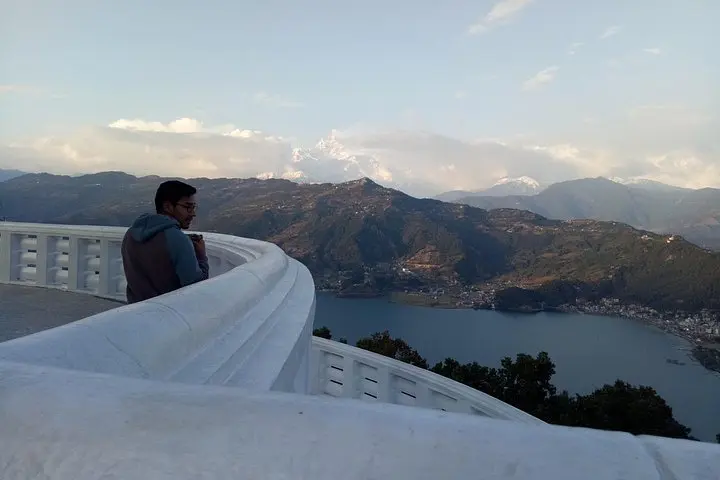
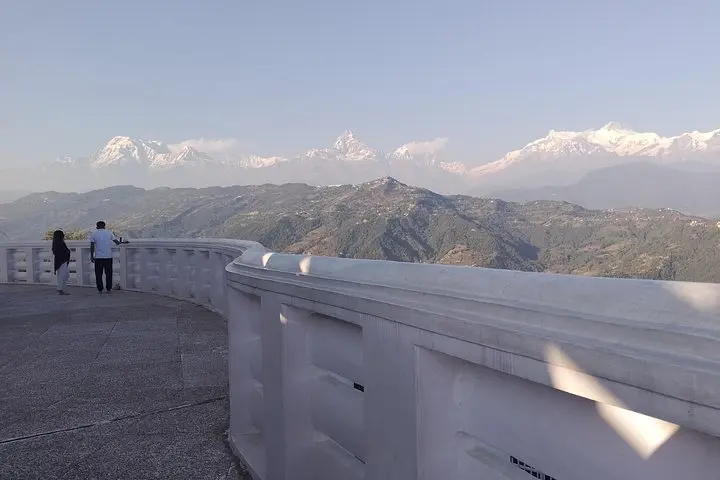
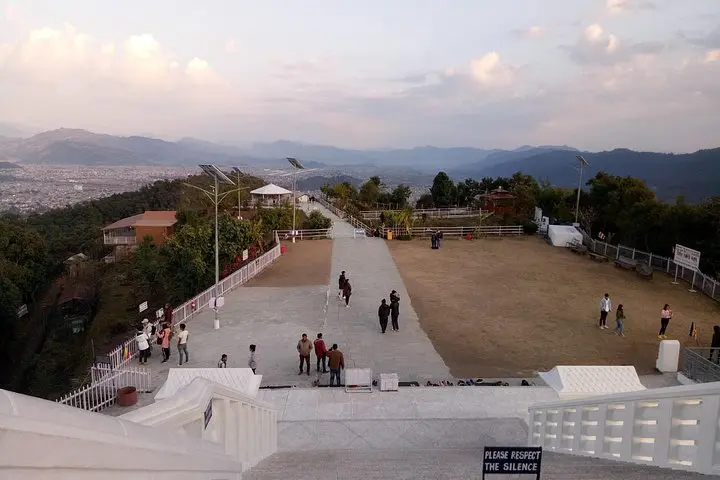
You arrive by late afternoon as the road climbs away from the lake and the city lights begin to warm. The car pulls up to a high ridge; below, Phewa Lake flattens into a dark mirror and the Annapurna range pins the horizon. The World Peace Stupa (Shanti Stupa) sits plain and white against that skyline, catching the low sun and offering a quiet ledge from which to watch the day end.
You arrive by late afternoon as the road climbs away from the lake and the city lights begin to warm. The car pulls up to a high ridge; below, Phewa Lake flattens into a dark mirror and the Annapurna range pins the horizon. The World Peace Stupa (Shanti Stupa) sits plain and white against that skyline, catching the low sun and offering a quiet ledge from which to watch the day end.
The stupa was built in the early 21st century as part of a network of peace monuments across Nepal and Japan; its clean dome and prayer flags reflect Buddhist practice and local pilgrimage. Geologically, the viewpoint sits on the lake’s surrounding ridgelines carved by tectonic uplift and fluvial erosion — the hills provide unobstructed western exposure for dramatic sunset light. Culturally, the stupa functions as both a pilgrimage site and a public viewpoint where locals and visitors share the same ritual of watching the mountains change color.
Practical guidance: the tour typically includes round-trip car transfer, entrance fees and a bottled water; expect a short uphill walk from the parking area to the stupa (uneven steps and a dirt path). Plan to arrive 30–45 minutes before sunset for the best light and fewer people. Bring a light jacket — gusts can bite as soon as the sun drops — and a camera with a wide-angle lens for lake-and-mountain panoramas. Respect the stupa’s sacred nature: remove hats in prayer areas and keep voices low.
Timing, simple footwear, and basic weather awareness make this a low-effort, high-reward way to end a day in Pokhara.