THE ADVENTURE COLLECTIVE® · Independent discovery and booking for outdoor travel

Cruise the Tonle Sap at golden hour and watch Kampong Phluk transform as water and light rearrange daily life. This small-group sunset boat tour combines cultural insight with calm lake scenery and a final drink at a floating restaurant.
Cruise the Tonle Sap at golden hour and watch Kampong Phluk transform as water and light rearrange daily life. This small-group sunset boat tour combines cultural insight with calm lake scenery and a final drink at a floating restaurant.
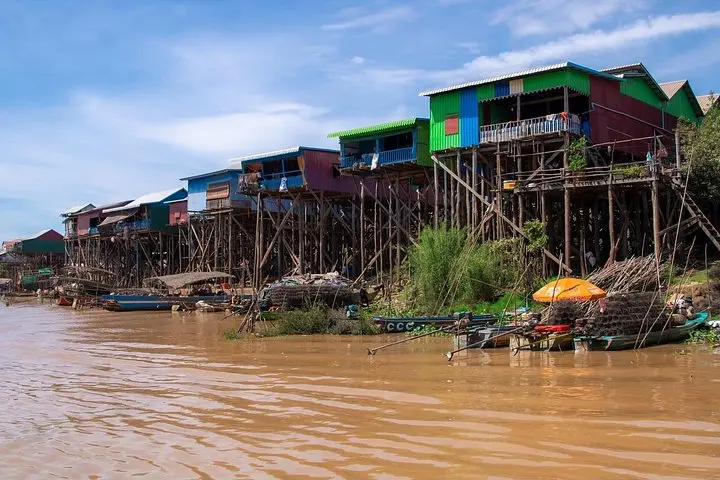
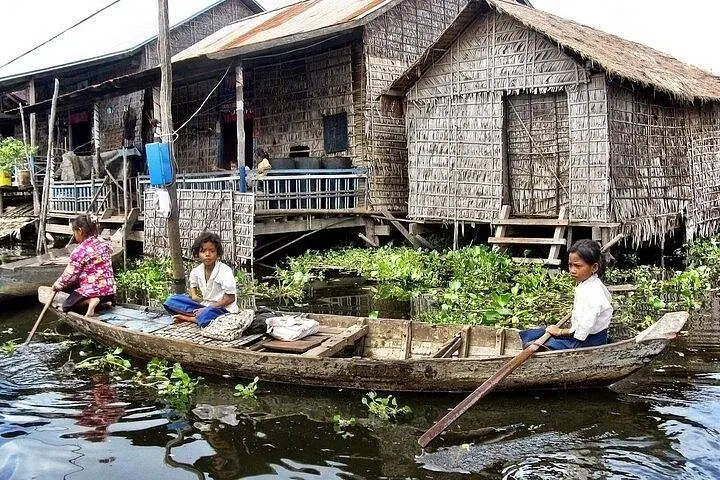
The sky softens into copper as your boat slips out from the riverbank and the stilt houses of Kampong Phluk line the horizon. Water licks the weathered posts and fishermen push off in narrow boats; children wave from raised porches as the sun tips toward the lake. The evening light cuts the village into silhouette—wood, bamboo, and the steady rhythm of life adapted to a floodplain.
Verified experiences and guided adventures in the surrounding area.
Operated by Bayon Temple Tour · Siem Reap, Siem Reap Province
The sky softens into copper as your boat slips out from the riverbank and the stilt houses of Kampong Phluk line the horizon. Water licks the weathered posts and fishermen push off in narrow boats; children wave from raised porches as the sun tips toward the lake. The evening light cuts the village into silhouette—wood, bamboo, and the steady rhythm of life adapted to a floodplain.
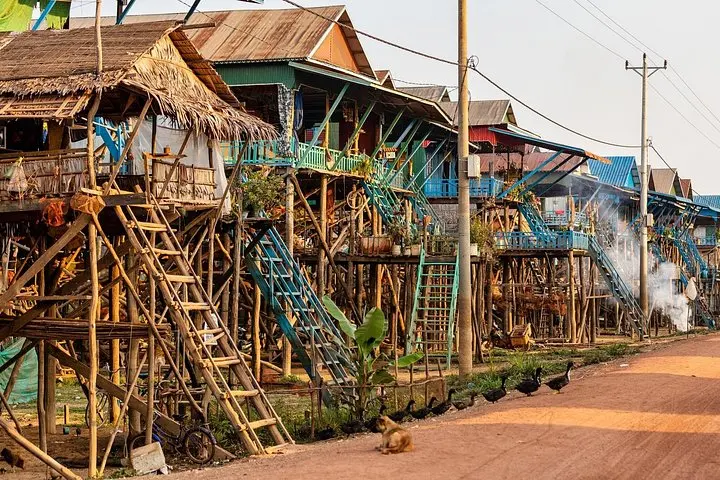
Kampong Phluk sits on the southwest edge of the Tonle Sap, a lake whose seasonal pulse defines life here. During the dry months broad mudflats expose the beams of houses; in the wet season the same homes float in a world of boats. Geology is simple and relentless: the Tonle Sap basin swells with monsoon runoff and reverses the flow of the river, creating an extraordinary inland fishery that has supported Khmer communities for generations. Culture here is practical and communal—schools, markets and temples all rise above the water line or move with it.
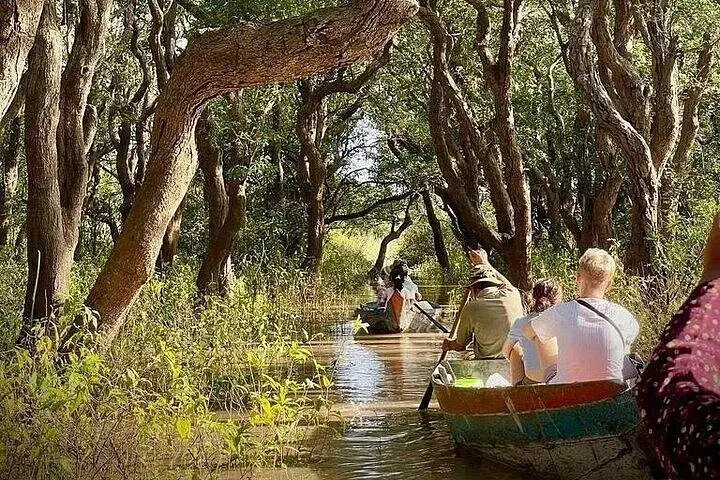
Expect two to three hours on tranquil water, a close-up look at stilt architecture, and a sunset topped off at a floating restaurant. Practical notes: bring a light rain layer during the wet season, strong insect repellent, and shoes that handle mud and boat decks. Photographers should mind reflections and backlight; locals appreciate polite questions before photographing people. Tours run in small groups and usually include transport from Siem Reap. The experience is low-impact, observational and intimate—an evening that connects you to the rhythm of Cambodia’s largest inland lake while leaving the village to carry on its day-to-day life.
The full experience runs about 7–8 hours including pickup and the sunset boat segment on Tonle Sap.
Yes; the tour is rated easy with short boat transfers and minimal walking, and vehicles and boats are generally accessible.
You may spot birds like kingfishers and egrets and occasional water monitor lizards; sightings depend on season and time of day.
Yes, but courteous behavior is expected—ask permission before photographing people and avoid intrusive close-ups during private moments.
Bayon Temple Tour operates guided outdoor trips and adventures with an emphasis on safety, stewardship, and memorable experiences.
The sky softens into copper as your boat slips out from the riverbank and the stilt houses of Kampong Phluk line the horizon. Water licks the weathered posts and fishermen push off in narrow boats; children wave from raised porches as the sun tips toward the lake. The evening light cuts the village into silhouette—wood, bamboo, and the steady rhythm of life adapted to a floodplain.
The sky softens into copper as your boat slips out from the riverbank and the stilt houses of Kampong Phluk line the horizon. Water licks the weathered posts and fishermen push off in narrow boats; children wave from raised porches as the sun tips toward the lake. The evening light cuts the village into silhouette—wood, bamboo, and the steady rhythm of life adapted to a floodplain.
Kampong Phluk sits on the southwest edge of the Tonle Sap, a lake whose seasonal pulse defines life here. During the dry months broad mudflats expose the beams of houses; in the wet season the same homes float in a world of boats. Geology is simple and relentless: the Tonle Sap basin swells with monsoon runoff and reverses the flow of the river, creating an extraordinary inland fishery that has supported Khmer communities for generations. Culture here is practical and communal—schools, markets and temples all rise above the water line or move with it.
Expect two to three hours on tranquil water, a close-up look at stilt architecture, and a sunset topped off at a floating restaurant. Practical notes: bring a light rain layer during the wet season, strong insect repellent, and shoes that handle mud and boat decks. Photographers should mind reflections and backlight; locals appreciate polite questions before photographing people. Tours run in small groups and usually include transport from Siem Reap. The experience is low-impact, observational and intimate—an evening that connects you to the rhythm of Cambodia’s largest inland lake while leaving the village to carry on its day-to-day life.