THE ADVENTURE COLLECTIVE® · Independent discovery and booking for outdoor travel

Ride a camel or horse around the Great Pyramids at sunset, take in the ancient profiles as the desert cools, and return to an evening of snacks and local hospitality. This accessible, guided tour includes hotel pickup and a short guided circuit of the Giza Plateau.
Ride a camel or horse around the Great Pyramids at sunset, take in the ancient profiles as the desert cools, and return to an evening of snacks and local hospitality. This accessible, guided tour includes hotel pickup and a short guided circuit of the Giza Plateau.
Late afternoon light thins across the Giza Plateau as a line of camels and a horse step onto wind-scrubbed sand. Riders swing into simple wooden saddles and the animals begin a slow, steady arc around the three great pyramids — Cheops, Chephren and Mykerinus — their silhouettes sharpening against a sky that shifts from ochre to deep blue.
Verified experiences and guided adventures in the surrounding area.
Operated by Three Pyramids Tours · Giza, Cairo Governorate
Late afternoon light thins across the Giza Plateau as a line of camels and a horse step onto wind-scrubbed sand. Riders swing into simple wooden saddles and the animals begin a slow, steady arc around the three great pyramids — Cheops, Chephren and Mykerinus — their silhouettes sharpening against a sky that shifts from ochre to deep blue.
The plateau is both archaeology and geology: layers of Tura limestone and desert veneer hold monuments built c. 2580–2500 BCE that dominated the skyline for millennia. Local guides, often from long-standing camel-handling families, point out building techniques, the causeway alignments and the nearby Solar Boat Museum while sharing practical tips on mounting and sitting in a moving saddle.
This is a straightforward, low-impact ride across mostly flat, compacted sand with occasional softer stretches near the pyramid bases. The tour typically runs about five hours including hotel pickup in an air-conditioned vehicle, a guided circuit during golden hour and light snacks afterward. Riders should be able to mount and dismount with assistance; people with serious spinal issues should avoid the activity.
Practical notes: schedule for late afternoon to avoid harsh sun, wear closed-toe shoes and breathable layers, carry plenty of water and a charged camera. Bring cash for tips and photos, follow your guide’s instructions when approaching monuments, and resist climbing the stones — preservation rules are enforced. The experience pairs raw desert presence with an up-close look at one of history’s most visible landscapes.
Yes — the tour includes pickup and drop-off in an air-conditioned vehicle; you’ll confirm your pickup point at booking.
The full experience is about five hours including transfers; the mounted portion is usually a 30–60 minute guided circuit around the plateau.
The tour is family-friendly but mounting requires some mobility; travellers with spinal injuries are advised not to participate and should disclose special requirements when booking.
Climbing is illegal and prohibited; casual photography is fine—professional shoots or commercial drone use require separate permits.
Three Pyramids Tours operates guided outdoor trips and adventures with an emphasis on safety, stewardship, and memorable experiences.
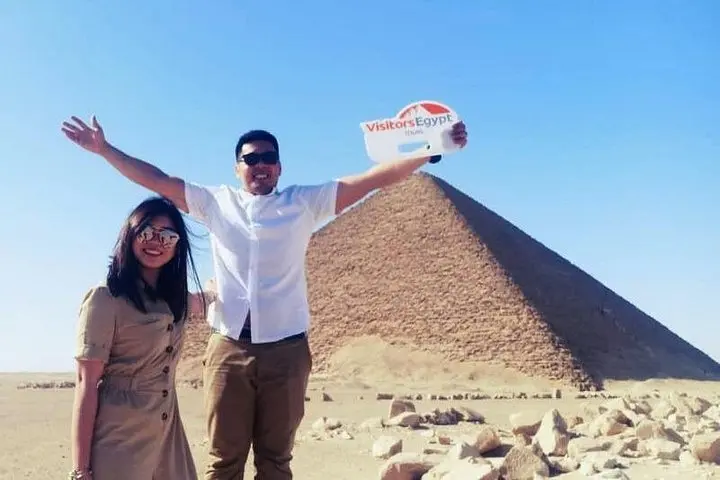
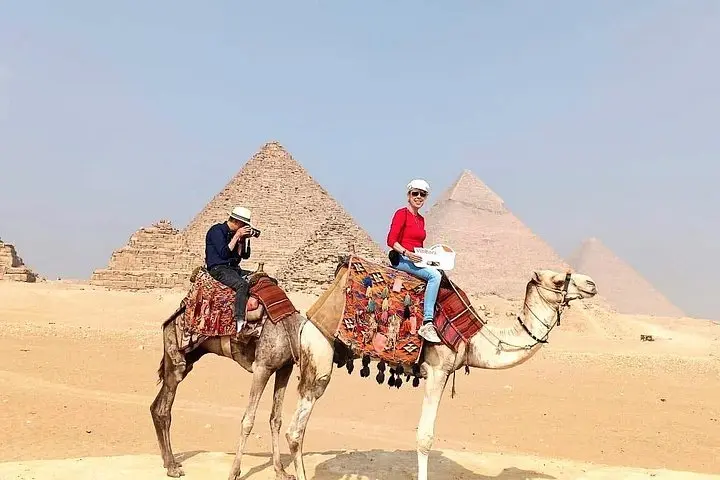
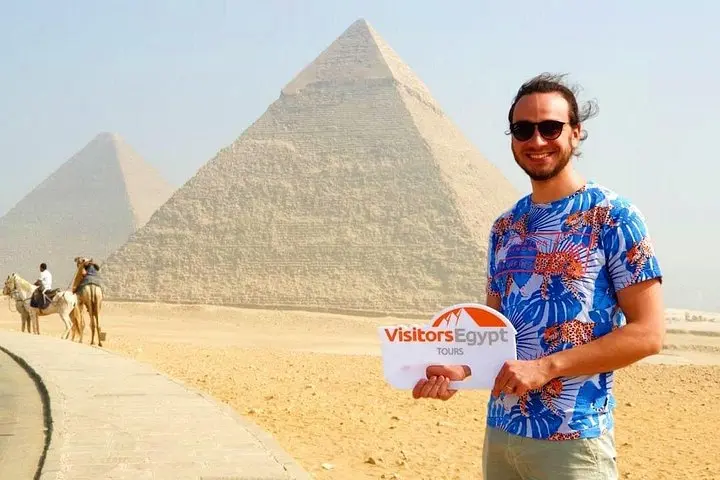
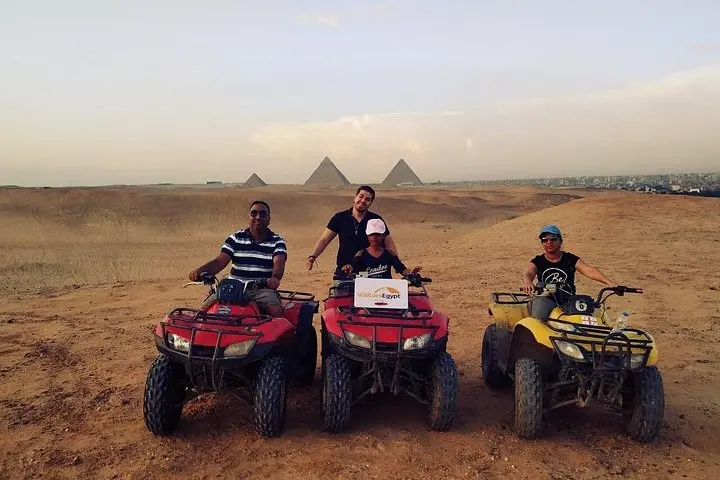
Late afternoon light thins across the Giza Plateau as a line of camels and a horse step onto wind-scrubbed sand. Riders swing into simple wooden saddles and the animals begin a slow, steady arc around the three great pyramids — Cheops, Chephren and Mykerinus — their silhouettes sharpening against a sky that shifts from ochre to deep blue.
Late afternoon light thins across the Giza Plateau as a line of camels and a horse step onto wind-scrubbed sand. Riders swing into simple wooden saddles and the animals begin a slow, steady arc around the three great pyramids — Cheops, Chephren and Mykerinus — their silhouettes sharpening against a sky that shifts from ochre to deep blue.
The plateau is both archaeology and geology: layers of Tura limestone and desert veneer hold monuments built c. 2580–2500 BCE that dominated the skyline for millennia. Local guides, often from long-standing camel-handling families, point out building techniques, the causeway alignments and the nearby Solar Boat Museum while sharing practical tips on mounting and sitting in a moving saddle.
This is a straightforward, low-impact ride across mostly flat, compacted sand with occasional softer stretches near the pyramid bases. The tour typically runs about five hours including hotel pickup in an air-conditioned vehicle, a guided circuit during golden hour and light snacks afterward. Riders should be able to mount and dismount with assistance; people with serious spinal issues should avoid the activity.
Practical notes: schedule for late afternoon to avoid harsh sun, wear closed-toe shoes and breathable layers, carry plenty of water and a charged camera. Bring cash for tips and photos, follow your guide’s instructions when approaching monuments, and resist climbing the stones — preservation rules are enforced. The experience pairs raw desert presence with an up-close look at one of history’s most visible landscapes.