THE ADVENTURE COLLECTIVE® · Independent discovery and booking for outdoor travel

Ride a camel or horse as the sun slides behind the Great Pyramids on this private five-hour tour. Expect close-up views of Khufu, Khafre and Menkaure, attentive local guides, and simple desert flavors at dusk.
Ride a camel or horse as the sun slides behind the Great Pyramids on this private five-hour tour. Expect close-up views of Khufu, Khafre and Menkaure, attentive local guides, and simple desert flavors at dusk.
The sun eases toward the horizon and the Giza Plateau flattens into long amber shadows; you climb a leathery camel or settle into the saddle of a horse and feel the desert wind nudging you forward. From outside the fenced complex, the three great pyramids—Khufu, Khafre and Menkaure—loom like ancient machines, their stone faces catching the last light while tour groups thin and the air cools.
Verified experiences and guided adventures in the surrounding area.
Operated by Three Pyramids Tours · Giza, Cairo Governorate
The sun eases toward the horizon and the Giza Plateau flattens into long amber shadows; you climb a leathery camel or settle into the saddle of a horse and feel the desert wind nudging you forward. From outside the fenced complex, the three great pyramids—Khufu, Khafre and Menkaure—loom like ancient machines, their stone faces catching the last light while tour groups thin and the air cools.
This short safari frames Egypt’s most famous monuments against simple desert geology: wind-polished limestone and windblown sand over a bedrock plateau once sea floor in the Tethys Ocean. The pyramids date to the Fourth Dynasty (c. 2600–2500 BCE) and were built as royal tombs; nearby you’ll find the Sphinx, the overseer carved in soft limestone. Local culture blends modern Cairo rhythms with long-standing Bedouin and Nubian traditions—camel handlers often pass down skills through families, and evening snack stalls prepare simple Egyptian bites.
Practical guidance: the tour is private and about five hours, often timed for sunset. Wear sturdy closed-toe shoes and sun protection; mounts are steady but mounting can be abrupt. Bring a refillable water bottle and light layers—the plateau cools fast after sunset. Respect handlers, follow guide directions when approaching animals, and keep camera gear secure during the ride.
Expect gentle riding, abundant photo stops, and a compact taste of monumental history—an easy, cinematic introduction to the sights and sensations of Giza.
The itinerary is about five hours from hotel pickup to drop-off, with the riding and photo stops concentrated on the plateau near sunset.
Most people can; the tour notes it is suitable for all fitness levels but not recommended for those with spinal injuries—advise your operator if you have mobility concerns.
Yes—photography of the pyramids and ride is allowed, but be respectful of other visitors and handlers; some areas inside the plateau have restricted access.
Tipping is customary for guides and camel/horse handlers in Egypt; small cash tips directly to individuals are appropriate if service is good.
Three Pyramids Tours operates guided outdoor trips and adventures with an emphasis on safety, stewardship, and memorable experiences.
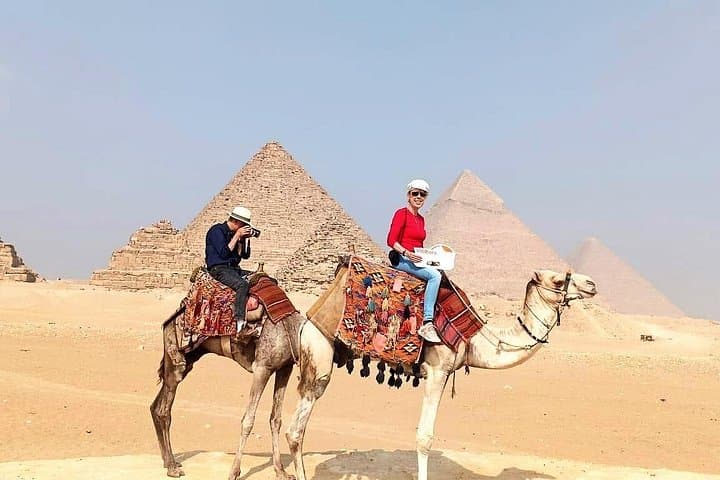
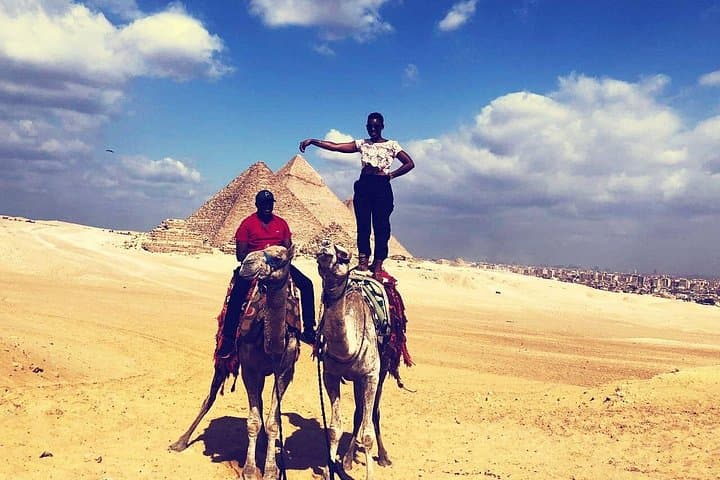
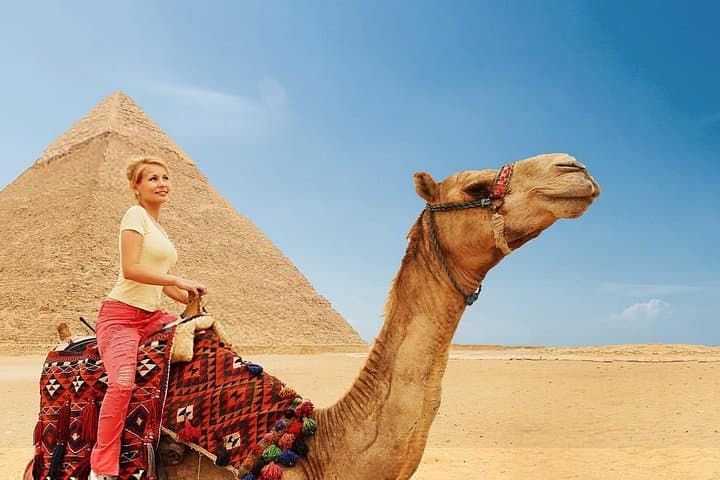
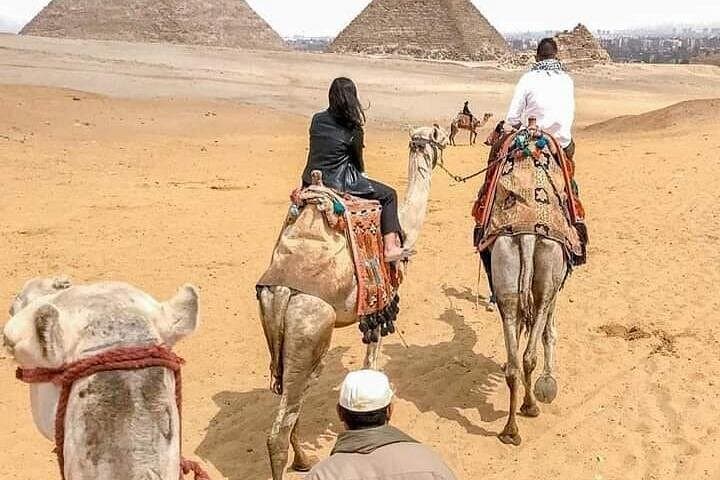
The sun eases toward the horizon and the Giza Plateau flattens into long amber shadows; you climb a leathery camel or settle into the saddle of a horse and feel the desert wind nudging you forward. From outside the fenced complex, the three great pyramids—Khufu, Khafre and Menkaure—loom like ancient machines, their stone faces catching the last light while tour groups thin and the air cools.
The sun eases toward the horizon and the Giza Plateau flattens into long amber shadows; you climb a leathery camel or settle into the saddle of a horse and feel the desert wind nudging you forward. From outside the fenced complex, the three great pyramids—Khufu, Khafre and Menkaure—loom like ancient machines, their stone faces catching the last light while tour groups thin and the air cools.
This short safari frames Egypt’s most famous monuments against simple desert geology: wind-polished limestone and windblown sand over a bedrock plateau once sea floor in the Tethys Ocean. The pyramids date to the Fourth Dynasty (c. 2600–2500 BCE) and were built as royal tombs; nearby you’ll find the Sphinx, the overseer carved in soft limestone. Local culture blends modern Cairo rhythms with long-standing Bedouin and Nubian traditions—camel handlers often pass down skills through families, and evening snack stalls prepare simple Egyptian bites.
Practical guidance: the tour is private and about five hours, often timed for sunset. Wear sturdy closed-toe shoes and sun protection; mounts are steady but mounting can be abrupt. Bring a refillable water bottle and light layers—the plateau cools fast after sunset. Respect handlers, follow guide directions when approaching animals, and keep camera gear secure during the ride.
Expect gentle riding, abundant photo stops, and a compact taste of monumental history—an easy, cinematic introduction to the sights and sensations of Giza.