THE ADVENTURE COLLECTIVE® · Independent discovery and booking for outdoor travel

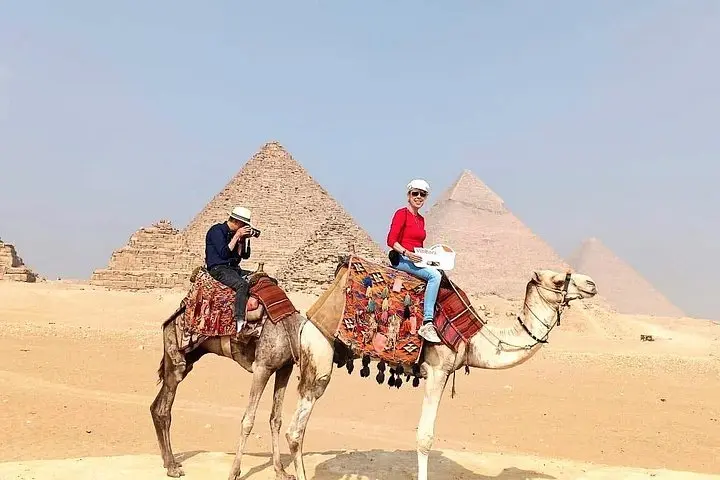
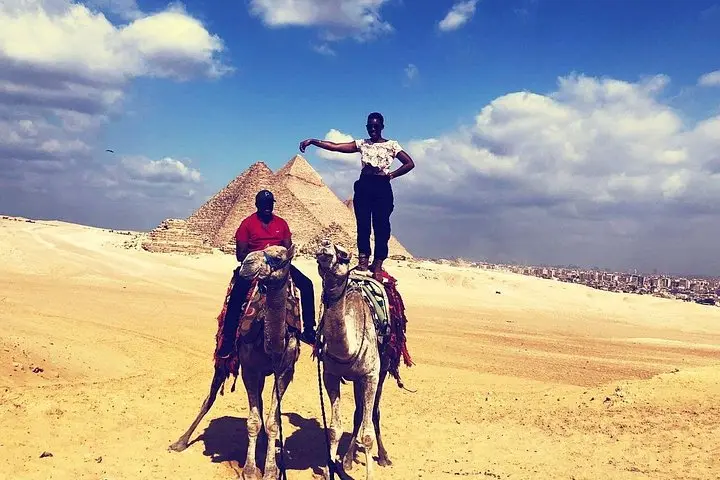
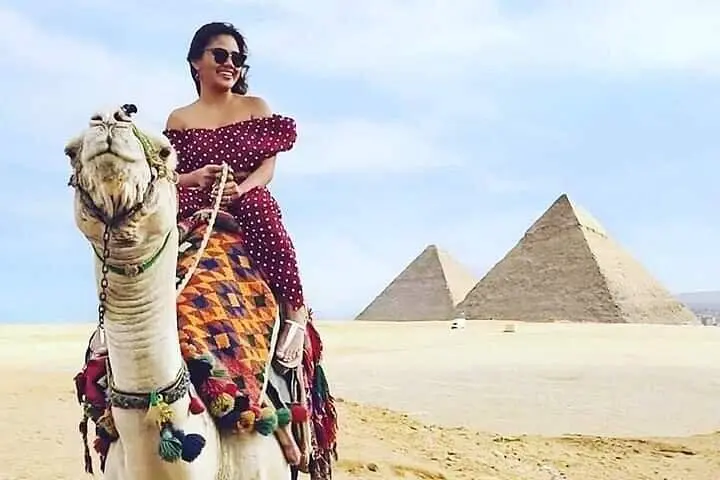
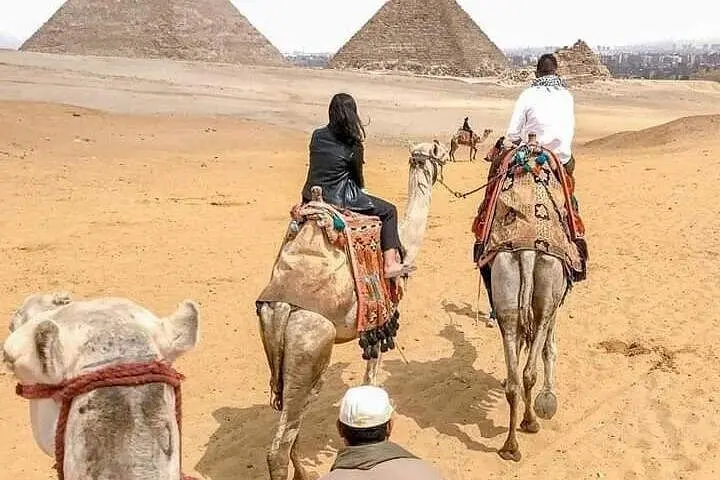
Ride a camel around the Giza Pyramids at sunset for an intimate, low-speed approach to some of history’s largest stone monuments. This private, guided outing pairs sweeping dusk views with easy riding and practical local logistics.
Ride a camel around the Giza Pyramids at sunset for an intimate, low-speed approach to some of history’s largest stone monuments. This private, guided outing pairs sweeping dusk views with easy riding and practical local logistics.
You crest a low ridge and the silhouettes of three ancient giants cut into the late light—Cheops, Khafre and Menkaure loom against a cooling sky as a camel pads steady beneath you. Sand grits at the saddle; the city hum is distant. The ride moves slow and deliberate, the desert seeming to test your rhythm as much as the animal beneath you.
Verified experiences and guided adventures in the surrounding area.
Operated by Three Pyramids Tours · Giza, Giza Governorate
You crest a low ridge and the silhouettes of three ancient giants cut into the late light—Cheops, Khafre and Menkaure loom against a cooling sky as a camel pads steady beneath you. Sand grits at the saddle; the city hum is distant. The ride moves slow and deliberate, the desert seeming to test your rhythm as much as the animal beneath you.
These stone pyramids date to Egypt’s Fourth Dynasty (c. 2600–2500 BCE), built as monumental tombs for pharaohs and aligned with astronomical markers. The plateau’s bedrock and wind-blown sand tell a geological story of Nile-fed sedimentation and centuries of human quarrying. Culturally, camel caravans have threaded this landscape for millennia—today’s sunset rides echo trade routes and Bedouin movement while catering to modern travelers seeking an atmospheric approach to the necropolis.
Practically, expect a private 4–5 hour outing with hotel pickup in an air-conditioned vehicle, a guided perimeter camel ride (photo stops, sunset views) and light snacks. The camel phase is gentle but involves mounting and dismounting from a raised platform; those with spinal issues should avoid it. Footing is sandy and uneven; short stretches may require walking. Bring sun protection, a water bottle, and a camera with extra battery—the light changes fast. Evenings cool quickly after sunset, so a light layer helps.
The experience balances spectacle and logistics: it’s less about hours in the saddle and more about timing the light, understanding site rules, and leaving the plateau as you found it—respectful, curious, prepared.
The camel segment typically lasts 30–60 minutes with photo stops; the full tour including transfers runs about 4–5 hours.
Yes—camel rides are paced for beginners, but not recommended for people with spinal injuries; children should be supervised and use child safety measures if available.
No—climbing the pyramids is prohibited; the tour provides perimeter views and authorized photo spots only.
Yes—bring extra batteries or power; the plateau is a prime photography location but follow guide directions to avoid blocking pathways.
Three Pyramids Tours operates guided outdoor trips and adventures with an emphasis on safety, stewardship, and memorable experiences.
You crest a low ridge and the silhouettes of three ancient giants cut into the late light—Cheops, Khafre and Menkaure loom against a cooling sky as a camel pads steady beneath you. Sand grits at the saddle; the city hum is distant. The ride moves slow and deliberate, the desert seeming to test your rhythm as much as the animal beneath you.
You crest a low ridge and the silhouettes of three ancient giants cut into the late light—Cheops, Khafre and Menkaure loom against a cooling sky as a camel pads steady beneath you. Sand grits at the saddle; the city hum is distant. The ride moves slow and deliberate, the desert seeming to test your rhythm as much as the animal beneath you.
These stone pyramids date to Egypt’s Fourth Dynasty (c. 2600–2500 BCE), built as monumental tombs for pharaohs and aligned with astronomical markers. The plateau’s bedrock and wind-blown sand tell a geological story of Nile-fed sedimentation and centuries of human quarrying. Culturally, camel caravans have threaded this landscape for millennia—today’s sunset rides echo trade routes and Bedouin movement while catering to modern travelers seeking an atmospheric approach to the necropolis.
Practically, expect a private 4–5 hour outing with hotel pickup in an air-conditioned vehicle, a guided perimeter camel ride (photo stops, sunset views) and light snacks. The camel phase is gentle but involves mounting and dismounting from a raised platform; those with spinal issues should avoid it. Footing is sandy and uneven; short stretches may require walking. Bring sun protection, a water bottle, and a camera with extra battery—the light changes fast. Evenings cool quickly after sunset, so a light layer helps.
The experience balances spectacle and logistics: it’s less about hours in the saddle and more about timing the light, understanding site rules, and leaving the plateau as you found it—respectful, curious, prepared.