THE ADVENTURE COLLECTIVE® · Independent discovery and booking for outdoor travel

A private five-hour camel ride circles the Giza plateau at sunset, offering close views of the Great Pyramids with a local guide handling logistics and storytelling. Ideal for travelers who want a low-impact, iconic desert experience with hotel pickup and snacks included.
A private five-hour camel ride circles the Giza plateau at sunset, offering close views of the Great Pyramids with a local guide handling logistics and storytelling. Ideal for travelers who want a low-impact, iconic desert experience with hotel pickup and snacks included.
The sun slides low over the Sahara as the camel caravan rises and falls like a slow breath; sand and sky blur into gold while the pyramids loom, their faces catching the last light. A private guide leads riders around the plateau where Cheops, Chephren and Mykerinos stand—ancient stone giants that have watched the Nile’s floodplain change course for millennia.
Verified experiences and guided adventures in the surrounding area.
Operated by Three Pyramids Tours · Giza, Giza Governorate
The sun slides low over the Sahara as the camel caravan rises and falls like a slow breath; sand and sky blur into gold while the pyramids loom, their faces catching the last light. A private guide leads riders around the plateau where Cheops, Chephren and Mykerinos stand—ancient stone giants that have watched the Nile’s floodplain change course for millennia.
These pyramids are funerary monuments from Egypt’s Fourth Dynasty (c. 2600–2500 BCE), built as royal tombs with precise engineering on limestone bedrock. The plateau’s geology is compacted sedimentary rock and wind-blown sand; underfoot is a mix of firm packed earth and softer dunes. Local Bedouin culture has long guided visitors across the desert and today provides much of the camel-handling expertise and storytelling.
Practical guidance: tours typically include hotel pickup in Cairo and run about five hours, arriving on site in late afternoon to catch sunset. Expect gentle, repetitive camel motion—suitable for most fitness levels—but bring sun protection and a closed-toe shoe for mounting and short walks. Photography windows are excellent at golden hour; the western side of the plateau offers broad panoramic shots while the Solar Boat Museum near Khufu provides indoor shade if the midday sun is high.
On-site etiquette matters: follow your guide’s route, avoid climbing the monuments, and carry water in reusable bottles. Wind can pick up fine sand—wear layers and keep electronics covered. With a bit of planning, this private camel ride pairs cinematic views with straightforward logistics, making an iconic desert experience accessible and memorable.
Guides are experienced and camels are trained for short tourist rides; inform the operator of any back issues and follow the handler’s mounting and riding instructions.
The tour includes snacks, pickup and taxes, but bring small local currency for tips, extra drinks, or optional services like photos.
The tour notes wheelchair accessible pickup but mounting a camel requires some mobility—contact the operator to discuss alternatives or assistance.
Riding segments typically last 30–90 minutes overall, interspersed with stops for photos and walking; total tour time is about five hours including transfers.
Three Pyramids Tours operates guided outdoor trips and adventures with an emphasis on safety, stewardship, and memorable experiences.
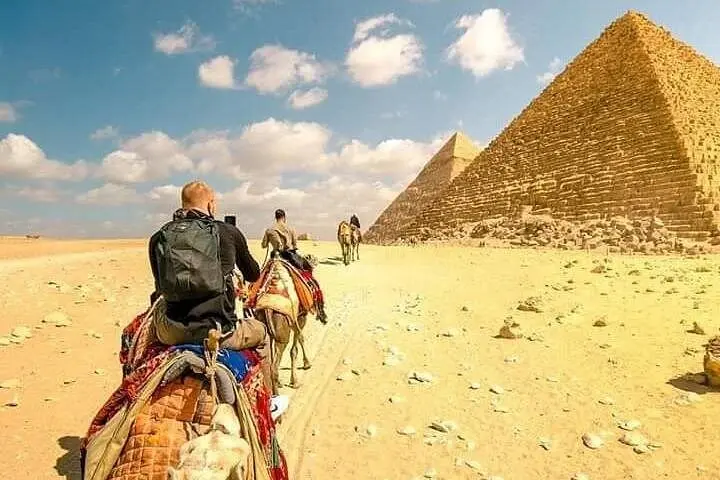
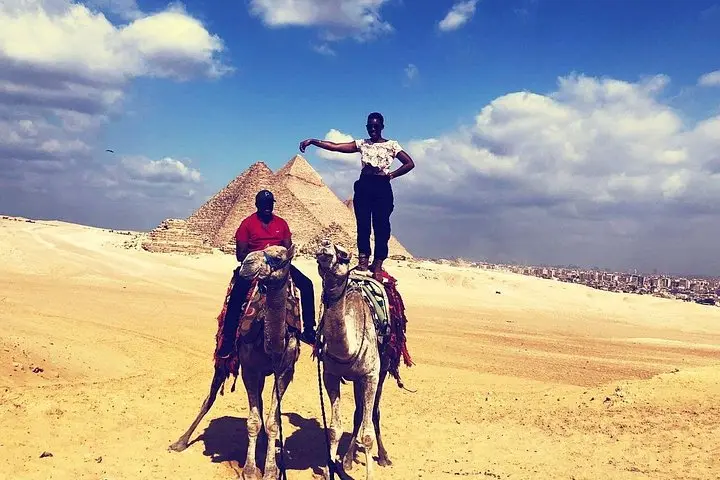
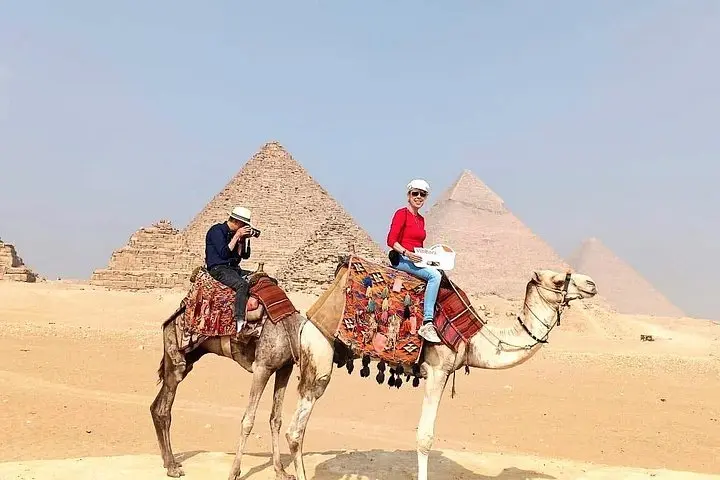
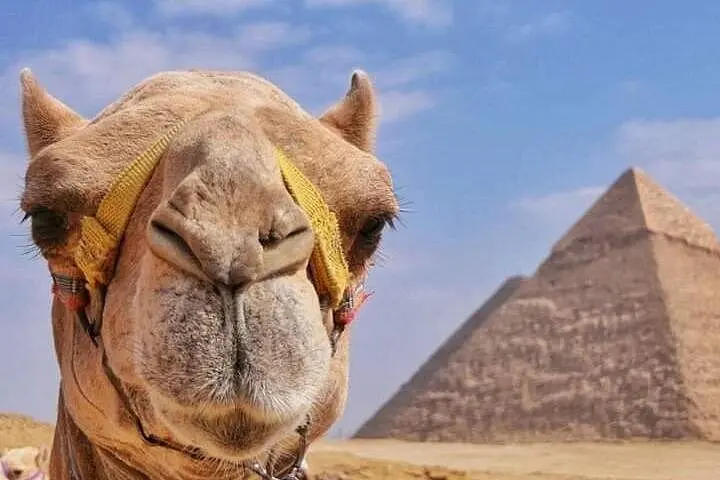
The sun slides low over the Sahara as the camel caravan rises and falls like a slow breath; sand and sky blur into gold while the pyramids loom, their faces catching the last light. A private guide leads riders around the plateau where Cheops, Chephren and Mykerinos stand—ancient stone giants that have watched the Nile’s floodplain change course for millennia.
The sun slides low over the Sahara as the camel caravan rises and falls like a slow breath; sand and sky blur into gold while the pyramids loom, their faces catching the last light. A private guide leads riders around the plateau where Cheops, Chephren and Mykerinos stand—ancient stone giants that have watched the Nile’s floodplain change course for millennia.
These pyramids are funerary monuments from Egypt’s Fourth Dynasty (c. 2600–2500 BCE), built as royal tombs with precise engineering on limestone bedrock. The plateau’s geology is compacted sedimentary rock and wind-blown sand; underfoot is a mix of firm packed earth and softer dunes. Local Bedouin culture has long guided visitors across the desert and today provides much of the camel-handling expertise and storytelling.
Practical guidance: tours typically include hotel pickup in Cairo and run about five hours, arriving on site in late afternoon to catch sunset. Expect gentle, repetitive camel motion—suitable for most fitness levels—but bring sun protection and a closed-toe shoe for mounting and short walks. Photography windows are excellent at golden hour; the western side of the plateau offers broad panoramic shots while the Solar Boat Museum near Khufu provides indoor shade if the midday sun is high.
On-site etiquette matters: follow your guide’s route, avoid climbing the monuments, and carry water in reusable bottles. Wind can pick up fine sand—wear layers and keep electronics covered. With a bit of planning, this private camel ride pairs cinematic views with straightforward logistics, making an iconic desert experience accessible and memorable.