THE ADVENTURE COLLECTIVE® · Independent discovery and booking for outdoor travel

Ride a camel around the Giza Plateau as the sun falls behind Khufu, Khafre and Menkaure. This private sunset tour pairs close-up views of the pyramids with practical tips on timing, safety and what to bring.
Ride a camel around the Giza Plateau as the sun falls behind Khufu, Khafre and Menkaure. This private sunset tour pairs close-up views of the pyramids with practical tips on timing, safety and what to bring.
The sun tilts toward the Nile and the limestone faces of Khufu, Khafre and Menkaure catch a last, fierce light as you mount a patient camel at the Giza Plateau. Sand slips under the beast’s padded feet and the desert wind nudges the small caravan forward; the hum of Cairo fades, replaced by crunching grit and the silhouette of the pyramids growing larger with each sway.
Verified experiences and guided adventures in the surrounding area.
Operated by Three Pyramids Tours · Giza, Cairo Governorate
The sun tilts toward the Nile and the limestone faces of Khufu, Khafre and Menkaure catch a last, fierce light as you mount a patient camel at the Giza Plateau. Sand slips under the beast’s padded feet and the desert wind nudges the small caravan forward; the hum of Cairo fades, replaced by crunching grit and the silhouette of the pyramids growing larger with each sway.
These monuments—built of quarried limestone and granite—date to Egypt’s Old Kingdom (c. 2600–2500 BCE) and were the tallest human-made structures for millennia. Geologically the plateau is a compacted strip of Pleistocene limestone; culturally it remains a living center of tourism and local trade, where Bedouin-led camel and horse handlers have worked for generations. Expect a mosaic of modern tour logistics and traditional presence: guides, handlers, and vendors close to the viewing areas.
Practically, a private camel ride here is short and accessible: low elevation, sandy, uneven footing and brief circuits around the pyramids—often 20–45 minutes on the camel plus time for photos and a short walk to key viewpoints. Tours typically include hotel pickup in an air-conditioned vehicle and run best at sunset for light and cooler temperatures. Bring sunscreen, a wide-brim hat, stable footwear for sandy surfaces, and a small bottle of water. Respect handlers’ instructions for mounting and dismounting; this activity is unsuitable for people with serious spinal issues. Plan extra time for security checks and be prepared to negotiate brief crowds near the main viewing platforms. A private ride offers the freedom to pause for photographs and to experience the plateau when the low light sharpens stone and shadow.
Rides are usually 20–45 minutes on the camel, plus time for photos and walking between viewpoints; total tour time with pickup runs about 4–5 hours.
Climbing the exterior is prohibited; access inside the Great Pyramid and some mastabas requires separate tickets and is often limited—check current site rules before you go.
The tour offers vehicle pickup and some flat areas for viewing, but camel mounting and sandy terrain are not accessible—notify the operator about mobility needs to arrange alternatives.
Handlers are local guides experienced with camels, but follow their instructions for mounting/dismounting and saddle fit; tours typically advise against the activity for those with spinal injuries.
Three Pyramids Tours operates guided outdoor trips and adventures with an emphasis on safety, stewardship, and memorable experiences.
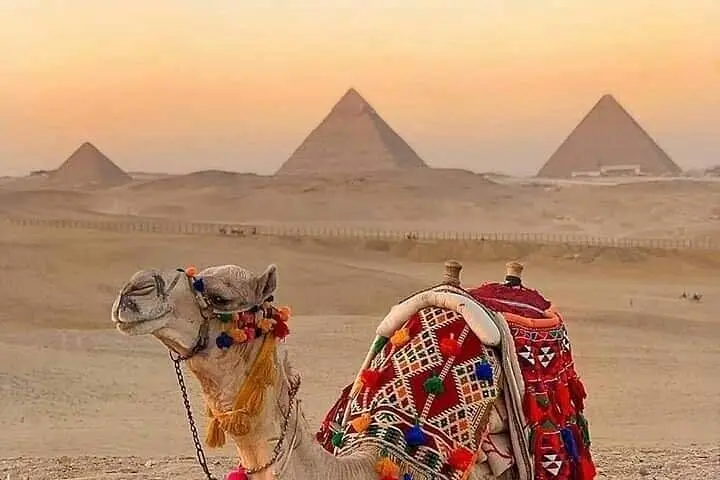
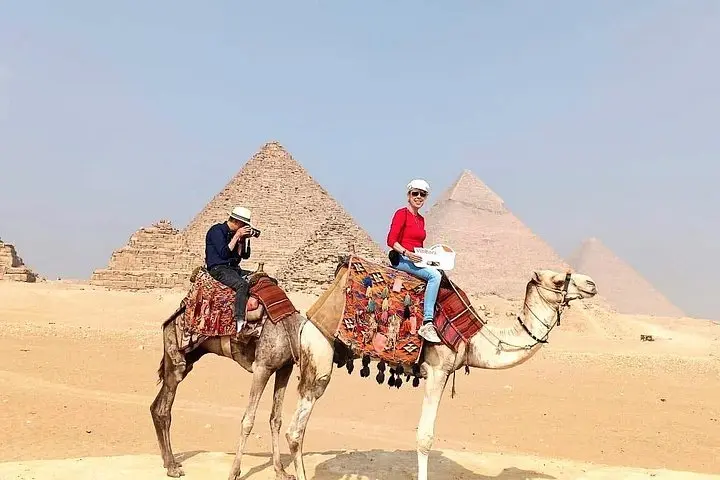
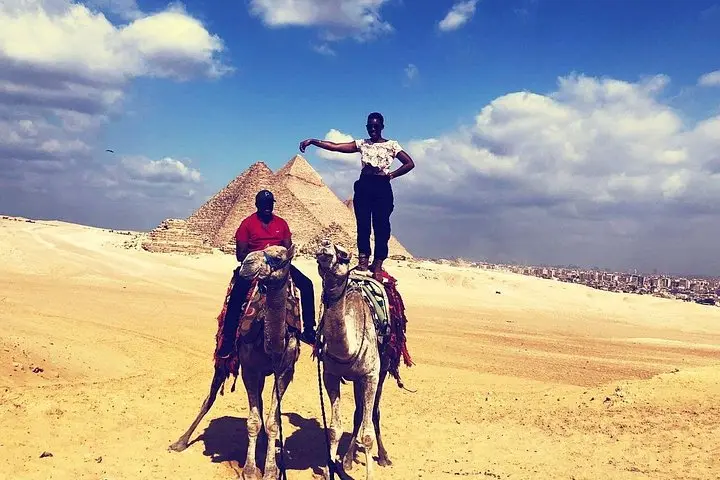
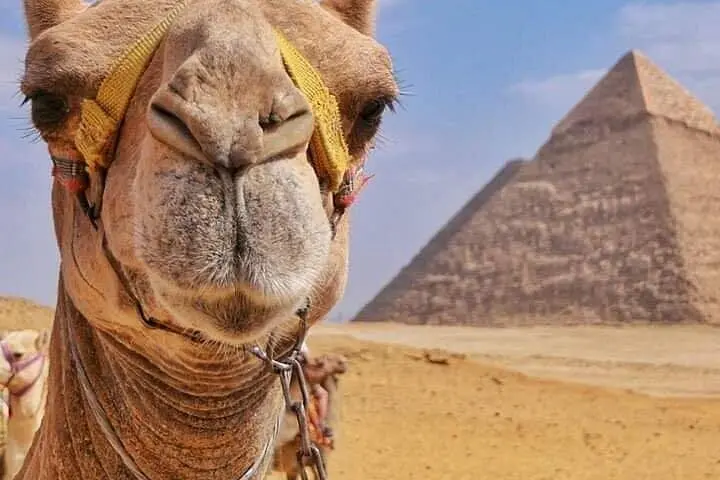
The sun tilts toward the Nile and the limestone faces of Khufu, Khafre and Menkaure catch a last, fierce light as you mount a patient camel at the Giza Plateau. Sand slips under the beast’s padded feet and the desert wind nudges the small caravan forward; the hum of Cairo fades, replaced by crunching grit and the silhouette of the pyramids growing larger with each sway.
The sun tilts toward the Nile and the limestone faces of Khufu, Khafre and Menkaure catch a last, fierce light as you mount a patient camel at the Giza Plateau. Sand slips under the beast’s padded feet and the desert wind nudges the small caravan forward; the hum of Cairo fades, replaced by crunching grit and the silhouette of the pyramids growing larger with each sway.
These monuments—built of quarried limestone and granite—date to Egypt’s Old Kingdom (c. 2600–2500 BCE) and were the tallest human-made structures for millennia. Geologically the plateau is a compacted strip of Pleistocene limestone; culturally it remains a living center of tourism and local trade, where Bedouin-led camel and horse handlers have worked for generations. Expect a mosaic of modern tour logistics and traditional presence: guides, handlers, and vendors close to the viewing areas.
Practically, a private camel ride here is short and accessible: low elevation, sandy, uneven footing and brief circuits around the pyramids—often 20–45 minutes on the camel plus time for photos and a short walk to key viewpoints. Tours typically include hotel pickup in an air-conditioned vehicle and run best at sunset for light and cooler temperatures. Bring sunscreen, a wide-brim hat, stable footwear for sandy surfaces, and a small bottle of water. Respect handlers’ instructions for mounting and dismounting; this activity is unsuitable for people with serious spinal issues. Plan extra time for security checks and be prepared to negotiate brief crowds near the main viewing platforms. A private ride offers the freedom to pause for photographs and to experience the plateau when the low light sharpens stone and shadow.