THE ADVENTURE COLLECTIVE® · Independent discovery and booking for outdoor travel

Ride a camel as the sun drops behind the Great Pyramids of Giza and get a rare, elevated perspective on one of humanity’s oldest monuments. This guide covers what you’ll see, the history underfoot, and practical tips to prepare for the ride.
Ride a camel as the sun drops behind the Great Pyramids of Giza and get a rare, elevated perspective on one of humanity’s oldest monuments. This guide covers what you’ll see, the history underfoot, and practical tips to prepare for the ride.
The sun leans low over the Giza Plateau as a line of camels rocks forward, hooves whispering against wind-scoured sand. You sit a little higher than the crowds, the three great pyramids—Khufu, Khafre and Menkaure—cutting crisp silhouettes against the fading sky as handlers guide the caravan past terraces of loose stone.
Verified experiences and guided adventures in the surrounding area.
Operated by Three Pyramids Tours · Giza, Giza Governorate
The sun leans low over the Giza Plateau as a line of camels rocks forward, hooves whispering against wind-scoured sand. You sit a little higher than the crowds, the three great pyramids—Khufu, Khafre and Menkaure—cutting crisp silhouettes against the fading sky as handlers guide the caravan past terraces of loose stone.
This stretch of the Sahara sits on a limestone bedrock uplifted millions of years ago and then quarried by ancient engineers who stacked blocks into the world’s oldest monumental tombs. Built around 4,500 years ago, the pyramids were part of a funerary complex tied to pharaonic beliefs about the afterlife; the nearby Sphinx keeps a silent watch over the desert approaches. Today the site is as much a cultural crossroads—local camel handlers, guides, and vendors blend Bedouin traditions with modern tourism.
Practically, the experience is short and sensory: expect a guided pickup, a roughly 1–2 hour camel circuit at or near sunset, light snacks, and an hour or so for photos. Terrain is sandy and uneven; camels mount and dismount with a pronounced tilt. Back or spinal issues are a real consideration—decline if advised. Bring a brimmed hat, layered clothing for changing desert temperatures, plenty of water, and a camera with a fast shutter for low light. Respect signage and stay outside protected excavation zones; negotiate fees and tipping clearly with your handler before the ride.
This ride is about perspective—an elevated, slow-moving view of a very old place that rewards preparation and simple courtesy.
The guided camel circuit at Giza typically lasts 1–2 hours as part of a roughly 5-hour tour including pickup, transfers, and time for photos.
Many operators run family-friendly rides, but mounting and the camel’s motion can be jarring; inform the operator of ages and any mobility concerns when booking.
This specific camel-focused tour usually offers exterior views; interior access requires separate tickets and is subject to museum/archaeological limits.
Yes—tipping camel handlers and guides is customary; set expectations in advance and carry small bills in local currency.
Three Pyramids Tours operates guided outdoor trips and adventures with an emphasis on safety, stewardship, and memorable experiences.
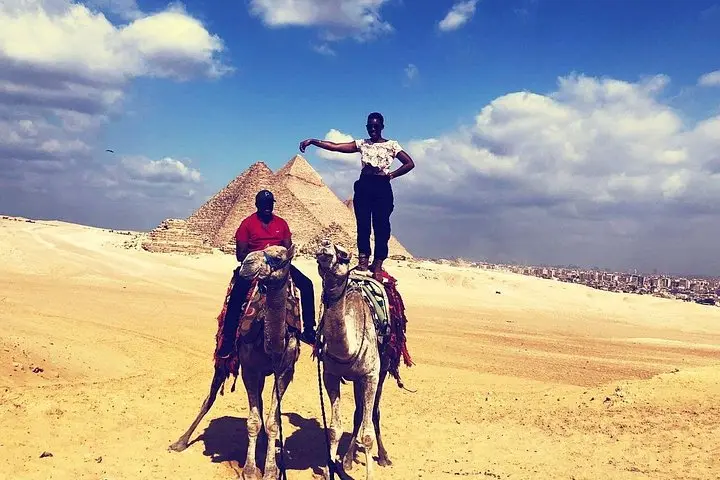
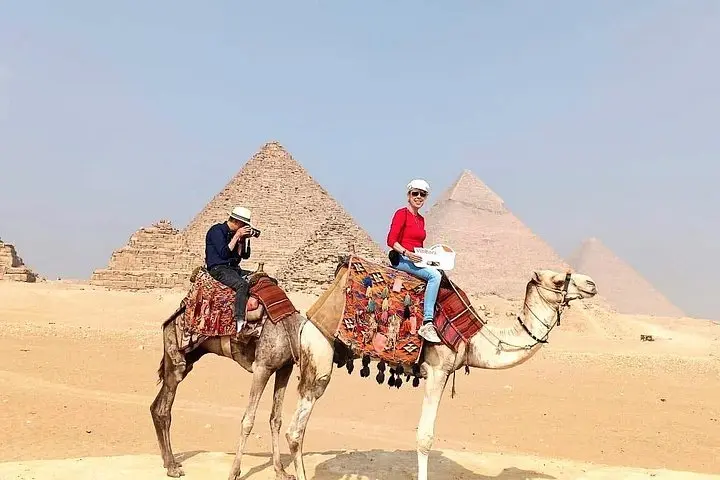
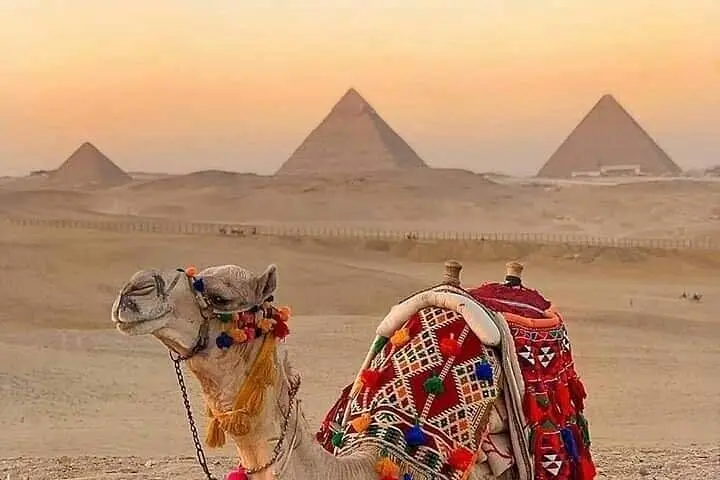
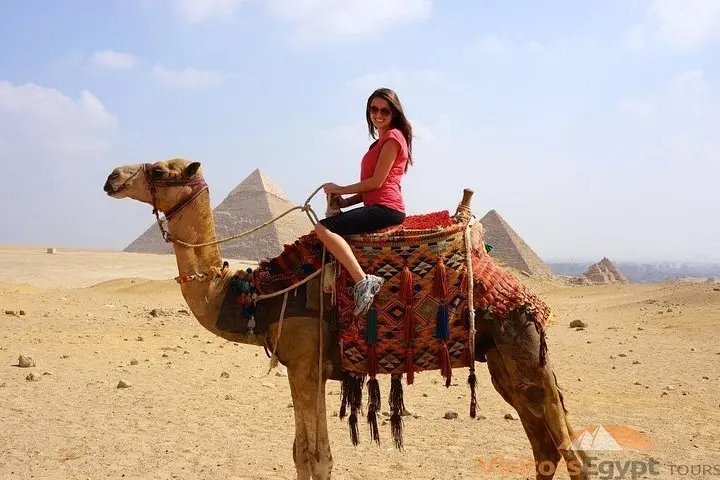
The sun leans low over the Giza Plateau as a line of camels rocks forward, hooves whispering against wind-scoured sand. You sit a little higher than the crowds, the three great pyramids—Khufu, Khafre and Menkaure—cutting crisp silhouettes against the fading sky as handlers guide the caravan past terraces of loose stone.
The sun leans low over the Giza Plateau as a line of camels rocks forward, hooves whispering against wind-scoured sand. You sit a little higher than the crowds, the three great pyramids—Khufu, Khafre and Menkaure—cutting crisp silhouettes against the fading sky as handlers guide the caravan past terraces of loose stone.
This stretch of the Sahara sits on a limestone bedrock uplifted millions of years ago and then quarried by ancient engineers who stacked blocks into the world’s oldest monumental tombs. Built around 4,500 years ago, the pyramids were part of a funerary complex tied to pharaonic beliefs about the afterlife; the nearby Sphinx keeps a silent watch over the desert approaches. Today the site is as much a cultural crossroads—local camel handlers, guides, and vendors blend Bedouin traditions with modern tourism.
Practically, the experience is short and sensory: expect a guided pickup, a roughly 1–2 hour camel circuit at or near sunset, light snacks, and an hour or so for photos. Terrain is sandy and uneven; camels mount and dismount with a pronounced tilt. Back or spinal issues are a real consideration—decline if advised. Bring a brimmed hat, layered clothing for changing desert temperatures, plenty of water, and a camera with a fast shutter for low light. Respect signage and stay outside protected excavation zones; negotiate fees and tipping clearly with your handler before the ride.
This ride is about perspective—an elevated, slow-moving view of a very old place that rewards preparation and simple courtesy.