THE ADVENTURE COLLECTIVE® · Independent discovery and booking for outdoor travel

Trade Stockholm’s skyline for granite cliffs and pine-dark trails on a guided sunset hike into Tyresta National Park. Enjoy a lakeside Swedish meal or hot soup, then continue into the hush of night for a close-to-nature experience.
Trade Stockholm’s skyline for granite cliffs and pine-dark trails on a guided sunset hike into Tyresta National Park. Enjoy a lakeside Swedish meal or hot soup, then continue into the hush of night for a close-to-nature experience.
A low sun slips between pines as the city lights of Stockholm fade behind you; the forest swallows sound and the path narrows to soft needle-littered soil. You move with a small group, the guide’s voice steady as dusk deepens, the granite cliffs ahead catching the last light and the lake below reflecting it like a slow breath.
Verified experiences and guided adventures in the surrounding area.
Operated by Stockholm Nature AB · Stockholm, Stockholm County
A low sun slips between pines as the city lights of Stockholm fade behind you; the forest swallows sound and the path narrows to soft needle-littered soil. You move with a small group, the guide’s voice steady as dusk deepens, the granite cliffs ahead catching the last light and the lake below reflecting it like a slow breath.
Tyresta National Park is one of Sweden’s most intact remnants of ancient boreal forest—old-growth pines, exposed Precambrian granite, and small kettle lakes carved by the last ice age. Human history in the area stretches from Fornborg hillfort remains to more recent rural uses; the park’s cultural remains are quiet companions to its natural features.
Expect walking on singletrack and maintained trails with occasional off-path stretches and a short uphill of ~20 meters. The route crosses high rock shelves overlooking clear lakes, where midges and ducks are common in summer and a steaming soup tastes essential when the air is cold. Wildlife is most active at dusk—foxes, hares, and birds may reveal themselves, though sightings aren’t guaranteed.
Practical notes: the full outing is about 4.5 hours including two 30-minute public transport rides, with 6–8 km of walking split into two 1.5-hour legs and a lakeside break. Wear waterproof footwear, bring a headlamp or small torch for the return, dress in layers against chills that arrive quickly after sunset, and carry water and any personal snacks. The guide provides fika and either a midsummer light meal or hot soup in winter, leaving you to carry memories and minimal gear back to the city.
Walking distance is about 6–8 km split into two 1.5-hour sections; total duration including transport is approximately 4–4.5 hours.
The route is described as physically easy to moderate with a short uphill; not recommended for those with serious heart problems or limited mobility—check with the provider for participants over 70.
In summer the group enjoys a light Swedish Midsummer-style meal and fika; in winter the break includes a warming hot soup and pastries or hot drinks.
No—dusk increases chances of seeing mammals or birds, but sightings are never guaranteed; the guide will point out likely areas and signs.
Stockholm Nature AB operates guided outdoor trips and adventures with an emphasis on safety, stewardship, and memorable experiences.
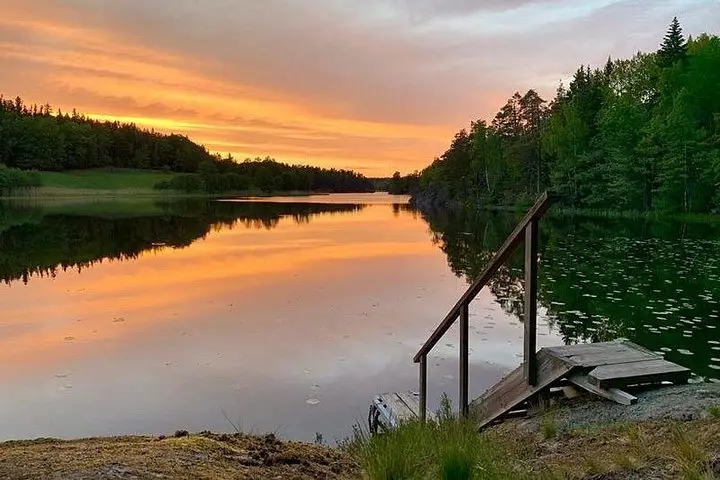
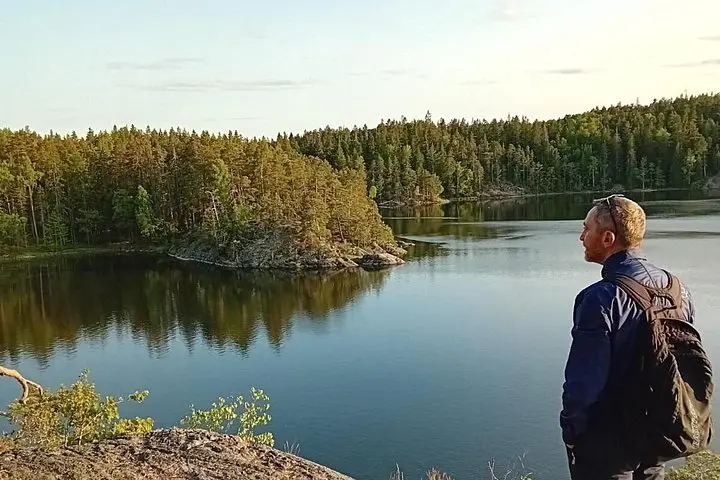
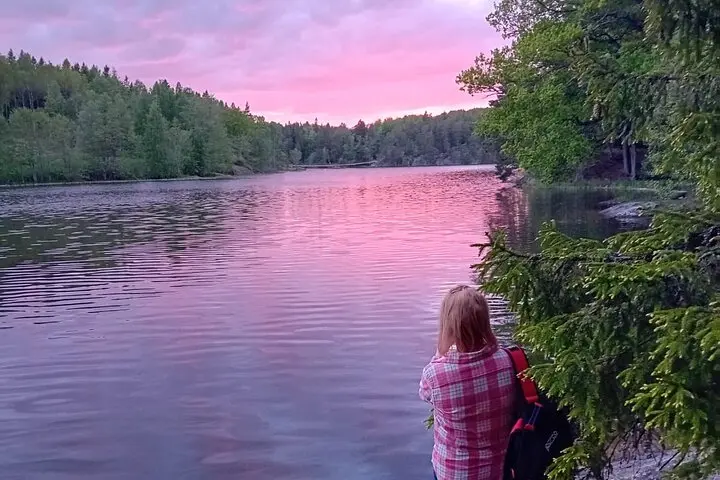
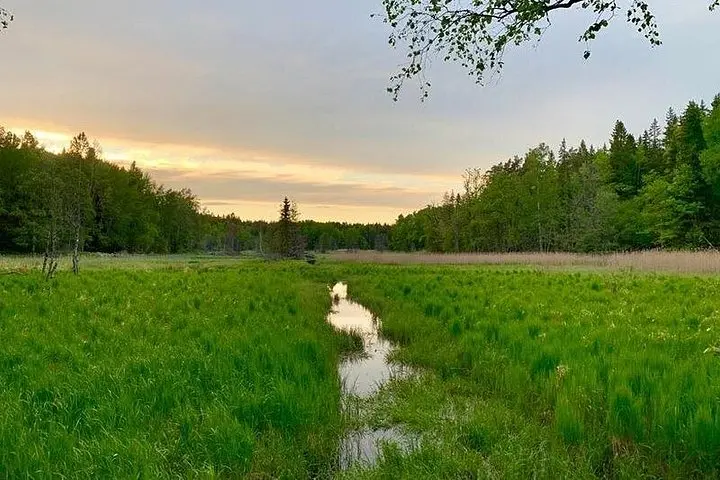
A low sun slips between pines as the city lights of Stockholm fade behind you; the forest swallows sound and the path narrows to soft needle-littered soil. You move with a small group, the guide’s voice steady as dusk deepens, the granite cliffs ahead catching the last light and the lake below reflecting it like a slow breath.
A low sun slips between pines as the city lights of Stockholm fade behind you; the forest swallows sound and the path narrows to soft needle-littered soil. You move with a small group, the guide’s voice steady as dusk deepens, the granite cliffs ahead catching the last light and the lake below reflecting it like a slow breath.
Tyresta National Park is one of Sweden’s most intact remnants of ancient boreal forest—old-growth pines, exposed Precambrian granite, and small kettle lakes carved by the last ice age. Human history in the area stretches from Fornborg hillfort remains to more recent rural uses; the park’s cultural remains are quiet companions to its natural features.
Expect walking on singletrack and maintained trails with occasional off-path stretches and a short uphill of ~20 meters. The route crosses high rock shelves overlooking clear lakes, where midges and ducks are common in summer and a steaming soup tastes essential when the air is cold. Wildlife is most active at dusk—foxes, hares, and birds may reveal themselves, though sightings aren’t guaranteed.
Practical notes: the full outing is about 4.5 hours including two 30-minute public transport rides, with 6–8 km of walking split into two 1.5-hour legs and a lakeside break. Wear waterproof footwear, bring a headlamp or small torch for the return, dress in layers against chills that arrive quickly after sunset, and carry water and any personal snacks. The guide provides fika and either a midsummer light meal or hot soup in winter, leaving you to carry memories and minimal gear back to the city.