THE ADVENTURE COLLECTIVE® · Independent discovery and booking for outdoor travel

Glide between Bagan’s brick pagodas in a traditional horse cart and finish at a west-facing temple for a dramatic sunset. This gentle half-day tour pairs local history with practical tips for timing, dress and comfort.
Glide between Bagan’s brick pagodas in a traditional horse cart and finish at a west-facing temple for a dramatic sunset. This gentle half-day tour pairs local history with practical tips for timing, dress and comfort.
The horse cart moves at a deliberate, old-world pace across the Bagan plain as late light stretches long shadows from spire to spire. Dust lifts around the wheels and the guide points ahead — a red-brick silhouette cut against a wide sky — while the Ayeyarwady river, a slow ribbon to the east, seems to urge the cart onward toward the sunset.
Verified experiences and guided adventures in the surrounding area.
Operated by Grayline Vietnam Threeland Travel · Bagan, Mandalay Region
The horse cart moves at a deliberate, old-world pace across the Bagan plain as late light stretches long shadows from spire to spire. Dust lifts around the wheels and the guide points ahead — a red-brick silhouette cut against a wide sky — while the Ayeyarwady river, a slow ribbon to the east, seems to urge the cart onward toward the sunset.
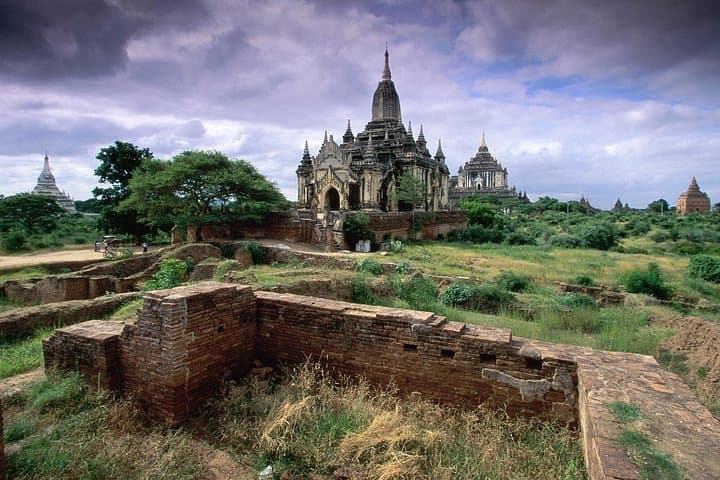
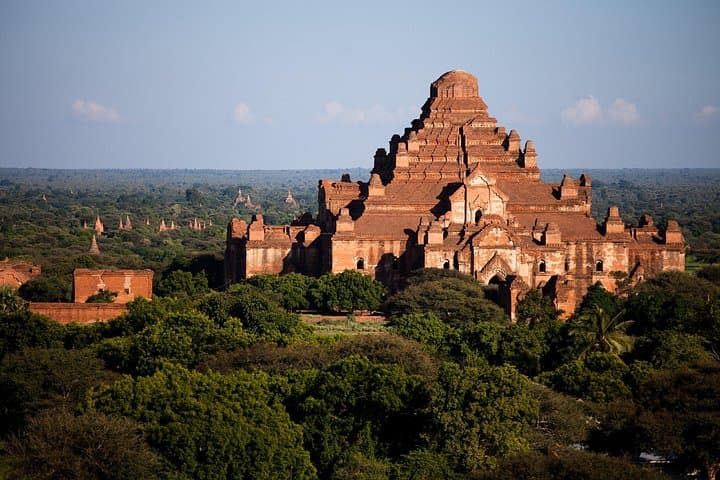
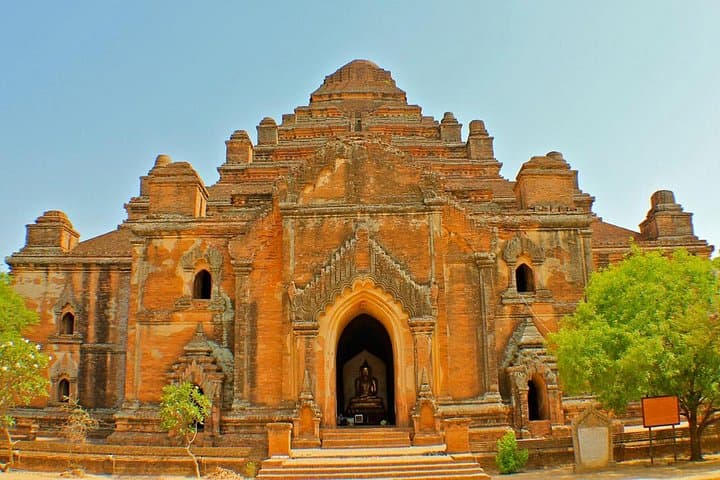
Bagan was the capital of the Pagan Kingdom (9th–13th centuries) and once hosted thousands of Buddhist monuments; today roughly two thousand remain, their kiln-fired bricks weathered but remarkably intact. The plain’s geology—riverine alluvium and compacted clay—made mass brick building practical, which in turn shaped the region’s cultural focus on temple-making. Riding a royal horse cart lets you feel the scale of that human effort without the rush: typical stops include Min Oh Chantha, Dhammayangyi, Sulamani and Pyat Thadar, the latter a favored west-facing spot for the closing light.
Practical guidance: choose an afternoon departure to avoid midday heat and to catch sunset; modest clothing that covers shoulders and knees is required at most pagodas; carry water, sun protection and small local cash for donations or tips. The cart is low-impact and suitable for people with basic mobility, but expect short walks and uneven steps at some temples. Guides explain iconography, restoration efforts and the living monastic community that still uses many sites.
Evening light flattens the landscape and clarifies why generations built here: the horizon becomes the stage, the temples keep their silent watch, and the rhythm of hooves on packed earth becomes the day’s steady punctuation.
Yes—hotel pickup and drop-off by air-conditioned vehicle are included as part of the tour.
The tour requires a minimum of two participants to operate; private bookings are available when the minimum is met.
No—sunset viewing depends on weather and visibility; guides choose west-facing temples like Pyat Thadar for the best chance.
Children under 2 are free; ages 2–12 are charged approximately 75% of the adult price; over 12 are considered adults.
Grayline Vietnam Threeland Travel operates guided outdoor trips and adventures with an emphasis on safety, stewardship, and memorable experiences.
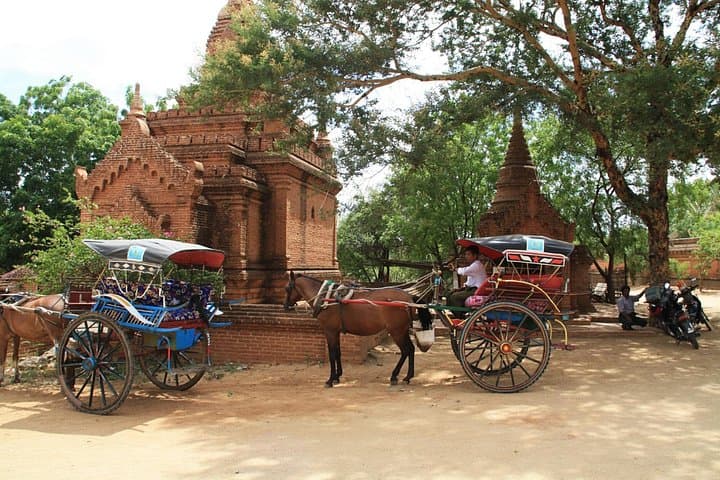
The horse cart moves at a deliberate, old-world pace across the Bagan plain as late light stretches long shadows from spire to spire. Dust lifts around the wheels and the guide points ahead — a red-brick silhouette cut against a wide sky — while the Ayeyarwady river, a slow ribbon to the east, seems to urge the cart onward toward the sunset.
The horse cart moves at a deliberate, old-world pace across the Bagan plain as late light stretches long shadows from spire to spire. Dust lifts around the wheels and the guide points ahead — a red-brick silhouette cut against a wide sky — while the Ayeyarwady river, a slow ribbon to the east, seems to urge the cart onward toward the sunset.
Bagan was the capital of the Pagan Kingdom (9th–13th centuries) and once hosted thousands of Buddhist monuments; today roughly two thousand remain, their kiln-fired bricks weathered but remarkably intact. The plain’s geology—riverine alluvium and compacted clay—made mass brick building practical, which in turn shaped the region’s cultural focus on temple-making. Riding a royal horse cart lets you feel the scale of that human effort without the rush: typical stops include Min Oh Chantha, Dhammayangyi, Sulamani and Pyat Thadar, the latter a favored west-facing spot for the closing light.
Practical guidance: choose an afternoon departure to avoid midday heat and to catch sunset; modest clothing that covers shoulders and knees is required at most pagodas; carry water, sun protection and small local cash for donations or tips. The cart is low-impact and suitable for people with basic mobility, but expect short walks and uneven steps at some temples. Guides explain iconography, restoration efforts and the living monastic community that still uses many sites.
Evening light flattens the landscape and clarifies why generations built here: the horizon becomes the stage, the temples keep their silent watch, and the rhythm of hooves on packed earth becomes the day’s steady punctuation.