THE ADVENTURE COLLECTIVE® · Independent discovery and booking for outdoor travel

Watch rusted steel meet desert sky at Zekreet while sharing an Arabian keshta picnic. This five‑hour private outing pairs Richard Serra’s monumental sculptures with a traditional picnic experience and sunset views.
Watch rusted steel meet desert sky at Zekreet while sharing an Arabian keshta picnic. This five‑hour private outing pairs Richard Serra’s monumental sculptures with a traditional picnic experience and sunset views.
The low sun slants across limestone ridges and the wind carries salt from the nearby shore as you step out onto the pale sand of Zekreet. Steel plates rise from the ground in long, rusted lines—Richard Serra’s East–West/West–East—cutting the horizon like a deliberate gesture. Nearby, a private keshta spread awaits: woven sadu mats, gahwa cups, and cushions set against sculpted rock.
Verified experiences and guided adventures in the surrounding area.
Operated by 365 Adventures · Zekreet, Al-Shahaniya
The low sun slants across limestone ridges and the wind carries salt from the nearby shore as you step out onto the pale sand of Zekreet. Steel plates rise from the ground in long, rusted lines—Richard Serra’s East–West/West–East—cutting the horizon like a deliberate gesture. Nearby, a private keshta spread awaits: woven sadu mats, gahwa cups, and cushions set against sculpted rock.
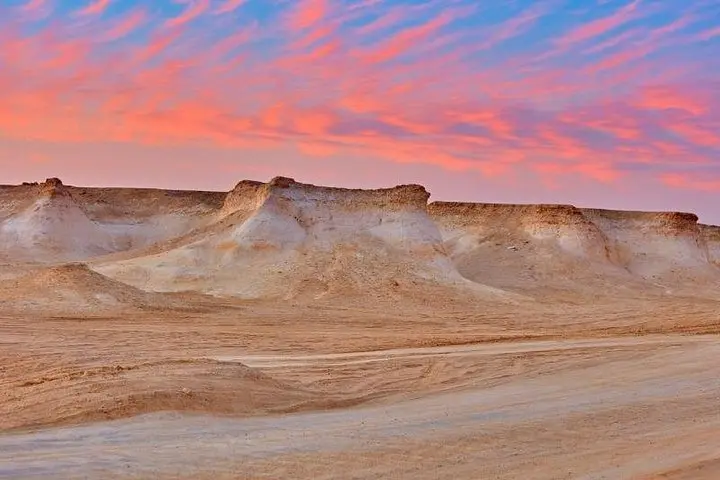
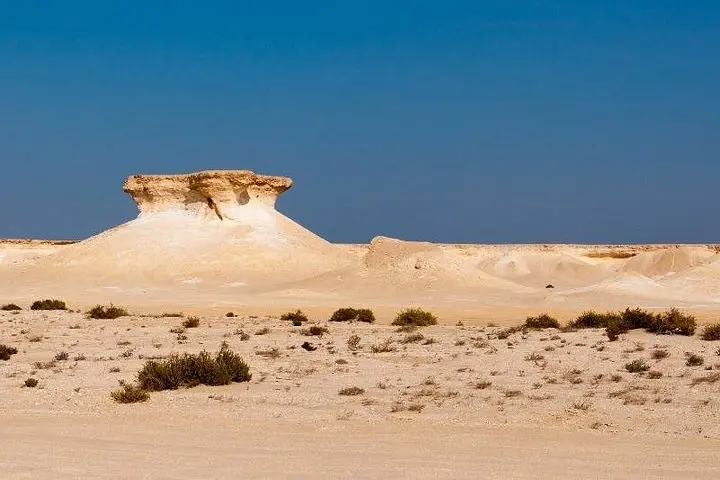
Zekreet sits on Qatar’s western peninsula where wind and waves have eroded soft limestone into sharp ridges and sheltered coves. The Serra installation (installed mid‑2010s by Qatar Museums) anchors a modern art moment amid traditional Bedouin landscapes and the oil‑town history of nearby Dukhan. Geologically, the area shows exposed Eocene limestone and fossil beds; culturally, the keshta ritual revives Arab traditions of communal sharing and hospitality.
Expect easy walking across sand and gravel with short climbs onto rock outcrops for views; the light at sunset is why people come. Wildlife is discreet: shorebirds and small desert mammals appear in low light, and the beach can host migrating waders in season.
Practical guidance: travel by private vehicle (the excursion usually includes pickup), bring sun protection, and time your visit for late afternoon to avoid midday heat. Respect the artwork and fragile rock surfaces—stay on established tracks where provided. Hydrate and carry a closed‑toe shoe for rocky sections; dress modestly for cultural sites. This is a low‑effort, high‑reward outing that fuses contemporary art, quiet geology, and a taste of Arabian hospitality.
The activity is scheduled for about five hours total, typically including pickup, an art stop at the Serra sculptures, and the keshta picnic at sunset.
Yes—this private tour includes transportation and pickup as listed in the booking details.
Suitable for all ages; parents should supervise children on rocky sections and near roads.
Photography is allowed for personal use; always avoid touching or climbing on the artwork and follow guide instructions.
365 Adventures operates guided outdoor trips and adventures with an emphasis on safety, stewardship, and memorable experiences.
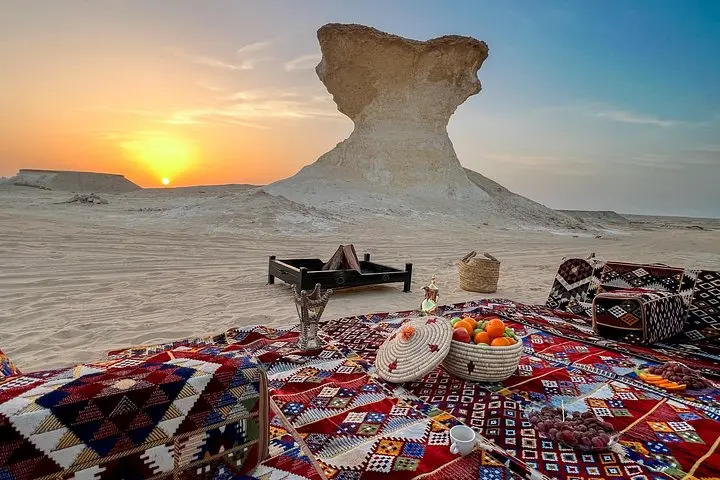
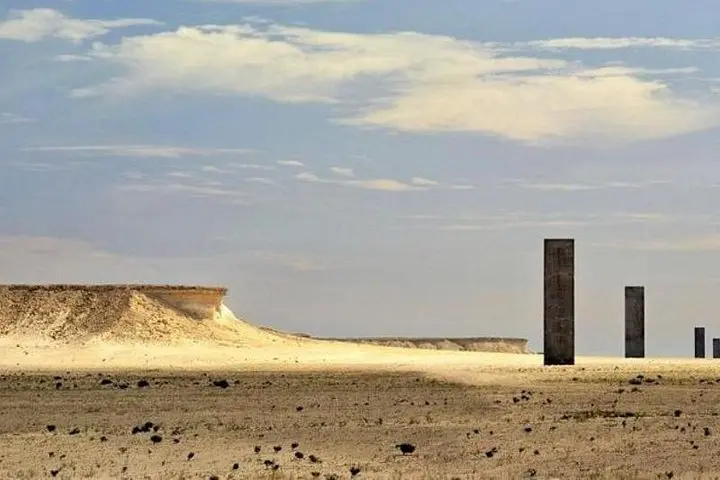
The low sun slants across limestone ridges and the wind carries salt from the nearby shore as you step out onto the pale sand of Zekreet. Steel plates rise from the ground in long, rusted lines—Richard Serra’s East–West/West–East—cutting the horizon like a deliberate gesture. Nearby, a private keshta spread awaits: woven sadu mats, gahwa cups, and cushions set against sculpted rock.
The low sun slants across limestone ridges and the wind carries salt from the nearby shore as you step out onto the pale sand of Zekreet. Steel plates rise from the ground in long, rusted lines—Richard Serra’s East–West/West–East—cutting the horizon like a deliberate gesture. Nearby, a private keshta spread awaits: woven sadu mats, gahwa cups, and cushions set against sculpted rock.
Zekreet sits on Qatar’s western peninsula where wind and waves have eroded soft limestone into sharp ridges and sheltered coves. The Serra installation (installed mid‑2010s by Qatar Museums) anchors a modern art moment amid traditional Bedouin landscapes and the oil‑town history of nearby Dukhan. Geologically, the area shows exposed Eocene limestone and fossil beds; culturally, the keshta ritual revives Arab traditions of communal sharing and hospitality.
Expect easy walking across sand and gravel with short climbs onto rock outcrops for views; the light at sunset is why people come. Wildlife is discreet: shorebirds and small desert mammals appear in low light, and the beach can host migrating waders in season.
Practical guidance: travel by private vehicle (the excursion usually includes pickup), bring sun protection, and time your visit for late afternoon to avoid midday heat. Respect the artwork and fragile rock surfaces—stay on established tracks where provided. Hydrate and carry a closed‑toe shoe for rocky sections; dress modestly for cultural sites. This is a low‑effort, high‑reward outing that fuses contemporary art, quiet geology, and a taste of Arabian hospitality.