THE ADVENTURE COLLECTIVE® · Independent discovery and booking for outdoor travel

Glide past stilted homes and narrow mangrove canals on this half-day Tonle Sap tour from Siem Reap. Learn how communities live with the lake’s seasonal pulse, choose a short canoe trip through flooded forest, and finish watching the sun sink over endless water.
Glide past stilted homes and narrow mangrove canals on this half-day Tonle Sap tour from Siem Reap. Learn how communities live with the lake’s seasonal pulse, choose a short canoe trip through flooded forest, and finish watching the sun sink over endless water.
The boat slips from the pier and Tonle Sap opens — flat water that takes your eye to the horizon, mangrove fingers reaching like hands along the shore. Long wooden houses stand on stilts, their shadows cutting clean lines on the reflective lake as fishermen push small sampans through narrow channels. The air smells faintly of wet earth and river fish; the lake feels alive, moving with the daily rhythm of the community.
Verified experiences and guided adventures in the surrounding area.
Operated by Angkor 𝐓𝐫𝐚𝐯𝐞𝐥 𝐆𝐮𝐢𝐝𝐞 · Siem Reap, Siem Reap
The boat slips from the pier and Tonle Sap opens — flat water that takes your eye to the horizon, mangrove fingers reaching like hands along the shore. Long wooden houses stand on stilts, their shadows cutting clean lines on the reflective lake as fishermen push small sampans through narrow channels. The air smells faintly of wet earth and river fish; the lake feels alive, moving with the daily rhythm of the community.
Tonle Sap is Southeast Asia’s largest freshwater lake, its annual flood pulse expanding and contracting the shoreline by kilometres. Kompong Phluk’s elevated stilt villages are a direct response to that cycle: architecture shaped by water, livelihoods built on fish, and markets that float when the rains arrive. Geologically the lake is fed by seasonal monsoon runoff and the Mekong’s backflow, creating rich fisheries and migrating birds that follow the water’s rise.
This half-day trip (about 5–6 hours including a roughly 1‑hour drive from Siem Reap) mixes an open-boat cruise with an optional 15-minute canoe through the flooded mangrove channels. Guides explain local life—floating hospitals, fish farms, and household systems adapted to the tides—while you watch kingfishers and storks quarter the surface for food.
Practical edge: morning runs cooler but afternoon tours catch sunset; bring sun protection, insect repellent and small Cambodian riel or US dollars for the optional canoe (around $5). The route is low-impact but weather-dependent—expect splash and a bit of wind. Move slowly, keep valuables dry, and let the lake set the pace.
The tour runs about 5–6 hours including hotel pickup (morning pickup around 7:30–8:00); afternoon options end at sunset.
The short canoe trip is typically optional and paid locally (around $5); the main boat tour is included in the booking.
This experience is family-friendly and the provider lists wheelchair‑accessible options, but boarding smaller boats may require assistance.
Expect waterbirds like storks and kingfishers, and often aquatic life visible near fish farms; sightings vary by season and water level.
Angkor 𝐓𝐫𝐚𝐯𝐞𝐥 𝐆𝐮𝐢𝐝𝐞 operates guided outdoor trips and adventures with an emphasis on safety, stewardship, and memorable experiences.
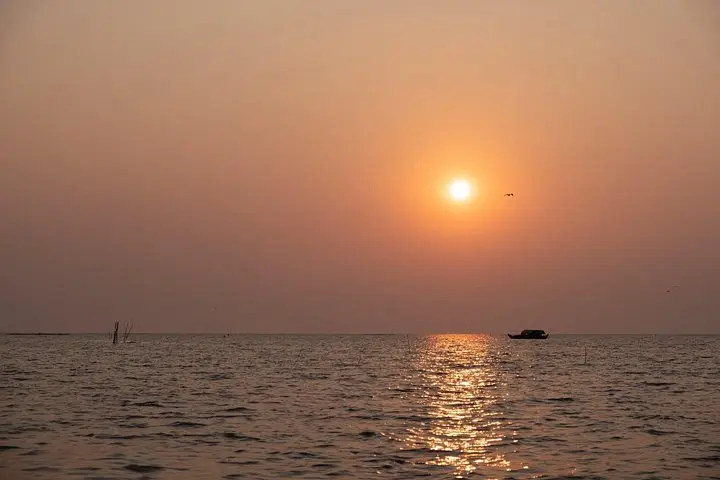
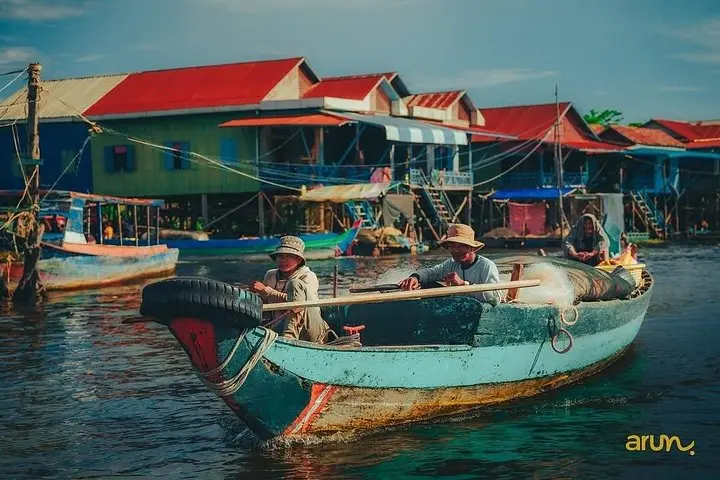
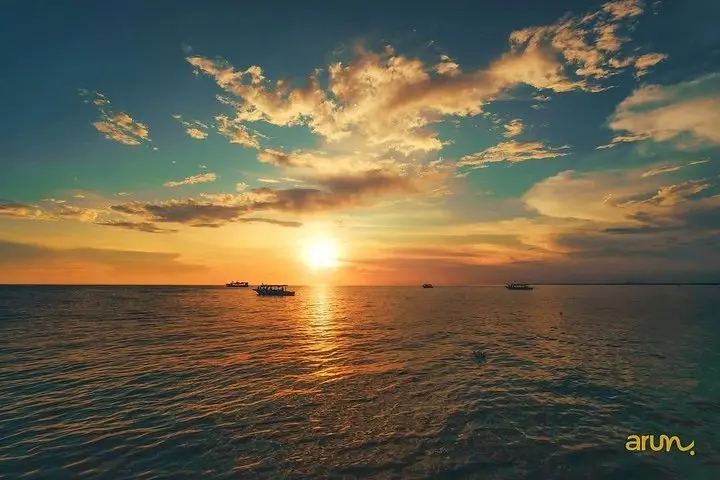
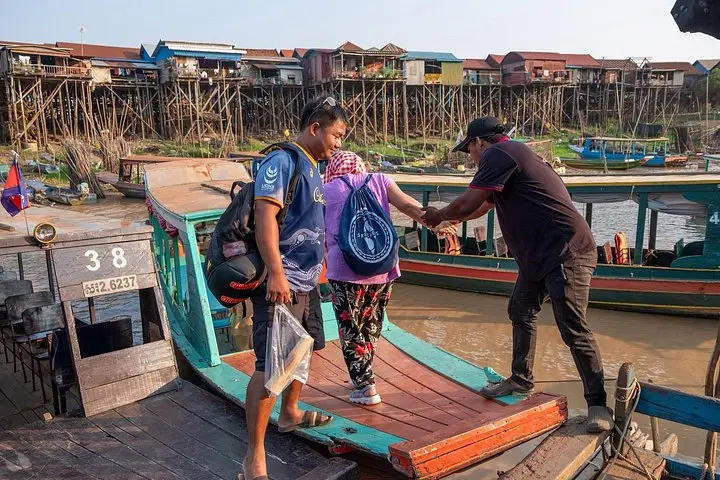
The boat slips from the pier and Tonle Sap opens — flat water that takes your eye to the horizon, mangrove fingers reaching like hands along the shore. Long wooden houses stand on stilts, their shadows cutting clean lines on the reflective lake as fishermen push small sampans through narrow channels. The air smells faintly of wet earth and river fish; the lake feels alive, moving with the daily rhythm of the community.
The boat slips from the pier and Tonle Sap opens — flat water that takes your eye to the horizon, mangrove fingers reaching like hands along the shore. Long wooden houses stand on stilts, their shadows cutting clean lines on the reflective lake as fishermen push small sampans through narrow channels. The air smells faintly of wet earth and river fish; the lake feels alive, moving with the daily rhythm of the community.
Tonle Sap is Southeast Asia’s largest freshwater lake, its annual flood pulse expanding and contracting the shoreline by kilometres. Kompong Phluk’s elevated stilt villages are a direct response to that cycle: architecture shaped by water, livelihoods built on fish, and markets that float when the rains arrive. Geologically the lake is fed by seasonal monsoon runoff and the Mekong’s backflow, creating rich fisheries and migrating birds that follow the water’s rise.
This half-day trip (about 5–6 hours including a roughly 1‑hour drive from Siem Reap) mixes an open-boat cruise with an optional 15-minute canoe through the flooded mangrove channels. Guides explain local life—floating hospitals, fish farms, and household systems adapted to the tides—while you watch kingfishers and storks quarter the surface for food.
Practical edge: morning runs cooler but afternoon tours catch sunset; bring sun protection, insect repellent and small Cambodian riel or US dollars for the optional canoe (around $5). The route is low-impact but weather-dependent—expect splash and a bit of wind. Move slowly, keep valuables dry, and let the lake set the pace.