THE ADVENTURE COLLECTIVE® · Independent discovery and booking for outdoor travel

Strap into a quad and cross wind-sculpted dunes on a 3-hour desert safari from Hurghada. Finish with Bedouin tea, a short camel ride, and sunset views that make the sand seem to move.
Strap into a quad and cross wind-sculpted dunes on a 3-hour desert safari from Hurghada. Finish with Bedouin tea, a short camel ride, and sunset views that make the sand seem to move.
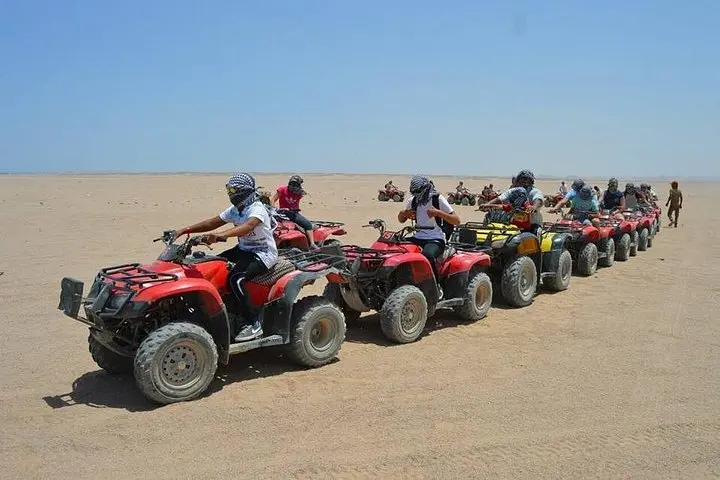
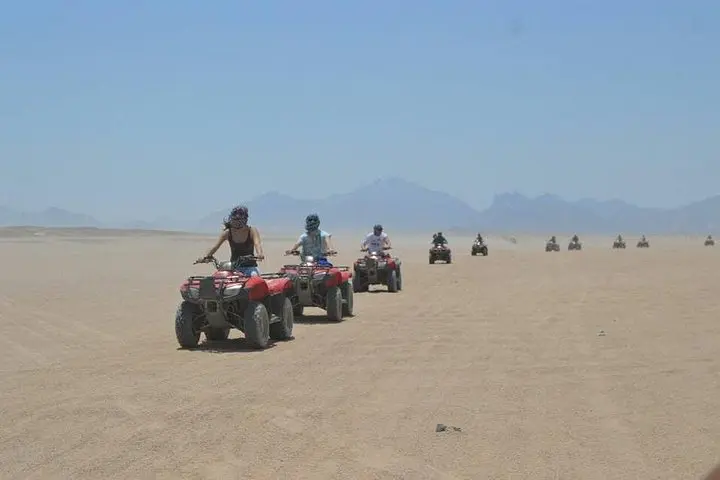
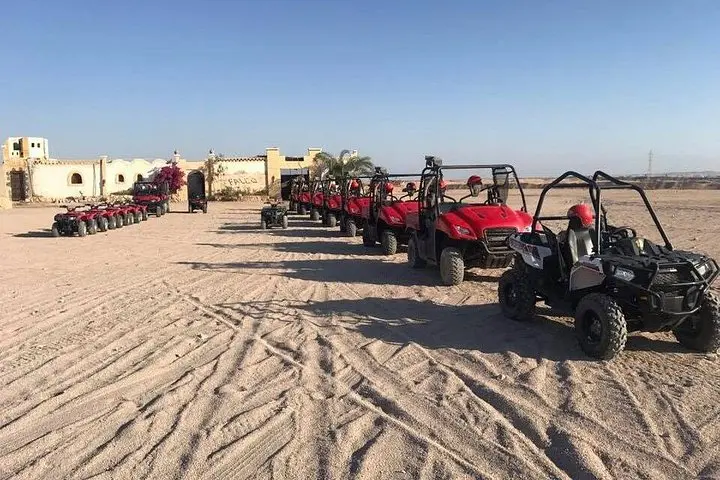
Late afternoon light slants across a sea of sand as you straddle a warm quad, the engine a steady pulse beneath you. The dunes roll like slow waves; the machine answers every ridge and hollow as you cut a track through the open desert. In three hours you’ll push roughly 15–25 km of sandy single-track and open flats, pause on a wind-sculpted crest to watch the sun drop, then move into a small Bedouin camp for tea and a short cultural exchange.
Verified experiences and guided adventures in the surrounding area.
Operated by Royal Safari · Hurghada, Red Sea Governorate
Late afternoon light slants across a sea of sand as you straddle a warm quad, the engine a steady pulse beneath you. The dunes roll like slow waves; the machine answers every ridge and hollow as you cut a track through the open desert. In three hours you’ll push roughly 15–25 km of sandy single-track and open flats, pause on a wind-sculpted crest to watch the sun drop, then move into a small Bedouin camp for tea and a short cultural exchange.
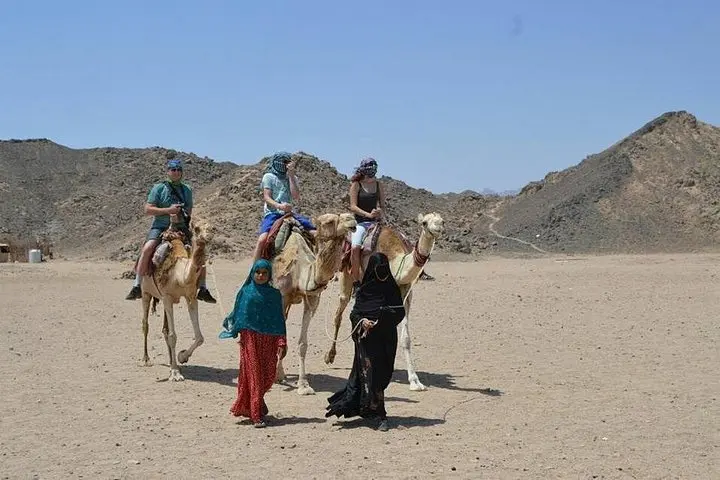
The Red Sea coastal desert around Hurghada is geologically young: loose quartz-rich sands formed by river and coastal erosion, swept inland by persistent northeasterly winds. Bedouin families have traversed these plains for centuries, and modern safaris borrow that route logic—dune corridors and dry wadis used as natural tracks. Expect a brief camel ride and the ritual of oriental tea, a simple window into local desert hospitality.
Practical guidance: the terrain is all sand with occasional compacted tracks; elevation change is minimal but traction is variable. The operator provides head scarves; riders must be physically able to mount and control a 4x4 quad—moderate fitness is recommended. Bring sunglasses or goggles, a buff or scarf for dust, at least 1–2 liters of water, sunscreen, and closed-toe shoes. Avoid this trip if you have spinal, heart, or pregnancy restrictions.
Timing matters—late afternoon trips deliver the best light and cooler temperatures. Respect the environment by staying on designated tracks and leaving no trace; the desert’s fragile surface recovers slowly from disturbance.
No formal experience is required, but basic comfort with throttle and brakes and the ability to follow a guide are expected; instruction is provided before departure.
Operators typically set age and weight limits—children often must ride with an adult and severe mobility or weight restrictions may apply; check with the provider when booking.
Most operators provide helmets and head scarves; confirm on booking and bring your own goggles if you prefer tighter eye protection.
Wear closed-toe shoes, long shorts or lightweight trousers to protect legs from heat and scrapes, and sun protection like a hat and sunscreen for pre/post-ride periods.
Royal Safari operates guided outdoor trips and adventures with an emphasis on safety, stewardship, and memorable experiences.
Late afternoon light slants across a sea of sand as you straddle a warm quad, the engine a steady pulse beneath you. The dunes roll like slow waves; the machine answers every ridge and hollow as you cut a track through the open desert. In three hours you’ll push roughly 15–25 km of sandy single-track and open flats, pause on a wind-sculpted crest to watch the sun drop, then move into a small Bedouin camp for tea and a short cultural exchange.
Late afternoon light slants across a sea of sand as you straddle a warm quad, the engine a steady pulse beneath you. The dunes roll like slow waves; the machine answers every ridge and hollow as you cut a track through the open desert. In three hours you’ll push roughly 15–25 km of sandy single-track and open flats, pause on a wind-sculpted crest to watch the sun drop, then move into a small Bedouin camp for tea and a short cultural exchange.
The Red Sea coastal desert around Hurghada is geologically young: loose quartz-rich sands formed by river and coastal erosion, swept inland by persistent northeasterly winds. Bedouin families have traversed these plains for centuries, and modern safaris borrow that route logic—dune corridors and dry wadis used as natural tracks. Expect a brief camel ride and the ritual of oriental tea, a simple window into local desert hospitality.
Practical guidance: the terrain is all sand with occasional compacted tracks; elevation change is minimal but traction is variable. The operator provides head scarves; riders must be physically able to mount and control a 4x4 quad—moderate fitness is recommended. Bring sunglasses or goggles, a buff or scarf for dust, at least 1–2 liters of water, sunscreen, and closed-toe shoes. Avoid this trip if you have spinal, heart, or pregnancy restrictions.
Timing matters—late afternoon trips deliver the best light and cooler temperatures. Respect the environment by staying on designated tracks and leaving no trace; the desert’s fragile surface recovers slowly from disturbance.