THE ADVENTURE COLLECTIVE® · Independent discovery and booking for outdoor travel

Explore Marrakech’s medina with a local guide: shadowed alleys, artisan workshops, and a rooftop mint tea as Jemaa el-Fnaa erupts at sunset. This small-group walking tour pairs cultural insight with practical guidance to help you move confidently through the old city.
Explore Marrakech’s medina with a local guide: shadowed alleys, artisan workshops, and a rooftop mint tea as Jemaa el-Fnaa erupts at sunset. This small-group walking tour pairs cultural insight with practical guidance to help you move confidently through the old city.
The medina opens like a living map: stone alleys cool underfoot, call to prayer echoing off russet walls, and the smell of spices and braised meat drawing you deeper. A guided walk through Marrakech’s old city leads from shadowed riads to sunlit courtyards, finishing on a rooftop with mint tea as Jemaa el-Fnaa flips from daytime market to evening spectacle.
Verified experiences and guided adventures in the surrounding area.
Operated by Amazouz Morocco Tours · Marrakech, Marrakesh-Safi
The medina opens like a living map: stone alleys cool underfoot, call to prayer echoing off russet walls, and the smell of spices and braised meat drawing you deeper. A guided walk through Marrakech’s old city leads from shadowed riads to sunlit courtyards, finishing on a rooftop with mint tea as Jemaa el-Fnaa flips from daytime market to evening spectacle.
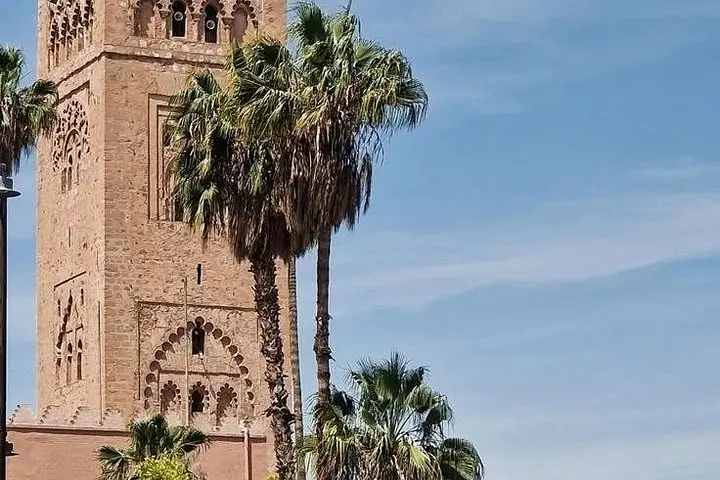
Founded in the 11th century and protected as a UNESCO World Heritage site, the medina’s lanes reflect centuries of trade and craft. Buildings show the city’s red-clay geology—local earth baked into the ochre façades that define Marrakech’s skyline—while artisan quarters preserve techniques in leather, metalwork, and woven textiles. Culture here is hands-on: vendors, storytellers, and musicians shape a public life that’s performed in squares, souks, and hidden courtyards.
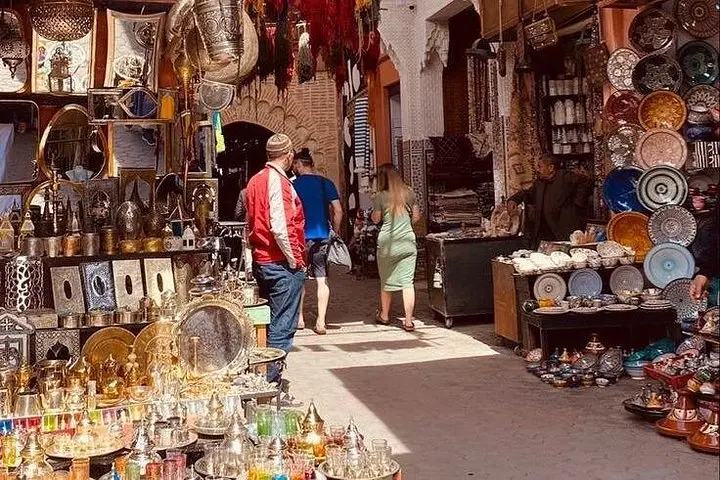
Expect uneven cobbles, narrow passages, and frequent sensory surprises—a barber’s chair, a spice stall, a tiled fountain. A small-group guide will point out architectural features, explain haggling etiquette, and introduce lesser-known workshops where craftsmen still work by hammer and dye.
Practical notes: wear sturdy walking shoes and carry a refillable water bottle; late afternoon is best for cooler temperatures and golden light. Keep valuables secure and ask before photographing people. Respect local dress norms—covering shoulders and knees avoids unwanted attention. If you have mobility concerns, alert your operator: some alleys are stepped or narrow. End your walk on a rooftop terrace with mint tea to watch the square ignite at sunset—the city’s daily transformation distilled into one focused hour.
The full experience runs about 6–7 hours, typically including pickup, guided walking, and a rooftop tea at sunset.
Yes—it's rated easy, but uneven cobbles and narrow alleys can be challenging for strollers or limited mobility; notify the operator ahead of booking.
Yes; the guide usually points out reputable artisan shops and allows time for browsing, though purchases are optional.
Bottled water is commonly included and the rooftop mint tea is usually part of the itinerary; check the operator’s inclusions for specifics.
Amazouz Morocco Tours operates guided outdoor trips and adventures with an emphasis on safety, stewardship, and memorable experiences.
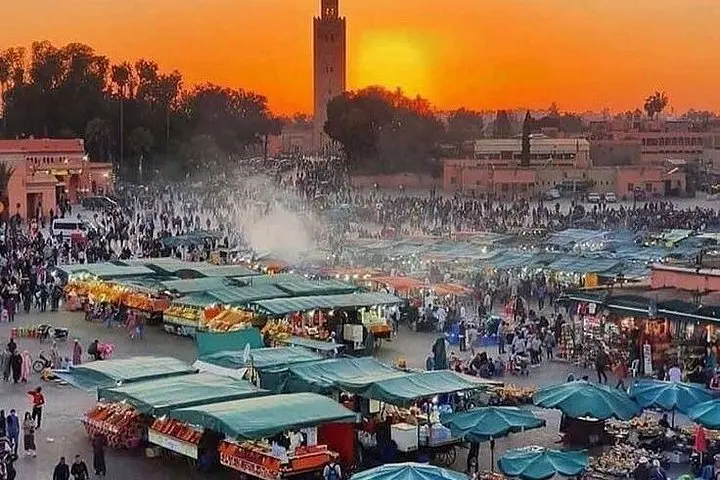
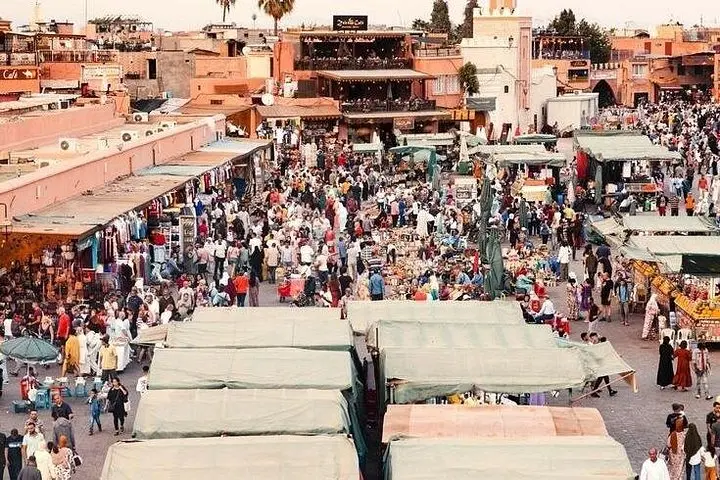
The medina opens like a living map: stone alleys cool underfoot, call to prayer echoing off russet walls, and the smell of spices and braised meat drawing you deeper. A guided walk through Marrakech’s old city leads from shadowed riads to sunlit courtyards, finishing on a rooftop with mint tea as Jemaa el-Fnaa flips from daytime market to evening spectacle.
The medina opens like a living map: stone alleys cool underfoot, call to prayer echoing off russet walls, and the smell of spices and braised meat drawing you deeper. A guided walk through Marrakech’s old city leads from shadowed riads to sunlit courtyards, finishing on a rooftop with mint tea as Jemaa el-Fnaa flips from daytime market to evening spectacle.
Founded in the 11th century and protected as a UNESCO World Heritage site, the medina’s lanes reflect centuries of trade and craft. Buildings show the city’s red-clay geology—local earth baked into the ochre façades that define Marrakech’s skyline—while artisan quarters preserve techniques in leather, metalwork, and woven textiles. Culture here is hands-on: vendors, storytellers, and musicians shape a public life that’s performed in squares, souks, and hidden courtyards.
Expect uneven cobbles, narrow passages, and frequent sensory surprises—a barber’s chair, a spice stall, a tiled fountain. A small-group guide will point out architectural features, explain haggling etiquette, and introduce lesser-known workshops where craftsmen still work by hammer and dye.
Practical notes: wear sturdy walking shoes and carry a refillable water bottle; late afternoon is best for cooler temperatures and golden light. Keep valuables secure and ask before photographing people. Respect local dress norms—covering shoulders and knees avoids unwanted attention. If you have mobility concerns, alert your operator: some alleys are stepped or narrow. End your walk on a rooftop terrace with mint tea to watch the square ignite at sunset—the city’s daily transformation distilled into one focused hour.