THE ADVENTURE COLLECTIVE® · Independent discovery and booking for outdoor travel

Climb toward Etna’s 2,000‑meter rim, explore a lava tube with helmets and torches, taste local farm products, and watch the summit glow at sunset. This 5–6 hour tour from Catania pairs easy trekking with geological highlights and spectacular evening light.
Climb toward Etna’s 2,000‑meter rim, explore a lava tube with helmets and torches, taste local farm products, and watch the summit glow at sunset. This 5–6 hour tour from Catania pairs easy trekking with geological highlights and spectacular evening light.
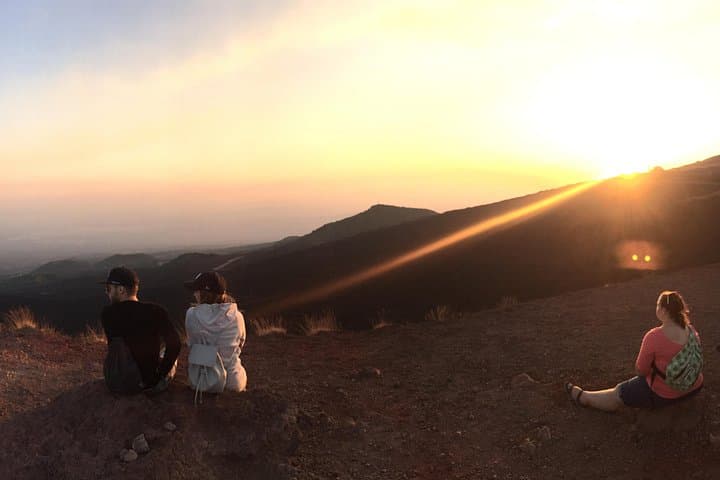
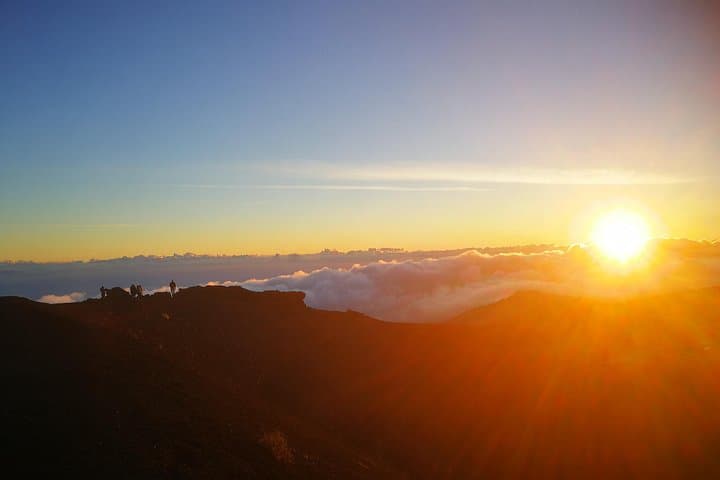
The afternoon light thins as you drive up from Catania, the Ionian Sea slipping away and black fields of ancient flows rising like a raw coastline of stone. At 2,000 meters the air is thinner and cooler; the crater rim takes on sharp ochre and charcoal tones as the sun slides toward the horizon and the mountain seems to hold its breath.
Verified experiences and guided adventures in the surrounding area.
Operated by Etnavic · Catania, Sicily
The afternoon light thins as you drive up from Catania, the Ionian Sea slipping away and black fields of ancient flows rising like a raw coastline of stone. At 2,000 meters the air is thinner and cooler; the crater rim takes on sharp ochre and charcoal tones as the sun slides toward the horizon and the mountain seems to hold its breath.
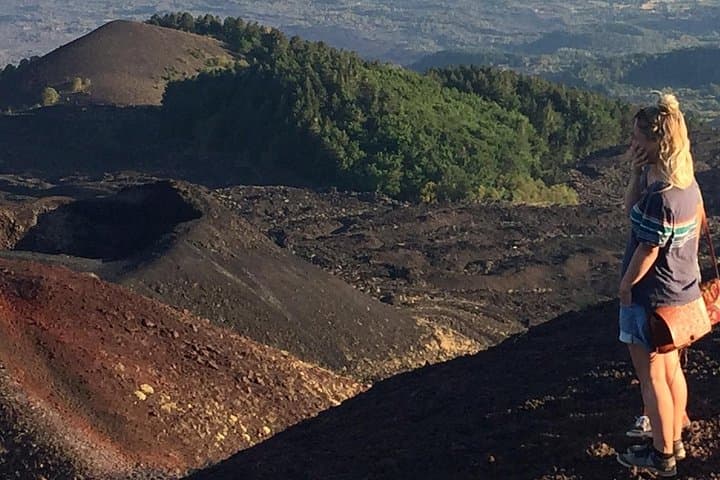
Mount Etna has been erupting for hundreds of thousands of years; recent major flows reshaped slopes in 1991–1993 and left visible lava fronts near Zafferana Etnea. Geologically, Etna is a composite volcano—strata of ash, basalt and pumice stacked by repeated eruptions—and the Valle del Bove opens like a scarped amphitheater carved by collapse and erosion. Locally, villages grow wines, olive oil and honey from the volcanic soils, and this tour stops at a family farm for tastings that explain why the terroir tastes distinct.
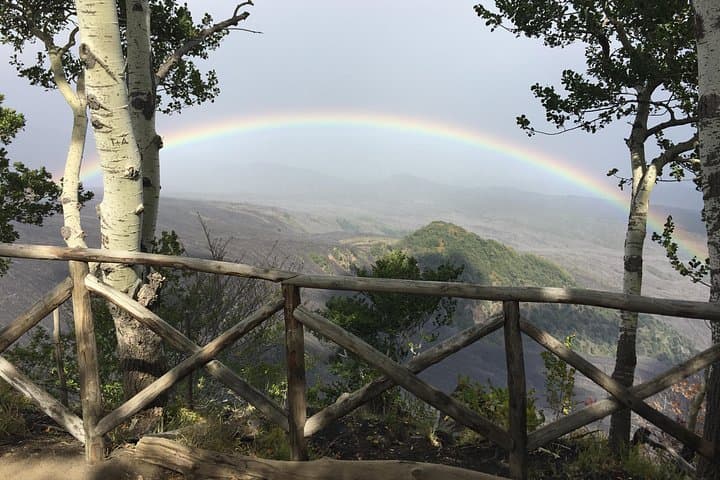
Practically: the itinerary mixes short, easy trekking around an old crater, a guided exploration of a lava tube (helmets and torches provided), and viewpoints over the Valle del Bove timed for sunset. Expect 5–6 hours door-to-door if you leave Catania; winter departures move earlier (noon) because of daylight and weather.
Wear sturdy footwear and layered clothing for a rapidly shifting temperature, carry water and sunscreen, and be prepared for loose volcanic scree on footpaths. Guides provide helmets and lights for the lava cave, but a small headlamp is a useful backup. Book with flexibility—weather and volcanic activity can change plans the same day.
The trekking is described as easy level but occurs on loose volcanic scree; most people with basic mobility can complete it, though steady footing is required.
Yes—the tour includes a guided visit into a lava tube; helmets and torches are provided by the operator.
From November to April the tour departs earlier at around 12:00 to ensure sufficient daylight and to accommodate winter conditions.
Yes—pickups are available from agreed points in Catania and nearby Etna villages; public meeting points like Piazza Stesicoro are also used.
Etnavic operates guided outdoor trips and adventures with an emphasis on safety, stewardship, and memorable experiences.
The afternoon light thins as you drive up from Catania, the Ionian Sea slipping away and black fields of ancient flows rising like a raw coastline of stone. At 2,000 meters the air is thinner and cooler; the crater rim takes on sharp ochre and charcoal tones as the sun slides toward the horizon and the mountain seems to hold its breath.
The afternoon light thins as you drive up from Catania, the Ionian Sea slipping away and black fields of ancient flows rising like a raw coastline of stone. At 2,000 meters the air is thinner and cooler; the crater rim takes on sharp ochre and charcoal tones as the sun slides toward the horizon and the mountain seems to hold its breath.
Mount Etna has been erupting for hundreds of thousands of years; recent major flows reshaped slopes in 1991–1993 and left visible lava fronts near Zafferana Etnea. Geologically, Etna is a composite volcano—strata of ash, basalt and pumice stacked by repeated eruptions—and the Valle del Bove opens like a scarped amphitheater carved by collapse and erosion. Locally, villages grow wines, olive oil and honey from the volcanic soils, and this tour stops at a family farm for tastings that explain why the terroir tastes distinct.
Practically: the itinerary mixes short, easy trekking around an old crater, a guided exploration of a lava tube (helmets and torches provided), and viewpoints over the Valle del Bove timed for sunset. Expect 5–6 hours door-to-door if you leave Catania; winter departures move earlier (noon) because of daylight and weather.
Wear sturdy footwear and layered clothing for a rapidly shifting temperature, carry water and sunscreen, and be prepared for loose volcanic scree on footpaths. Guides provide helmets and lights for the lava cave, but a small headlamp is a useful backup. Book with flexibility—weather and volcanic activity can change plans the same day.