THE ADVENTURE COLLECTIVE® · Independent discovery and booking for outdoor travel

Explore Sugamo’s century-old shopping arcade on a guided 3‑hour walking food tour. Taste five local stops, enjoy lunch, and meet family-run shops that preserve Tokyo’s everyday flavors.
Explore Sugamo’s century-old shopping arcade on a guided 3‑hour walking food tour. Taste five local stops, enjoy lunch, and meet family-run shops that preserve Tokyo’s everyday flavors.
On a mid-morning in Sugamo, the pavement hums with small conversations and the scent of grilled rice crackers. The guide gathers the group near the Aoyama Flower Market at Sugamo Station and leads a short weave through a compact shopping arcade where shopfronts open like pages from a century-old cookbook.
Verified experiences and guided adventures in the surrounding area.
Operated by Arigato Japan KK · Tokyo, Tokyo
On a mid-morning in Sugamo, the pavement hums with small conversations and the scent of grilled rice crackers. The guide gathers the group near the Aoyama Flower Market at Sugamo Station and leads a short weave through a compact shopping arcade where shopfronts open like pages from a century-old cookbook.
Sugamo’s food culture grew alongside Tokyo’s rapid 20th‑century urbanization. Once a neighborhood market for working families and, later, older residents, its narrow lanes preserve long-running confectioners, pickling shops, and eateries that adapted recipes through wartime shortages into local classics. The area sits on the Kanto Plain, flat and easily navigable—its character comes from human-scale streets rather than dramatic topography.
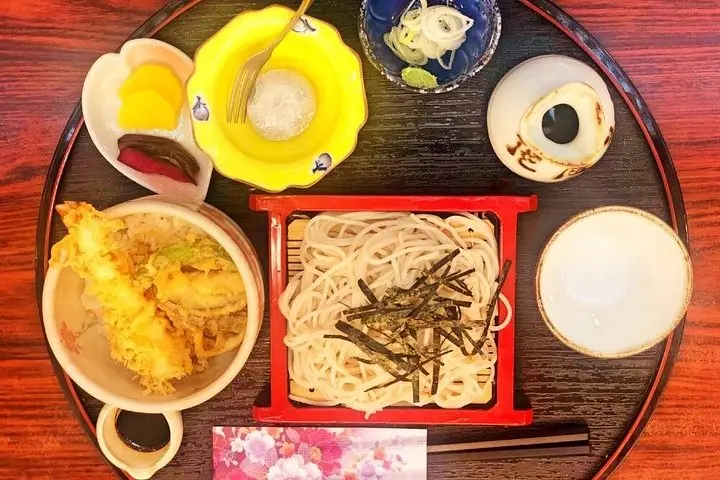
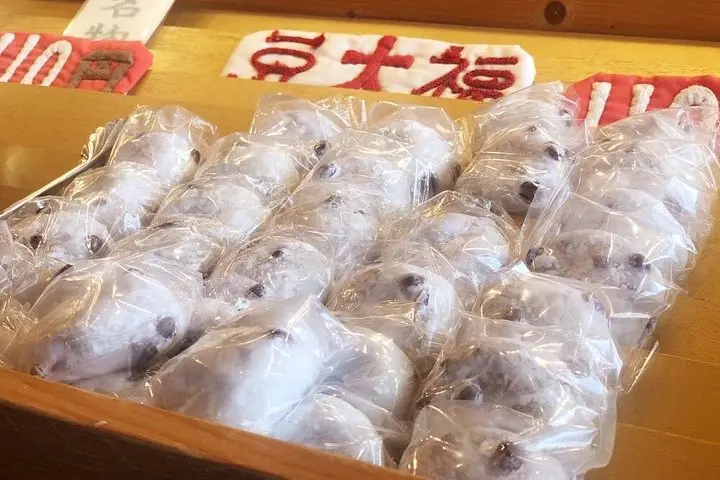
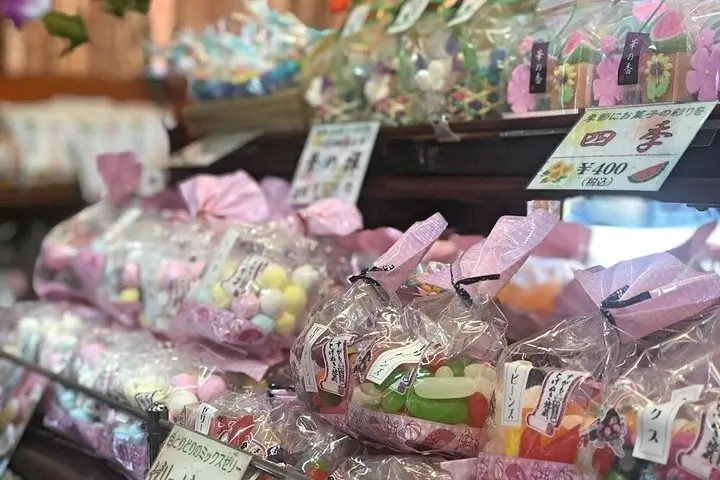
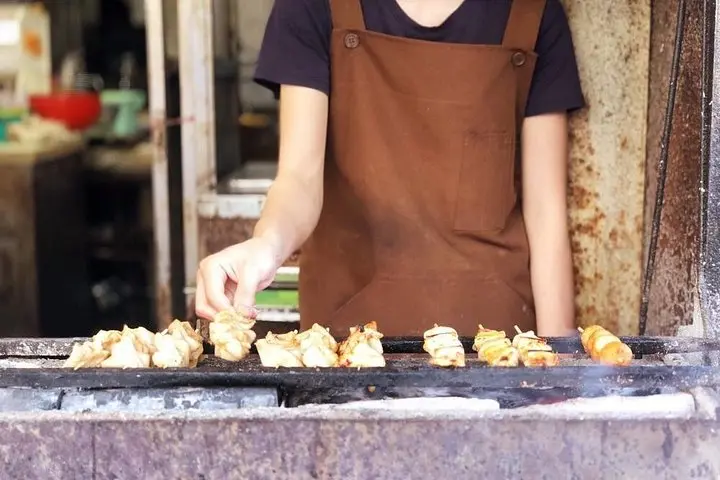
On this three-hour walk, participants taste five stops: salty senbei, savory oden, a lunchtime set at a local restaurant, and region-specific sweets you’ll rarely find in tourist districts. The pace is family-friendly, with opportunities to chat with shop owners who often run multi-generational stalls.
Practical guidance: bring small bills or a loaded IC card—some stalls are cash-preferred. Expect light walking on crowded sidewalks and quick standing tastings; seating is available at the included lunch. Weather in Tokyo can change fast—summer is humid, winters are crisp—so layer. For dietary restrictions the tour notes vegetarian and pescatarian options; notify in advance.
This tour is ideal for travelers who want a grounded, neighborhood-level food experience—short distances between stops, local stories at each counter, and the kind of tastes that reveal everyday Tokyo life.
The meetup is at the front of the Aoyama Flower Market inside Sugamo Station’s entrance area—your confirmation includes exact meeting details.
Yes; the tour is family-friendly with bite-sized tastings and a relaxed pace suitable for kids.
The operator can handle common restrictions (vegetarian, pescetarian, no pork, no shellfish) if notified at booking.
About 1–2 miles total over three hours with frequent stops; terrain is flat but sidewalks can be crowded.
Arigato Japan KK operates guided outdoor trips and adventures with an emphasis on safety, stewardship, and memorable experiences.
On a mid-morning in Sugamo, the pavement hums with small conversations and the scent of grilled rice crackers. The guide gathers the group near the Aoyama Flower Market at Sugamo Station and leads a short weave through a compact shopping arcade where shopfronts open like pages from a century-old cookbook.
On a mid-morning in Sugamo, the pavement hums with small conversations and the scent of grilled rice crackers. The guide gathers the group near the Aoyama Flower Market at Sugamo Station and leads a short weave through a compact shopping arcade where shopfronts open like pages from a century-old cookbook.
Sugamo’s food culture grew alongside Tokyo’s rapid 20th‑century urbanization. Once a neighborhood market for working families and, later, older residents, its narrow lanes preserve long-running confectioners, pickling shops, and eateries that adapted recipes through wartime shortages into local classics. The area sits on the Kanto Plain, flat and easily navigable—its character comes from human-scale streets rather than dramatic topography.
On this three-hour walk, participants taste five stops: salty senbei, savory oden, a lunchtime set at a local restaurant, and region-specific sweets you’ll rarely find in tourist districts. The pace is family-friendly, with opportunities to chat with shop owners who often run multi-generational stalls.
Practical guidance: bring small bills or a loaded IC card—some stalls are cash-preferred. Expect light walking on crowded sidewalks and quick standing tastings; seating is available at the included lunch. Weather in Tokyo can change fast—summer is humid, winters are crisp—so layer. For dietary restrictions the tour notes vegetarian and pescatarian options; notify in advance.
This tour is ideal for travelers who want a grounded, neighborhood-level food experience—short distances between stops, local stories at each counter, and the kind of tastes that reveal everyday Tokyo life.