THE ADVENTURE COLLECTIVE® · Independent discovery and booking for outdoor travel

A compact, mountain-focused tour from Tbilisi to Svaneti that blends short hikes, cultural sites and a visit to Europe’s highest settlements. Expect glaciers, medieval towers and rough alpine roads over three immersive days.
A compact, mountain-focused tour from Tbilisi to Svaneti that blends short hikes, cultural sites and a visit to Europe’s highest settlements. Expect glaciers, medieval towers and rough alpine roads over three immersive days.
Morning light slices across the High Caucasus as a private van threads narrow roads up from Tbilisi toward Mestia. Pines lean into the wind, rivers quicken and the mountains begin to assert themselves — sharp ridgelines, snowfields, and the square silhouettes of Svan towers standing like watchful neighbors.
Verified experiences and guided adventures in the surrounding area.
Operated by Leontravel Georgia · Mestia, Samegrelo-Zemo Svaneti
Morning light slices across the High Caucasus as a private van threads narrow roads up from Tbilisi toward Mestia. Pines lean into the wind, rivers quicken and the mountains begin to assert themselves — sharp ridgelines, snowfields, and the square silhouettes of Svan towers standing like watchful neighbors.
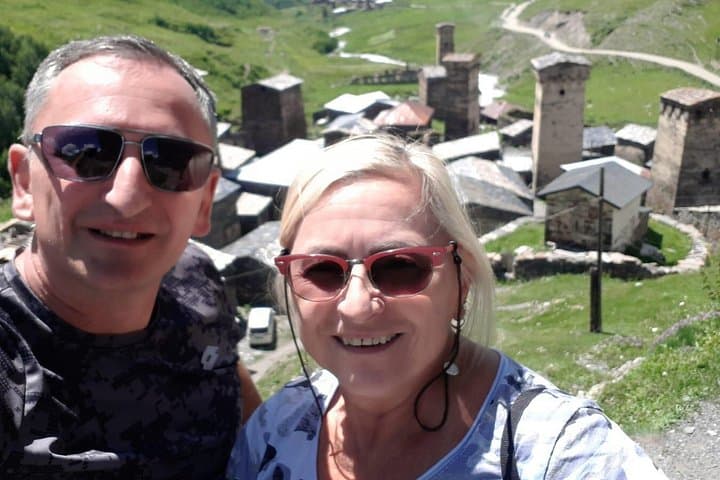
Svaneti’s story is carved in stone and time: medieval defensive towers, isolated villages, and a culture forged by altitude. The geology is dramatic — Paleozoic gneiss and limestone folded into steep valleys, glaciers that still grind and feed braided rivers. Ushguli, a UNESCO site, offers one of Europe’s highest inhabited settlements where centuries-old towers punctuate green pastures.
Travelers can expect a mix of road travel, short hikes, and cultural stops: a lift-assisted ascent to Zuruldi’s upper cafe for broad views, a drive and walk around Ushguli with optional horseback excursions, and a guided approach to the Chalaadi Glacier moraine. Nature here is active — streams seem to dare you onward, and the glacier’s tongue pushes slow, audible change into the valley.
Practical notes: routes include uneven alpine trails, loose scree and potentially muddy mountain roads. Pack stiff-soled boots, layered clothing for big temperature swings and enough water for multi-hour outings. Three days allows acclimatization to altitude changes around 1,500–2,200 m, but expect some bumpy driving and simple family-run hotels rather than luxury refuges. Plan for variable weather, bring local currency (small towns have limited card access), and respect fragile alpine pastures — stay on trails, carry out waste, and ask before photographing people or private property.
Most tours provide private transfer by road; the drive takes about 8–10 hours with stops. Flights to Mestia exist seasonally but ground travel is the common option.
Ushguli is accessible year-round, but winter brings heavy snow and limited services; spring thaw can make roads slower—summer and early fall are most reliable.
Short guided walks and an excursion to Chalaadi Glacier are typically included; more technical or longer hikes can be arranged separately.
Travel insurance with emergency evacuation is advised for mountain regions; no special permits are required for standard tourist routes.
Leontravel Georgia operates guided outdoor trips and adventures with an emphasis on safety, stewardship, and memorable experiences.


Morning light slices across the High Caucasus as a private van threads narrow roads up from Tbilisi toward Mestia. Pines lean into the wind, rivers quicken and the mountains begin to assert themselves — sharp ridgelines, snowfields, and the square silhouettes of Svan towers standing like watchful neighbors.
Morning light slices across the High Caucasus as a private van threads narrow roads up from Tbilisi toward Mestia. Pines lean into the wind, rivers quicken and the mountains begin to assert themselves — sharp ridgelines, snowfields, and the square silhouettes of Svan towers standing like watchful neighbors.
Svaneti’s story is carved in stone and time: medieval defensive towers, isolated villages, and a culture forged by altitude. The geology is dramatic — Paleozoic gneiss and limestone folded into steep valleys, glaciers that still grind and feed braided rivers. Ushguli, a UNESCO site, offers one of Europe’s highest inhabited settlements where centuries-old towers punctuate green pastures.
Travelers can expect a mix of road travel, short hikes, and cultural stops: a lift-assisted ascent to Zuruldi’s upper cafe for broad views, a drive and walk around Ushguli with optional horseback excursions, and a guided approach to the Chalaadi Glacier moraine. Nature here is active — streams seem to dare you onward, and the glacier’s tongue pushes slow, audible change into the valley.
Practical notes: routes include uneven alpine trails, loose scree and potentially muddy mountain roads. Pack stiff-soled boots, layered clothing for big temperature swings and enough water for multi-hour outings. Three days allows acclimatization to altitude changes around 1,500–2,200 m, but expect some bumpy driving and simple family-run hotels rather than luxury refuges. Plan for variable weather, bring local currency (small towns have limited card access), and respect fragile alpine pastures — stay on trails, carry out waste, and ask before photographing people or private property.