THE ADVENTURE COLLECTIVE® · Independent discovery and booking for outdoor travel

Spend two days on Namibia’s Atlantic edge: a short city overview, a night in Swakopmund and hands-on dune action—quad biking and sandboarding. Practical coastal desert guidance and local insights help you prepare for wind, sand and bright sun.
Spend two days on Namibia’s Atlantic edge: a short city overview, a night in Swakopmund and hands-on dune action—quad biking and sandboarding. Practical coastal desert guidance and local insights help you prepare for wind, sand and bright sun.
The Atlantic pulls at your attention first: a flat, pewter ribbon under a wind that pushes salt and grit across the sand as you arrive in Swakopmund. Morning light slices the low coastal dunes; by midday the wind sharpens, and the dunes that surround the town dare you to climb them.
Verified experiences and guided adventures in the surrounding area.
Operated by Safari World Tours · Swakopmund, Erongo
The Atlantic pulls at your attention first: a flat, pewter ribbon under a wind that pushes salt and grit across the sand as you arrive in Swakopmund. Morning light slices the low coastal dunes; by midday the wind sharpens, and the dunes that surround the town dare you to climb them.
Swakopmund was founded by German colonists in 1892 and still wears its colonial architecture—lighthouse, mole and the old railway station—alongside the fishing harbor and a compact museum that chronicles Namibia’s coastal and inland history. Geologically, the town sits at the interface of the Namib Desert and the Atlantic, so expect broad beaches, wind-sculpted dunes (local dune faces commonly rise 30–100 m) and coarse, wind-packed sands mixed with fine drifting grains.
This two-day, accommodated tour pairs a short city orientation with active dune time: guided quad-biking across gravel bays and sand slopes, and sandboarding runs down steep, loose faces. The terrain is coastal sand and occasional gravel tracks; elevation change is modest overall but dune climbs provide bursts of exertion. Cultural touchpoints include the Swakopmund Museum and local cafés where German-Namibian culinary notes remain.
Practical guidance: travel from Windhoek is about three hours by road; vehicles are air-conditioned. Plan for strong sun and wind—bring layered clothes, closed-toe shoes for quads, and extra water (1–2 L per person per half-day activity). Schedule active dune sessions for early morning or late afternoon to avoid the strongest winds and hottest light. If you want sea life, add a Walvis Bay lagoon stop for birds and seals—optional on many itineraries.
Expect roughly a three-hour drive each way on sealed roads; travel times vary slightly with traffic and stops.
Yes, quad-biking and sandboarding are beginner-friendly with instructor briefings; the tour is labeled suitable for most fitness levels.
Typical inclusions are accommodation, breakfast and dinner, city orientation, dune quad-biking and sandboarding, transport in an air-conditioned vehicle and applicable taxes/fees—confirm specifics with the operator before booking.
Yes—optional experiences like sea kayaking, Sandwich Harbour visits or skydiving can often be arranged independently at extra cost.
Safari World Tours operates guided outdoor trips and adventures with an emphasis on safety, stewardship, and memorable experiences.
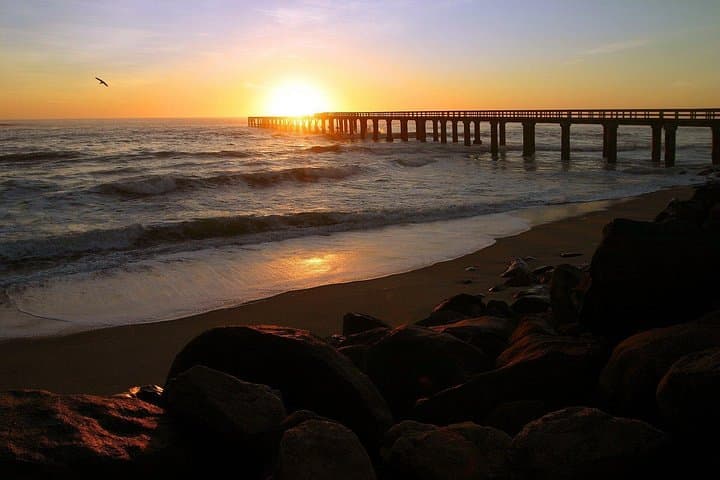
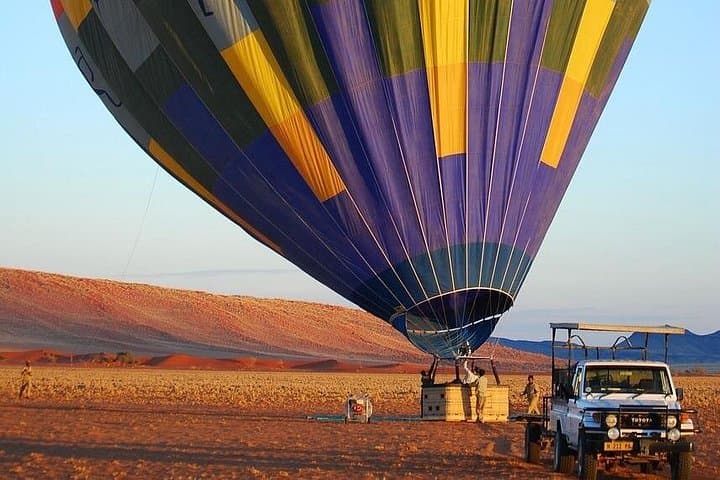
The Atlantic pulls at your attention first: a flat, pewter ribbon under a wind that pushes salt and grit across the sand as you arrive in Swakopmund. Morning light slices the low coastal dunes; by midday the wind sharpens, and the dunes that surround the town dare you to climb them.
The Atlantic pulls at your attention first: a flat, pewter ribbon under a wind that pushes salt and grit across the sand as you arrive in Swakopmund. Morning light slices the low coastal dunes; by midday the wind sharpens, and the dunes that surround the town dare you to climb them.
Swakopmund was founded by German colonists in 1892 and still wears its colonial architecture—lighthouse, mole and the old railway station—alongside the fishing harbor and a compact museum that chronicles Namibia’s coastal and inland history. Geologically, the town sits at the interface of the Namib Desert and the Atlantic, so expect broad beaches, wind-sculpted dunes (local dune faces commonly rise 30–100 m) and coarse, wind-packed sands mixed with fine drifting grains.
This two-day, accommodated tour pairs a short city orientation with active dune time: guided quad-biking across gravel bays and sand slopes, and sandboarding runs down steep, loose faces. The terrain is coastal sand and occasional gravel tracks; elevation change is modest overall but dune climbs provide bursts of exertion. Cultural touchpoints include the Swakopmund Museum and local cafés where German-Namibian culinary notes remain.
Practical guidance: travel from Windhoek is about three hours by road; vehicles are air-conditioned. Plan for strong sun and wind—bring layered clothes, closed-toe shoes for quads, and extra water (1–2 L per person per half-day activity). Schedule active dune sessions for early morning or late afternoon to avoid the strongest winds and hottest light. If you want sea life, add a Walvis Bay lagoon stop for birds and seals—optional on many itineraries.