THE ADVENTURE COLLECTIVE® · Independent discovery and booking for outdoor travel

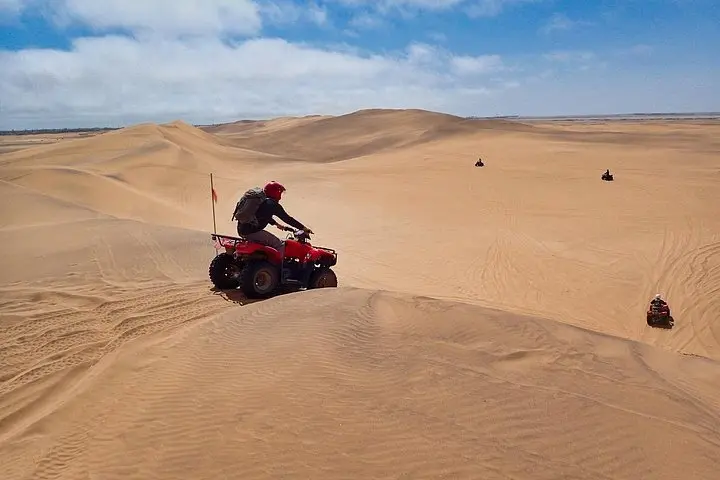
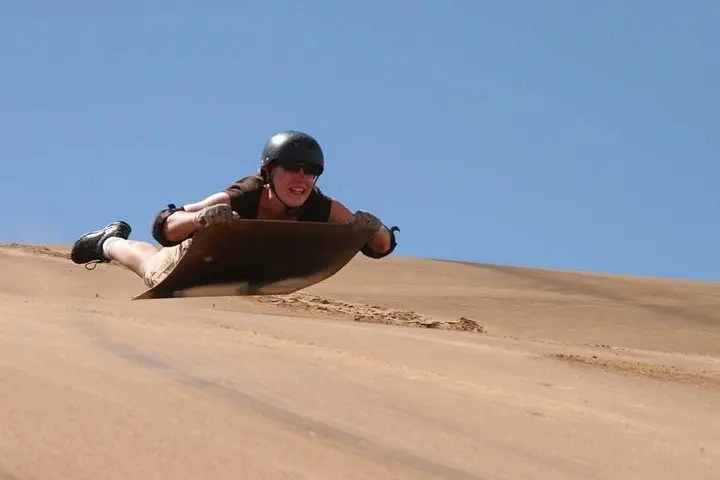
Power across Namibia’s coastal dunes on a three‑hour combo from Swakopmund: quad-biking into areas 4x4s can’t reach, then riding down sandy faces on a dune board. Expect wind-sculpted ridges, desert-adapted wildlife, and a practical, safety-focused outing suited to travelers with moderate fitness.
Power across Namibia’s coastal dunes on a three‑hour combo from Swakopmund: quad-biking into areas 4x4s can’t reach, then riding down sandy faces on a dune board. Expect wind-sculpted ridges, desert-adapted wildlife, and a practical, safety-focused outing suited to travelers with moderate fitness.
The wind shapes the dunes as you arrive — soft ridges slipping under a pale sky, the Atlantic glinting far to the west. On a three‑hour combo from Swakopmund you move with purpose: an hour on a quad slicing across the Namib’s steep faces, an hour learning to surf the sand on a board, then an hour to push back across the wilder hollows and return. The desert’s silence punctuates the engine’s growl and the whisper of sand underfoot.
Verified experiences and guided adventures in the surrounding area.
Operated by Blue Berry Travel · Swakopmund, Erongo Region
The wind shapes the dunes as you arrive — soft ridges slipping under a pale sky, the Atlantic glinting far to the west. On a three‑hour combo from Swakopmund you move with purpose: an hour on a quad slicing across the Namib’s steep faces, an hour learning to surf the sand on a board, then an hour to push back across the wilder hollows and return. The desert’s silence punctuates the engine’s growl and the whisper of sand underfoot.
This stretch of the Namib is part of the world’s oldest desert; dunes built from coastal sands and millions of years of wind form dramatic crescent ridges and wind-swept hollows. Swakopmund itself reflects German colonial history in its architecture and coastal culture — a compact town that serves as gateway and basecamp. Local guides point out desert-adapted plants (desert succulents and lichen) and the occasional oryx or springbok adapted to thin soils and sparse rains.
Practical guidance: arrive with closed-toe shoes and layered clothing — mornings are cool, afternoons can be hot. Sun protection is essential: broad-spectrum sunscreen, sunglasses, and a hat. Hydrate before and during the outing; guides provide water but carrying a small personal bottle is wise. Follow the guide’s briefing on throttle control and braking on sand; leaning into turns and keeping momentum on climbs makes the ride safer and more fun. For sand-boarding, start on gentler slopes to learn balance and braking.
Timing matters: early morning or late afternoon light improves visibility and comfort. Respect fragile dune vegetation, stay on designated routes, and keep an eye out for wildlife — the desert has a slow, resilient pulse that rewards attentive travelers.
No — guides provide instruction for both activities; a short training session precedes each element so beginners can participate.
Yes — helmets and basic safety gear are included; wear closed‑toe shoes and your own sunglasses for comfort.
Children can join if accompanied by an adult, but operators often set minimum age limits — check booking details before arrival.
Operators may cancel for strong winds or unsafe conditions; full refunds are typically offered if canceled at least 24 hours in advance.
Blue Berry Travel operates guided outdoor trips and adventures with an emphasis on safety, stewardship, and memorable experiences.


The wind shapes the dunes as you arrive — soft ridges slipping under a pale sky, the Atlantic glinting far to the west. On a three‑hour combo from Swakopmund you move with purpose: an hour on a quad slicing across the Namib’s steep faces, an hour learning to surf the sand on a board, then an hour to push back across the wilder hollows and return. The desert’s silence punctuates the engine’s growl and the whisper of sand underfoot.
The wind shapes the dunes as you arrive — soft ridges slipping under a pale sky, the Atlantic glinting far to the west. On a three‑hour combo from Swakopmund you move with purpose: an hour on a quad slicing across the Namib’s steep faces, an hour learning to surf the sand on a board, then an hour to push back across the wilder hollows and return. The desert’s silence punctuates the engine’s growl and the whisper of sand underfoot.
This stretch of the Namib is part of the world’s oldest desert; dunes built from coastal sands and millions of years of wind form dramatic crescent ridges and wind-swept hollows. Swakopmund itself reflects German colonial history in its architecture and coastal culture — a compact town that serves as gateway and basecamp. Local guides point out desert-adapted plants (desert succulents and lichen) and the occasional oryx or springbok adapted to thin soils and sparse rains.
Practical guidance: arrive with closed-toe shoes and layered clothing — mornings are cool, afternoons can be hot. Sun protection is essential: broad-spectrum sunscreen, sunglasses, and a hat. Hydrate before and during the outing; guides provide water but carrying a small personal bottle is wise. Follow the guide’s briefing on throttle control and braking on sand; leaning into turns and keeping momentum on climbs makes the ride safer and more fun. For sand-boarding, start on gentler slopes to learn balance and braking.
Timing matters: early morning or late afternoon light improves visibility and comfort. Respect fragile dune vegetation, stay on designated routes, and keep an eye out for wildlife — the desert has a slow, resilient pulse that rewards attentive travelers.