THE ADVENTURE COLLECTIVE® · Independent discovery and booking for outdoor travel

Climb the roughly 365 stone steps to Swayambhunath’s hilltop stupa and watch Kathmandu unfold beneath prayer flags and roving monkeys. This half-day cultural tour pairs panoramic views with centuries of shared Buddhist and Hindu ritual.
Climb the roughly 365 stone steps to Swayambhunath’s hilltop stupa and watch Kathmandu unfold beneath prayer flags and roving monkeys. This half-day cultural tour pairs panoramic views with centuries of shared Buddhist and Hindu ritual.
You mount the stone steps and the city stretches open beneath you: corrugated roofs, temple spires, and the ragged green ring of hills. Monkeys move like punctuation—bold, curious, sometimes brazen—around the dome of white that holds the stupa's calm gaze. The eyes of the Buddha watch each turn of the prayer wheels as incense threads smoke through sunlit courtyards.
Verified experiences and guided adventures in the surrounding area.
Operated by Adventure Thirdpole · Kathmandu, Bagmati Province
You mount the stone steps and the city stretches open beneath you: corrugated roofs, temple spires, and the ragged green ring of hills. Monkeys move like punctuation—bold, curious, sometimes brazen—around the dome of white that holds the stupa's calm gaze. The eyes of the Buddha watch each turn of the prayer wheels as incense threads smoke through sunlit courtyards.
Swayambhunath sits on a low hill above Kathmandu and dates back more than a millennium; local lore says the valley was once a lake and a divine lotus rose where the hill now stands. The site blends Buddhist and Hindu practice: prayer flags and shrines sit beside Hindu temples, and small monasteries hold daily chanting.
Geologically the hill is a remnant rise in the Kathmandu Basin; the approach is mostly compacted paths and roughly 365 stone steps from the main entrance—an accessible short climb with several terraces and viewpoints that frame the city. Expect pigeons, rhesus macaques, and shrill street sounds below; rooftop cafes and small courtyards reveal quiet moments for photos and reflection.
Practical guidance: arrive early for softer light and fewer crowds, wear sturdy shoes for the steps, secure loose items from curious monkeys, and dress respectfully—shoulders and knees covered in temple areas. Many half-day tours include hotel pickup and allow flexible time at the top; conserve water in warmer months and pause on the terraces for acclimatization. Respect rituals: avoid crossing in front of monks mid-ritual and ask before photographing close-up. Swayambhunath is compact but rich—plan 1–2 hours on-site within a 3–5 hour half-day tour to absorb views and culture without rush.
There is no standardized national entry fee at the main stupa, though donations at shrines are common; some guided tours include transportation and guidance fees.
Monkeys are generally not aggressive but will snatch food or loose items—avoid feeding them, keep a safe distance, and secure belongings.
Expect 1–2 hours to explore terraces, shrines, and viewpoints; a guided half-day tour often allows 3–5 hours including transport and stops.
The historic main stair approach is not wheelchair accessible, though road access to the top exists in parts—confirm mobility accommodations with your tour operator beforehand.
Adventure Thirdpole operates guided outdoor trips and adventures with an emphasis on safety, stewardship, and memorable experiences.
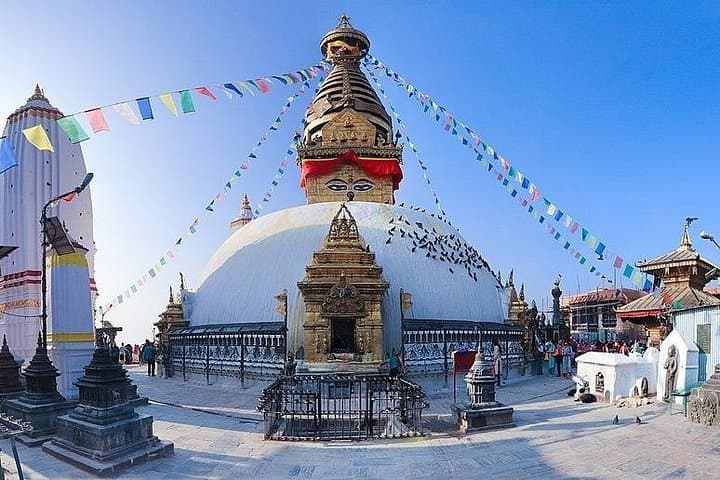

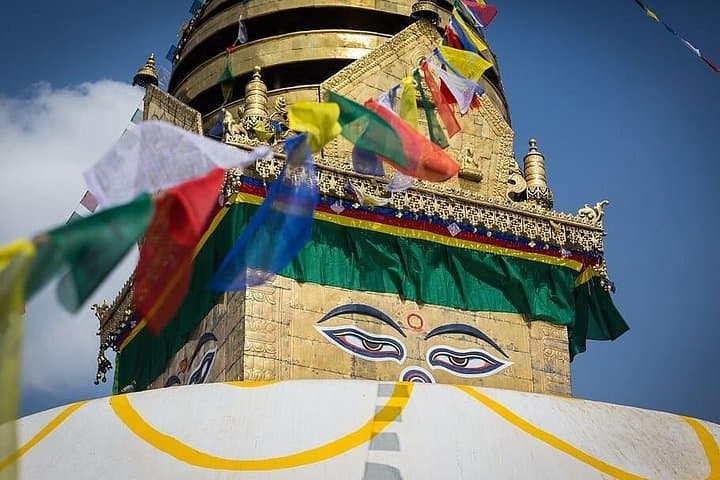
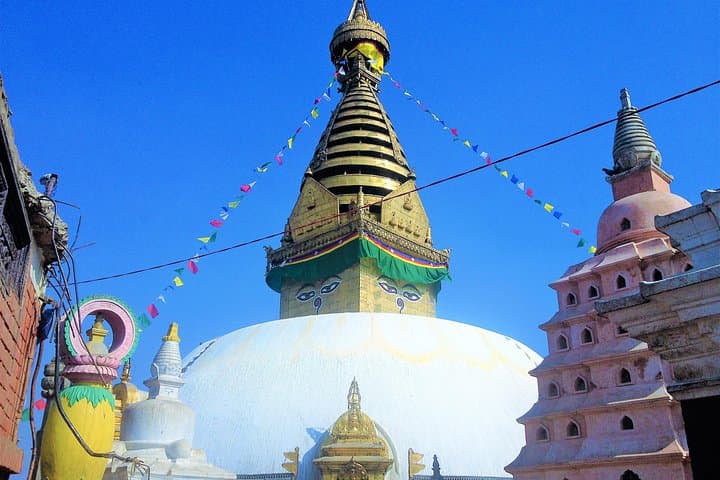
You mount the stone steps and the city stretches open beneath you: corrugated roofs, temple spires, and the ragged green ring of hills. Monkeys move like punctuation—bold, curious, sometimes brazen—around the dome of white that holds the stupa's calm gaze. The eyes of the Buddha watch each turn of the prayer wheels as incense threads smoke through sunlit courtyards.
You mount the stone steps and the city stretches open beneath you: corrugated roofs, temple spires, and the ragged green ring of hills. Monkeys move like punctuation—bold, curious, sometimes brazen—around the dome of white that holds the stupa's calm gaze. The eyes of the Buddha watch each turn of the prayer wheels as incense threads smoke through sunlit courtyards.
Swayambhunath sits on a low hill above Kathmandu and dates back more than a millennium; local lore says the valley was once a lake and a divine lotus rose where the hill now stands. The site blends Buddhist and Hindu practice: prayer flags and shrines sit beside Hindu temples, and small monasteries hold daily chanting.
Geologically the hill is a remnant rise in the Kathmandu Basin; the approach is mostly compacted paths and roughly 365 stone steps from the main entrance—an accessible short climb with several terraces and viewpoints that frame the city. Expect pigeons, rhesus macaques, and shrill street sounds below; rooftop cafes and small courtyards reveal quiet moments for photos and reflection.
Practical guidance: arrive early for softer light and fewer crowds, wear sturdy shoes for the steps, secure loose items from curious monkeys, and dress respectfully—shoulders and knees covered in temple areas. Many half-day tours include hotel pickup and allow flexible time at the top; conserve water in warmer months and pause on the terraces for acclimatization. Respect rituals: avoid crossing in front of monks mid-ritual and ask before photographing close-up. Swayambhunath is compact but rich—plan 1–2 hours on-site within a 3–5 hour half-day tour to absorb views and culture without rush.