THE ADVENTURE COLLECTIVE® · Independent discovery and booking for outdoor travel

Perched above Kathmandu, Swayambhunath Stupa offers sweeping city views, layered religious history, and a compact hilltop walk. A private guided tour delivers local interpretation, straightforward logistics, and a half-day cultural outing with practical tips for a smooth visit.
Perched above Kathmandu, Swayambhunath Stupa offers sweeping city views, layered religious history, and a compact hilltop walk. A private guided tour delivers local interpretation, straightforward logistics, and a half-day cultural outing with practical tips for a smooth visit.
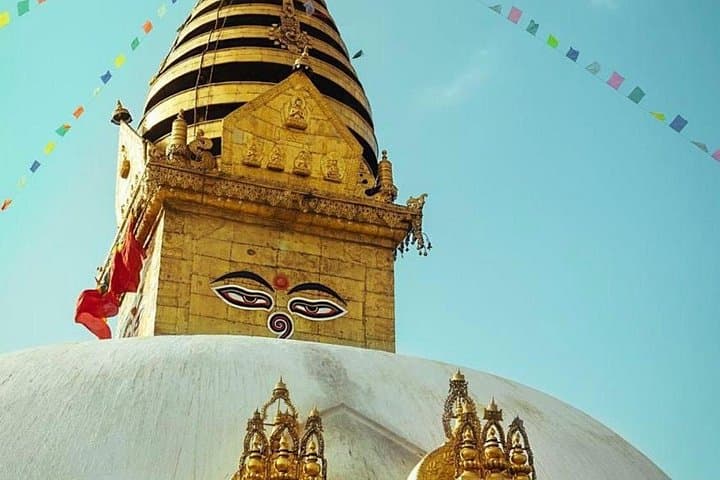
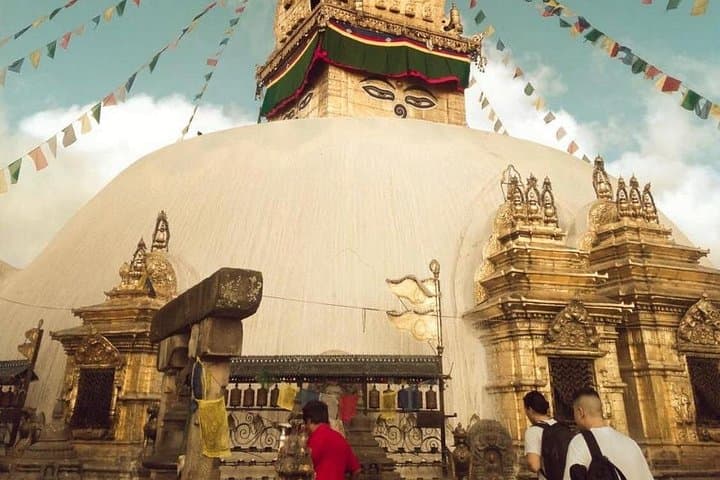
You arrive by car as Kathmandu thins beneath you and the cityscape opens—rooftops, prayer flags, and the far ridge of the Himalaya when skies are clear. The stupa sits above the bustle, eyes painted on a white dome watching the valley, with prayer wheels turning like a slow current pulling visitors forward.
Verified experiences and guided adventures in the surrounding area.
Operated by Explore Nepal Mountain - Kathmandu · Kathmandu, Bagmati Province
You arrive by car as Kathmandu thins beneath you and the cityscape opens—rooftops, prayer flags, and the far ridge of the Himalaya when skies are clear. The stupa sits above the bustle, eyes painted on a white dome watching the valley, with prayer wheels turning like a slow current pulling visitors forward.
Swayambhunath is one of the valley's oldest pilgrimage sites, a focal point for both Buddhists and Hindus. The complex is built into a low wooded hill of ancient alluvium and urban terraces; stone steps, small shrines, and painted stupas record layers of devotional practice and Nepali craftsmanship. Monkeys patrol the terraces, and the breeze down the hill seems to rearrange the city's sounds into a quieter rhythm.
On a private guided tour you get local context: symbolism of the eyes, the role of mani walls, and the mix of Newar and Tibetan-style iconography. Your driver-guide handles logistics — a roughly 30–45 minute drive from central Kathmandu depending on traffic, followed by a short climb up stone steps to the main platform.
Practical matters: dress modestly, remove shoes where required, keep water and sun protection on hand, and secure cameras — curious macaques are common. Mobility varies: transport options may allow closer drop-off, but the stupa platform involves steps; ask the operator if mobility accommodations are needed. The visit fits into a half-day window and pairs well with nearby Patan or a Durbar Square stop for a fuller cultural afternoon.
The private tour typically runs about 2–2.5 hours including pickup, a 30–45 minute scenic drive, time at the stupa, and return transfer.
Transport and some access points may be wheelchair-accessible, but reaching the stupa platform requires climbing steps; contact the operator beforehand to discuss drop-off options and assistance.
No standard entrance fee for the main complex is required for short visits; the booking accepts mobile tickets and includes private round-trip transfer as described by the operator.
Photography is generally allowed at the stupa and terraces, but be respectful inside small shrines and when people are praying; watch that monkeys don’t grab equipment.
Explore Nepal Mountain - Kathmandu operates guided outdoor trips and adventures with an emphasis on safety, stewardship, and memorable experiences.
You arrive by car as Kathmandu thins beneath you and the cityscape opens—rooftops, prayer flags, and the far ridge of the Himalaya when skies are clear. The stupa sits above the bustle, eyes painted on a white dome watching the valley, with prayer wheels turning like a slow current pulling visitors forward.
You arrive by car as Kathmandu thins beneath you and the cityscape opens—rooftops, prayer flags, and the far ridge of the Himalaya when skies are clear. The stupa sits above the bustle, eyes painted on a white dome watching the valley, with prayer wheels turning like a slow current pulling visitors forward.
Swayambhunath is one of the valley's oldest pilgrimage sites, a focal point for both Buddhists and Hindus. The complex is built into a low wooded hill of ancient alluvium and urban terraces; stone steps, small shrines, and painted stupas record layers of devotional practice and Nepali craftsmanship. Monkeys patrol the terraces, and the breeze down the hill seems to rearrange the city's sounds into a quieter rhythm.
On a private guided tour you get local context: symbolism of the eyes, the role of mani walls, and the mix of Newar and Tibetan-style iconography. Your driver-guide handles logistics — a roughly 30–45 minute drive from central Kathmandu depending on traffic, followed by a short climb up stone steps to the main platform.
Practical matters: dress modestly, remove shoes where required, keep water and sun protection on hand, and secure cameras — curious macaques are common. Mobility varies: transport options may allow closer drop-off, but the stupa platform involves steps; ask the operator if mobility accommodations are needed. The visit fits into a half-day window and pairs well with nearby Patan or a Durbar Square stop for a fuller cultural afternoon.