THE ADVENTURE COLLECTIVE® · Independent discovery and booking for outdoor travel

Explore four distinct cenotes at Casa Tortuga Park on a guided swim-and-snorkel tour near Tulum. Each sinkhole offers different terrain — caves, open channels, fossils and a 3 m jump — with bilingual guides and life vests included.
Explore four distinct cenotes at Casa Tortuga Park on a guided swim-and-snorkel tour near Tulum. Each sinkhole offers different terrain — caves, open channels, fossils and a 3 m jump — with bilingual guides and life vests included.
A thin trail parts the jungle and sunlight slices into a circular hole in the limestone — the first cenote hangs like a cool, green pool beneath a curtain of roots. At Casa Tortuga Park, four distinct sinkholes wait within walking distance of one another: a semi-open cavern with stalactites, a bat-frequented grotto, a wide open jade-green channel, and a bell-shaped cave with ancient rock formations. The guide moves groups steadily, pointing out fossils, root systems that reach into the water, and the stone geometry that tells a story of collapsed karst above an extensive underground aquifer.
Verified experiences and guided adventures in the surrounding area.
Operated by Encuentro T · Tulum, Quintana Roo
A thin trail parts the jungle and sunlight slices into a circular hole in the limestone — the first cenote hangs like a cool, green pool beneath a curtain of roots. At Casa Tortuga Park, four distinct sinkholes wait within walking distance of one another: a semi-open cavern with stalactites, a bat-frequented grotto, a wide open jade-green channel, and a bell-shaped cave with ancient rock formations. The guide moves groups steadily, pointing out fossils, root systems that reach into the water, and the stone geometry that tells a story of collapsed karst above an extensive underground aquifer.
Geologically, the Yucatán Peninsula is a porous limestone shelf; cenotes are where the roof has fallen in or where water has exposed caverns, creating connections to the freshwater table below. Culturally, these pools supplied life and ritual for the Maya, and the park interprets that relationship while protecting fragile sites. Expect 1–1.5 hours of time per cenote on a guided itinerary that includes life vests, bilingual interpretation, and optional kayak time.
Practical details: bring biodegradable sunscreen, a snorkel or mask (owners prefer their own), water shoes for slick rock, and a dry bag for electronics. The tour covers uneven stone steps and short jungle paths; people should be comfortable swimming and able to climb ladders or steps. Morning visits yield clearer water and softer light for photos; afternoons can be warmer with more insect activity. Follow guide instructions for jumping points — some cenotes have 3-meter launches into 8-meter pools. Respect signage, pack out trash, and wear reef-safe products to keep the water clear for fish, birds, and bats.
Yes — the tour includes life vests and staff will fit them before entering any cenote.
Some cenotes have designated jump points (e.g., a 3 m platform at Tres Zapotes); only jump when the guide indicates it is safe.
Children can join but must be accompanied by an adult; assess swimming ability and follow the guide’s safety instructions.
Casa Tortuga is a short drive from downtown Tulum — typically 15–30 minutes by taxi or arranged transport depending on pick-up location.
Encuentro T operates guided outdoor trips and adventures with an emphasis on safety, stewardship, and memorable experiences.
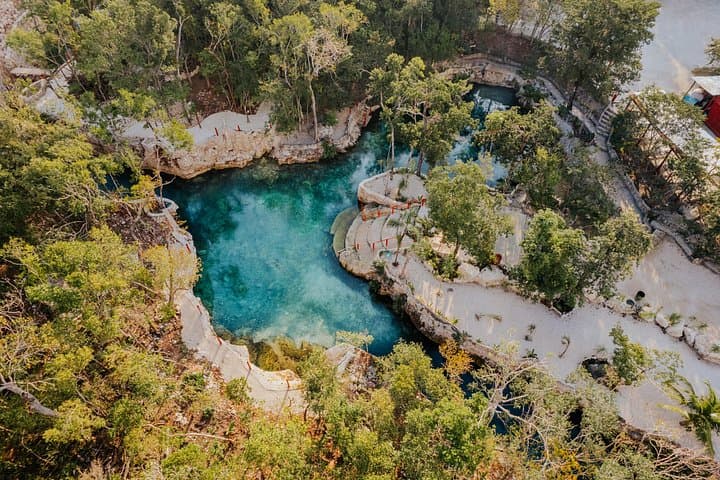


A thin trail parts the jungle and sunlight slices into a circular hole in the limestone — the first cenote hangs like a cool, green pool beneath a curtain of roots. At Casa Tortuga Park, four distinct sinkholes wait within walking distance of one another: a semi-open cavern with stalactites, a bat-frequented grotto, a wide open jade-green channel, and a bell-shaped cave with ancient rock formations. The guide moves groups steadily, pointing out fossils, root systems that reach into the water, and the stone geometry that tells a story of collapsed karst above an extensive underground aquifer.
A thin trail parts the jungle and sunlight slices into a circular hole in the limestone — the first cenote hangs like a cool, green pool beneath a curtain of roots. At Casa Tortuga Park, four distinct sinkholes wait within walking distance of one another: a semi-open cavern with stalactites, a bat-frequented grotto, a wide open jade-green channel, and a bell-shaped cave with ancient rock formations. The guide moves groups steadily, pointing out fossils, root systems that reach into the water, and the stone geometry that tells a story of collapsed karst above an extensive underground aquifer.
Geologically, the Yucatán Peninsula is a porous limestone shelf; cenotes are where the roof has fallen in or where water has exposed caverns, creating connections to the freshwater table below. Culturally, these pools supplied life and ritual for the Maya, and the park interprets that relationship while protecting fragile sites. Expect 1–1.5 hours of time per cenote on a guided itinerary that includes life vests, bilingual interpretation, and optional kayak time.
Practical details: bring biodegradable sunscreen, a snorkel or mask (owners prefer their own), water shoes for slick rock, and a dry bag for electronics. The tour covers uneven stone steps and short jungle paths; people should be comfortable swimming and able to climb ladders or steps. Morning visits yield clearer water and softer light for photos; afternoons can be warmer with more insect activity. Follow guide instructions for jumping points — some cenotes have 3-meter launches into 8-meter pools. Respect signage, pack out trash, and wear reef-safe products to keep the water clear for fish, birds, and bats.