THE ADVENTURE COLLECTIVE® · Independent discovery and booking for outdoor travel

Board a small boat from Terceira and slip into crystalline Atlantic water where curious bottlenose and common dolphins may approach on their own terms. This two-hour, conservation-minded swim balances close-up marine encounters with strict no-contact guidelines.
Board a small boat from Terceira and slip into crystalline Atlantic water where curious bottlenose and common dolphins may approach on their own terms. This two-hour, conservation-minded swim balances close-up marine encounters with strict no-contact guidelines.
A low-slung morning boat slips out past black volcanic headlands and into an Atlantic that goes from pewter to cobalt in a single horizon. You feel the swell beneath your calves before you see them: sleek backs cutting the surface, then a flash of curiosity as common and bottlenose dolphins circle the bow as if checking a new current.
Verified experiences and guided adventures in the surrounding area.
A low-slung morning boat slips out past black volcanic headlands and into an Atlantic that goes from pewter to cobalt in a single horizon. You feel the swell beneath your calves before you see them: sleek backs cutting the surface, then a flash of curiosity as common and bottlenose dolphins circle the bow as if checking a new current.
Terceira’s coastline is volcanic rock—pillow lavas, basalt cliffs and lava tubes carved by ancient eruptions. The island’s ports have long been waypoints for Atlantic sailors; local culture carries a practical marine knowledge shaped by centuries of fishing, provisioning ships, and an 18th-century economy that once included whaling. Today, that tradition has shifted toward protection: the Azores are a hotspot for cetacean research and regulated wildlife viewing.
On a two-hour excursion you’ll get a safety briefing, approach zones explained, and a soft-entry into crystalline water when dolphins show willing contact. Operators here emphasize non-interference: no feeding, no chasing, and limited swim time to minimize disturbance. Expect water temps 16–22°C (warmer in late summer), moderate swell, and visibility that can vary with weather—so timing and operator experience matter.
Practical tips: bring a high-quality mask, wear a wetsuit if you get cold fast, and be prepared for rapid weather shifts. Photography is rewarding but brief—dolphins decide the pace. This is an active, sensory encounter: the sea nudges you, the dolphins answer, and the island’s geology and maritime history frame the day in quiet, responsible awe.
No—dolphins are wild and approach voluntarily; operators only enable swims when dolphins display open, non-aggressive curiosity.
Water ranges roughly 16–22°C depending on season; most people wear a wetsuit for comfort and longer surface time.
Yes—the Azores have guidelines for cetacean interactions; reputable operators follow no‑approach, no‑feed, and limited swim-time rules.
Operators typically require basic snorkeling skills and comfort in open water; flotation options may be available if you disclose concerns ahead of time.
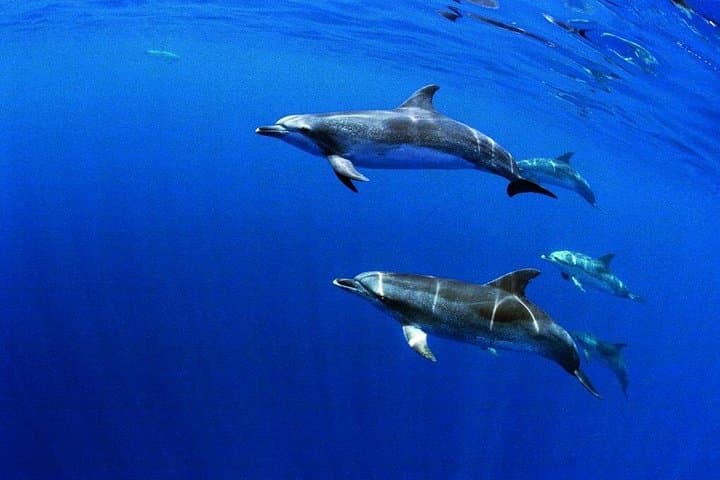
A low-slung morning boat slips out past black volcanic headlands and into an Atlantic that goes from pewter to cobalt in a single horizon. You feel the swell beneath your calves before you see them: sleek backs cutting the surface, then a flash of curiosity as common and bottlenose dolphins circle the bow as if checking a new current.
A low-slung morning boat slips out past black volcanic headlands and into an Atlantic that goes from pewter to cobalt in a single horizon. You feel the swell beneath your calves before you see them: sleek backs cutting the surface, then a flash of curiosity as common and bottlenose dolphins circle the bow as if checking a new current.
Terceira’s coastline is volcanic rock—pillow lavas, basalt cliffs and lava tubes carved by ancient eruptions. The island’s ports have long been waypoints for Atlantic sailors; local culture carries a practical marine knowledge shaped by centuries of fishing, provisioning ships, and an 18th-century economy that once included whaling. Today, that tradition has shifted toward protection: the Azores are a hotspot for cetacean research and regulated wildlife viewing.
On a two-hour excursion you’ll get a safety briefing, approach zones explained, and a soft-entry into crystalline water when dolphins show willing contact. Operators here emphasize non-interference: no feeding, no chasing, and limited swim time to minimize disturbance. Expect water temps 16–22°C (warmer in late summer), moderate swell, and visibility that can vary with weather—so timing and operator experience matter.
Practical tips: bring a high-quality mask, wear a wetsuit if you get cold fast, and be prepared for rapid weather shifts. Photography is rewarding but brief—dolphins decide the pace. This is an active, sensory encounter: the sea nudges you, the dolphins answer, and the island’s geology and maritime history frame the day in quiet, responsible awe.