THE ADVENTURE COLLECTIVE® · Independent discovery and booking for outdoor travel

Join a small-group, in-water encounter with migrating humpback whales off the Gold Coast. Expect 3–4 hours offshore, provided freedive suits and close-up wildlife moments guided by experienced skippers.
Join a small-group, in-water encounter with migrating humpback whales off the Gold Coast. Expect 3–4 hours offshore, provided freedive suits and close-up wildlife moments guided by experienced skippers.
The salt air sharpens as the coastline falls away and the boat lifts onto open swell; the engine quiets and the ocean seems to hold its breath. In a group of eight you slip into a 5mm freedive suit, fins cutting clean lines through blue, and wait — whales pass like moving mountains, curious or distant on their own terms.
Verified experiences and guided adventures in the surrounding area.
Operated by Blue Seafaris · Gold Coast, Queensland
The salt air sharpens as the coastline falls away and the boat lifts onto open swell; the engine quiets and the ocean seems to hold its breath. In a group of eight you slip into a 5mm freedive suit, fins cutting clean lines through blue, and wait — whales pass like moving mountains, curious or distant on their own terms.
This stretch of the East Australian Current hosts one of the planet's great migrations. Humpbacks travel from Antarctic feeding grounds to Queensland calving waters, a route known and respected for generations by the Indigenous Yugambeh people. Geologically, the continental shelf drops off near the Gold Coast, creating channels that funnel migrating whales close to shore and make encounters possible.
Local skippers read body language: a gentle fluke, a slow approach, or the flash of a pectoral fin that means a whale is tolerant of swimmers. The team keeps numbers low to reduce disturbance, echoing modern marine-protection practices that grew from past commercial whaling and evolving conservation law.
Plan for variable conditions: seas can be glassy or rollicking, currents will push and pull, and whales choose proximity. Expect 3–4 hours offshore, basic snorkeling skills, and cold water even in summer; organizers supply 5mm suits, masks and fins.
Practical tips: hydrate before boarding, protect skin with reef-safe sunscreen, secure cameras with floats, and listen closely to your guide — proximity rules and whale behavior guidelines are both legal and ethical. When you enter the water, move calmly: the encounter is a conversation, not a chase.
Sightings are highly likely during migration seasons since thousands pass the East Coast, but whales decide the level of interaction; small groups increase the chance of close encounters.
A moderate level of swimming and snorkeling comfort is required — you should be able to swim and tread water while wearing fins and a 5mm suit.
Organizers provide 5mm freedive suits with hoods; still, water can be chilly so follow guide advice on time in the water and warm up promptly after exiting.
Approach distances are governed by behavior and local regulations; guides will manage proximity to avoid stressing animals and to keep swimmers safe.
Blue Seafaris operates guided outdoor trips and adventures with an emphasis on safety, stewardship, and memorable experiences.
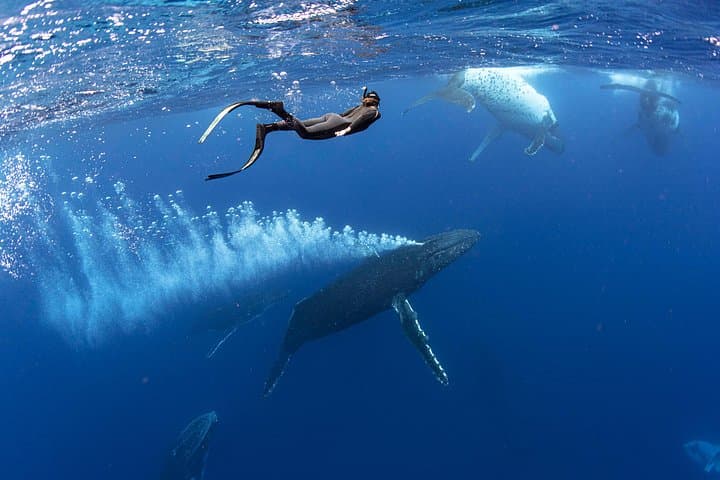
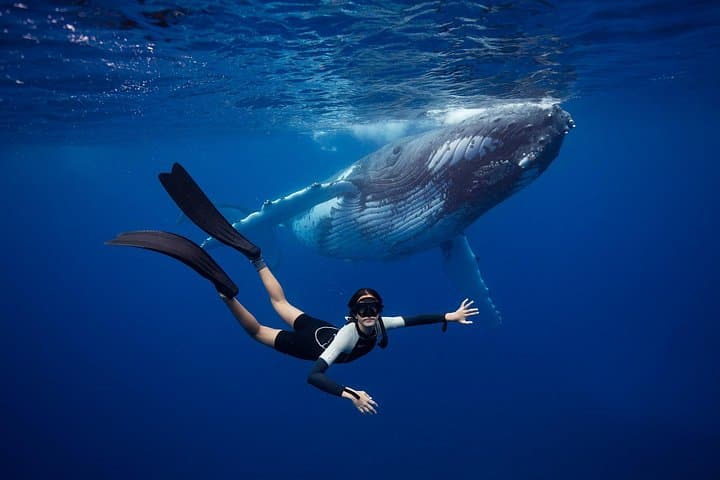
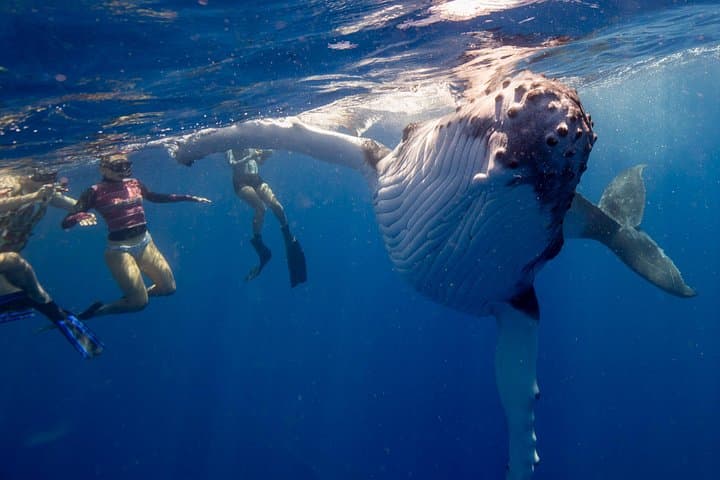
The salt air sharpens as the coastline falls away and the boat lifts onto open swell; the engine quiets and the ocean seems to hold its breath. In a group of eight you slip into a 5mm freedive suit, fins cutting clean lines through blue, and wait — whales pass like moving mountains, curious or distant on their own terms.
The salt air sharpens as the coastline falls away and the boat lifts onto open swell; the engine quiets and the ocean seems to hold its breath. In a group of eight you slip into a 5mm freedive suit, fins cutting clean lines through blue, and wait — whales pass like moving mountains, curious or distant on their own terms.
This stretch of the East Australian Current hosts one of the planet's great migrations. Humpbacks travel from Antarctic feeding grounds to Queensland calving waters, a route known and respected for generations by the Indigenous Yugambeh people. Geologically, the continental shelf drops off near the Gold Coast, creating channels that funnel migrating whales close to shore and make encounters possible.
Local skippers read body language: a gentle fluke, a slow approach, or the flash of a pectoral fin that means a whale is tolerant of swimmers. The team keeps numbers low to reduce disturbance, echoing modern marine-protection practices that grew from past commercial whaling and evolving conservation law.
Plan for variable conditions: seas can be glassy or rollicking, currents will push and pull, and whales choose proximity. Expect 3–4 hours offshore, basic snorkeling skills, and cold water even in summer; organizers supply 5mm suits, masks and fins.
Practical tips: hydrate before boarding, protect skin with reef-safe sunscreen, secure cameras with floats, and listen closely to your guide — proximity rules and whale behavior guidelines are both legal and ethical. When you enter the water, move calmly: the encounter is a conversation, not a chase.