THE ADVENTURE COLLECTIVE® · Independent discovery and booking for outdoor travel

Join a full-day boat trip from Cancún to Contoy Island to swim alongside migrating whale sharks. This guided snorkeling experience balances close-up marine encounters with clear rules to protect animals and reef habitat.
Join a full-day boat trip from Cancún to Contoy Island to swim alongside migrating whale sharks. This guided snorkeling experience balances close-up marine encounters with clear rules to protect animals and reef habitat.
The boat cuts a clean path through Caribbean blue as the mainland recedes and a low strip of green rises on the horizon: Contoy. By mid-morning the ocean has settled into a glassy sheet and the guides scan the surface, eyes practiced for the subtle backwash that marks a whale shark. When the first pale flank breaks the water you feel the scale of it—this is not a fleeting glimpse but a patient, almost languid presence, moving with a slow appetite for plankton.
Verified experiences and guided adventures in the surrounding area.
Operated by Cancun Travel Experience · Cancún, Quintana Roo
The boat cuts a clean path through Caribbean blue as the mainland recedes and a low strip of green rises on the horizon: Contoy. By mid-morning the ocean has settled into a glassy sheet and the guides scan the surface, eyes practiced for the subtle backwash that marks a whale shark. When the first pale flank breaks the water you feel the scale of it—this is not a fleeting glimpse but a patient, almost languid presence, moving with a slow appetite for plankton.
Contoy is a small, protected island north of Cancún, set aside to guard important seabird colonies and fragile reef habitats. The limestone and coral foundations beneath the boat are the same geology that built the Yucatán’s shoreline—porous bedrock scoured by ancient seas, now hosting living reef crests and seagrass meadows where whale sharks feed. The island’s history is pragmatic: a waypoint for fishermen and a nesting ground long before it gained park status in the late 20th century.
On deck you get a quick briefing—how to approach from the surface, when to enter the water, and why distance matters. Whale sharks are surprisingly tolerant; they slow and let you watch the ripple of gill slits and the tiny fish that shadow their bellies, but local rules demand respectful space. Guides switch between binoculars and radio, relaying positions to other boats so swimmers rotate through short, focused swims rather than crowding a single animal.
Beyond the animals, Contoy rewards curiosity. A short boardwalk leads through scrub to a low observation tower where frigatebirds wheel and anemone-dotted flats stretch toward Isla Mujeres. Lunch is served on a quiet beach—fresh, simple fare that tastes better after open-water salt and sun.
Practicalities: the full-day excursion runs roughly seven hours, including roundtrip transport from Cancún or Playa del Carmen. Tours operate seasonally—most reliably from late spring through early fall when whale sharks arrive to feed. Participants should be comfortable in open water and able to snorkel for short stints; life jackets are used and guides supervise every swim. Bring reef-safe sunscreen, a snug mask (snorkel gear is usually provided), a dry bag for electronics, and a towel.
Respect for the animals and reef is central: follow your guide’s instructions, avoid touching wildlife, and leave nothing on the sand. If you time it right you’ll come home with a story about moving beside the planet’s gentlest giant, and the clear proof that an organized, low-impact encounter can still feel like one of those rare, elemental days at sea.
The peak season runs roughly from May through September when warm currents bring plankton and attract whale sharks to the area.
Expect about 1 to 1.5 hours each way from Cancún, depending on sea conditions and the boat’s route.
Yes—operators typically provide snorkeling gear and life jackets, but many travelers bring their own mask for fit and comfort.
Children 8 and older are usually allowed, but they must be competent swimmers and accompanied by an adult; maximum weight limits may apply.
If you’re prone to seasickness take medication in advance; the trip requires getting on and off a small boat and moving in the water, so discuss mobility needs with the operator before booking.
Guides enforce strict approach distances, limit the number of swimmers at any one time, and brief guests on non-contact rules to minimize stress on whale sharks.
Cancun Travel Experience operates guided outdoor trips and adventures with an emphasis on safety, stewardship, and memorable experiences.
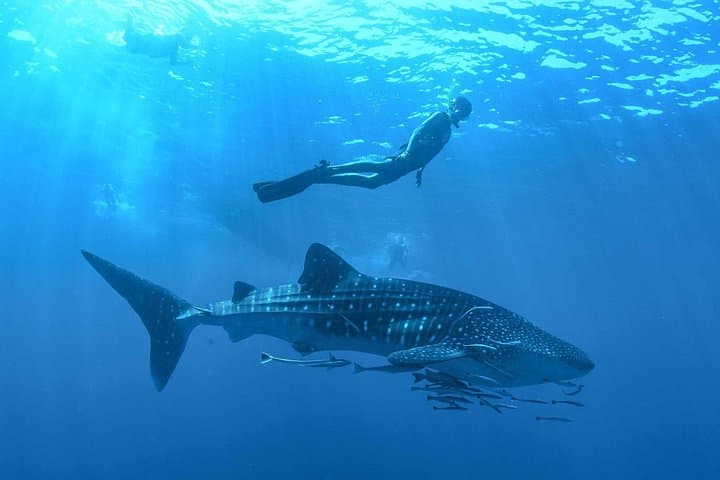


The boat cuts a clean path through Caribbean blue as the mainland recedes and a low strip of green rises on the horizon: Contoy. By mid-morning the ocean has settled into a glassy sheet and the guides scan the surface, eyes practiced for the subtle backwash that marks a whale shark. When the first pale flank breaks the water you feel the scale of it—this is not a fleeting glimpse but a patient, almost languid presence, moving with a slow appetite for plankton.
The boat cuts a clean path through Caribbean blue as the mainland recedes and a low strip of green rises on the horizon: Contoy. By mid-morning the ocean has settled into a glassy sheet and the guides scan the surface, eyes practiced for the subtle backwash that marks a whale shark. When the first pale flank breaks the water you feel the scale of it—this is not a fleeting glimpse but a patient, almost languid presence, moving with a slow appetite for plankton.
Contoy is a small, protected island north of Cancún, set aside to guard important seabird colonies and fragile reef habitats. The limestone and coral foundations beneath the boat are the same geology that built the Yucatán’s shoreline—porous bedrock scoured by ancient seas, now hosting living reef crests and seagrass meadows where whale sharks feed. The island’s history is pragmatic: a waypoint for fishermen and a nesting ground long before it gained park status in the late 20th century.
On deck you get a quick briefing—how to approach from the surface, when to enter the water, and why distance matters. Whale sharks are surprisingly tolerant; they slow and let you watch the ripple of gill slits and the tiny fish that shadow their bellies, but local rules demand respectful space. Guides switch between binoculars and radio, relaying positions to other boats so swimmers rotate through short, focused swims rather than crowding a single animal.
Beyond the animals, Contoy rewards curiosity. A short boardwalk leads through scrub to a low observation tower where frigatebirds wheel and anemone-dotted flats stretch toward Isla Mujeres. Lunch is served on a quiet beach—fresh, simple fare that tastes better after open-water salt and sun.
Practicalities: the full-day excursion runs roughly seven hours, including roundtrip transport from Cancún or Playa del Carmen. Tours operate seasonally—most reliably from late spring through early fall when whale sharks arrive to feed. Participants should be comfortable in open water and able to snorkel for short stints; life jackets are used and guides supervise every swim. Bring reef-safe sunscreen, a snug mask (snorkel gear is usually provided), a dry bag for electronics, and a towel.
Respect for the animals and reef is central: follow your guide’s instructions, avoid touching wildlife, and leave nothing on the sand. If you time it right you’ll come home with a story about moving beside the planet’s gentlest giant, and the clear proof that an organized, low-impact encounter can still feel like one of those rare, elemental days at sea.