THE ADVENTURE COLLECTIVE® · Independent discovery and booking for outdoor travel

Float beside the ocean’s largest fish on an 8‑hour small‑group snorkel from Cancún. Expect guided rotations around feeding whale sharks, onboard lunch near Isla Mujeres, and strict marine‑safety protocols.
Float beside the ocean’s largest fish on an 8‑hour small‑group snorkel from Cancún. Expect guided rotations around feeding whale sharks, onboard lunch near Isla Mujeres, and strict marine‑safety protocols.
The boat eases away from Marina Xtabay and the skyline of Cancún recedes into a band of blue. By mid-morning the water turns a clear, tropical turquoise and the captain radios ahead; the surface answers with the rippling shadow of something enormous. On this small‑group snorkeling run you’re not chasing adrenaline so much as a once‑in‑a‑lifetime proximity—narrowing in on the world’s largest fish as it filters plankton in the warm Gulf currents.
Verified experiences and guided adventures in the surrounding area.
Operated by EcoColors Mexico · Cancun, Quintana Roo
The boat eases away from Marina Xtabay and the skyline of Cancún recedes into a band of blue. By mid-morning the water turns a clear, tropical turquoise and the captain radios ahead; the surface answers with the rippling shadow of something enormous. On this small‑group snorkeling run you’re not chasing adrenaline so much as a once‑in‑a‑lifetime proximity—narrowing in on the world’s largest fish as it filters plankton in the warm Gulf currents.
The Yucatán coast has hosted seasonal whale shark aggregations for decades, drawn by upwellings of plankton around Isla Mujeres and Contoy. Geologically the region sits on an exposed portion of the Yucatán carbonate platform—flat, shallow, and warm—so encounters happen in relatively shallow open water rather than deep ocean trenches. The local fishing and tourism communities have built respectful protocols here: limited swimmers per animal, strict distances, and enforcement of mineral sunscreens to protect corals and skin‑sensitive wildlife.
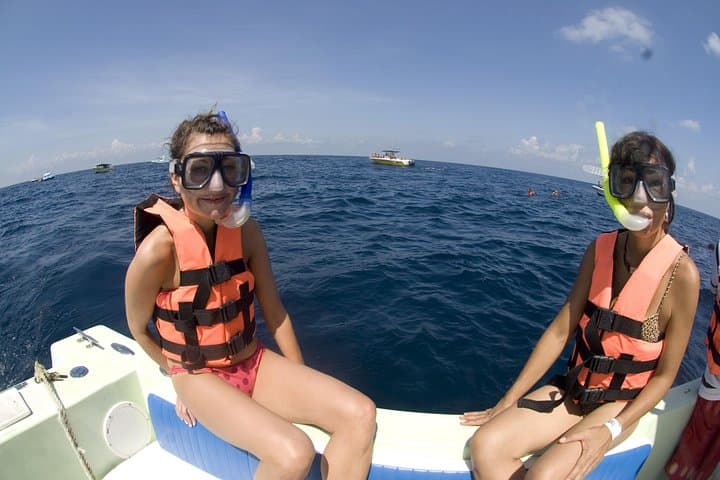
Practically, expect an 8‑hour day: briefing at the marina, boat transit, guided snorkeling rotations, and lunch off Isla Mujeres. Guides provide life jackets, masks and fins; basic snorkeling skills and the ability to enter and exit a small tender are required. Seas can be choppy—anti‑nausea meds are commonly recommended—and timing is early to mid‑day when whale sharks surface to feed. Bring mineral sunscreen, a rash guard, and a dry bag for cameras.
This trip is equal parts wildlife viewing and marine education: plan for clear rules, close but non‑intrusive approaches, and the patient reward of floating beside a gentle giant.
Sightings are likely during season but not guaranteed; operators use local tracking and promise efforts to maximize chances, with cancellation/refund policies if minimums aren’t met.
Minimum age is 5; children should be confident in the water and always wear provided life jackets during snorkeling rotations.
Guides enforce maximum swimmer counts, distance rules, and no‑touch policies; you’ll rotate in small groups to minimize stress on the animals.
Only mineral (reef‑safe) sunscreen is permitted; snorkel equipment is provided, but many guests bring their own masks and fins for better fit.
EcoColors Mexico operates guided outdoor trips and adventures with an emphasis on safety, stewardship, and memorable experiences.
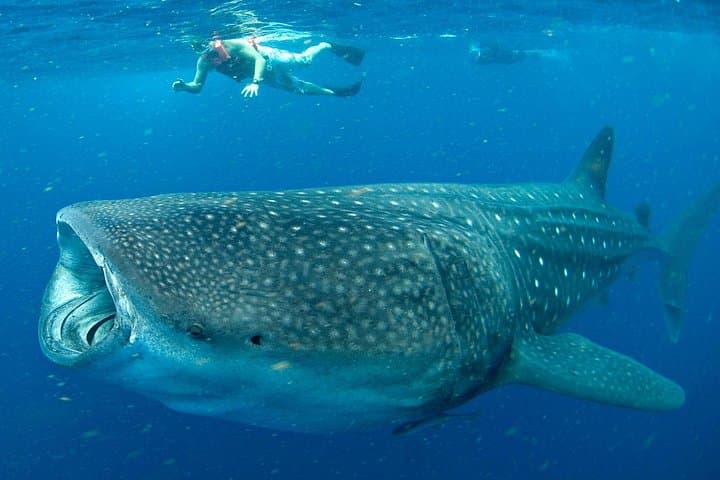
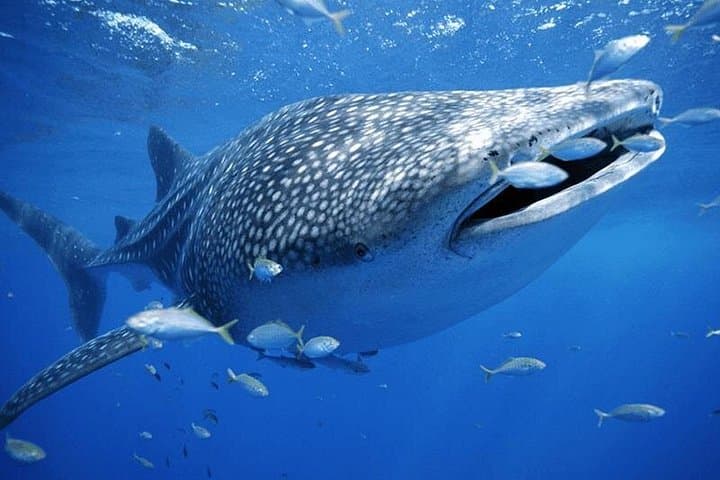
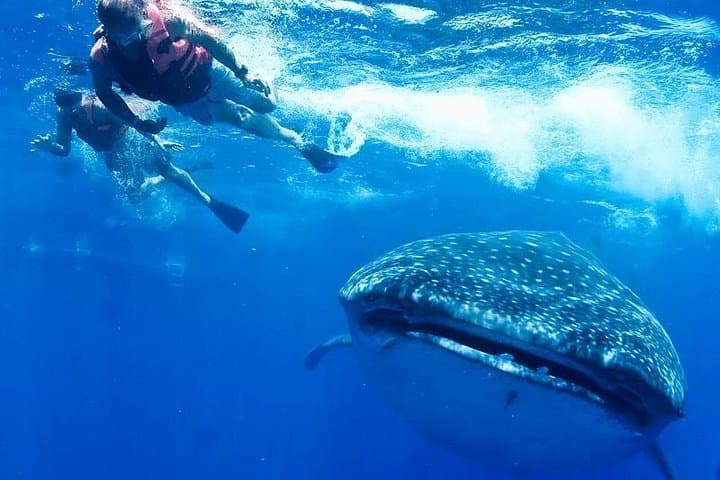
The boat eases away from Marina Xtabay and the skyline of Cancún recedes into a band of blue. By mid-morning the water turns a clear, tropical turquoise and the captain radios ahead; the surface answers with the rippling shadow of something enormous. On this small‑group snorkeling run you’re not chasing adrenaline so much as a once‑in‑a‑lifetime proximity—narrowing in on the world’s largest fish as it filters plankton in the warm Gulf currents.
The boat eases away from Marina Xtabay and the skyline of Cancún recedes into a band of blue. By mid-morning the water turns a clear, tropical turquoise and the captain radios ahead; the surface answers with the rippling shadow of something enormous. On this small‑group snorkeling run you’re not chasing adrenaline so much as a once‑in‑a‑lifetime proximity—narrowing in on the world’s largest fish as it filters plankton in the warm Gulf currents.
The Yucatán coast has hosted seasonal whale shark aggregations for decades, drawn by upwellings of plankton around Isla Mujeres and Contoy. Geologically the region sits on an exposed portion of the Yucatán carbonate platform—flat, shallow, and warm—so encounters happen in relatively shallow open water rather than deep ocean trenches. The local fishing and tourism communities have built respectful protocols here: limited swimmers per animal, strict distances, and enforcement of mineral sunscreens to protect corals and skin‑sensitive wildlife.
Practically, expect an 8‑hour day: briefing at the marina, boat transit, guided snorkeling rotations, and lunch off Isla Mujeres. Guides provide life jackets, masks and fins; basic snorkeling skills and the ability to enter and exit a small tender are required. Seas can be choppy—anti‑nausea meds are commonly recommended—and timing is early to mid‑day when whale sharks surface to feed. Bring mineral sunscreen, a rash guard, and a dry bag for cameras.
This trip is equal parts wildlife viewing and marine education: plan for clear rules, close but non‑intrusive approaches, and the patient reward of floating beside a gentle giant.