THE ADVENTURE COLLECTIVE® · Independent discovery and booking for outdoor travel

Float beside the world’s largest fish off La Paz in a six-person, marine-biologist-led tour designed for more time in the water and fewer crowds. Learn the animals’ biology, observe safely, and support local conservation on this four-hour snorkeling expedition.
Float beside the world’s largest fish off La Paz in a six-person, marine-biologist-led tour designed for more time in the water and fewer crowds. Learn the animals’ biology, observe safely, and support local conservation on this four-hour snorkeling expedition.
The boat slips away from La Paz’s cracked-masonry malecon and the city peels back into open water, the bay stretching wide and blue. You scan the surface for tell‑tale ripples: a convocation of white spots, a shadow rolling beneath the swell. When the whale shark appears, there’s no roar—only the low hum of the engine easing back and a current that seems to hold its breath. You don a mask, slip in, and the ocean rearranges itself around a giant that cruises with calm intent.
Verified experiences and guided adventures in the surrounding area.
Operated by Eco Migrations · La Paz, Baja California Sur
The boat slips away from La Paz’s cracked-masonry malecon and the city peels back into open water, the bay stretching wide and blue. You scan the surface for tell‑tale ripples: a convocation of white spots, a shadow rolling beneath the swell. When the whale shark appears, there’s no roar—only the low hum of the engine easing back and a current that seems to hold its breath. You don a mask, slip in, and the ocean rearranges itself around a giant that cruises with calm intent.
La Paz sits on the eastern edge of Baja California Sur, where nutrient-rich upwelling and the Gulf of California’s enclosed basin create seasonal feeding grounds for whale sharks. Local fishers first noted the aggregations decades ago; today the area is managed through protected zones and regulated encounters to reduce disturbance.
Expect clear, often cool water, plenty of plankton, and encounters that prioritize observation over interaction. Small-group limits (max six) and a marine biologist guide mean more time in the water and context about whale shark behavior, biology, and the local conservation efforts that protect them.
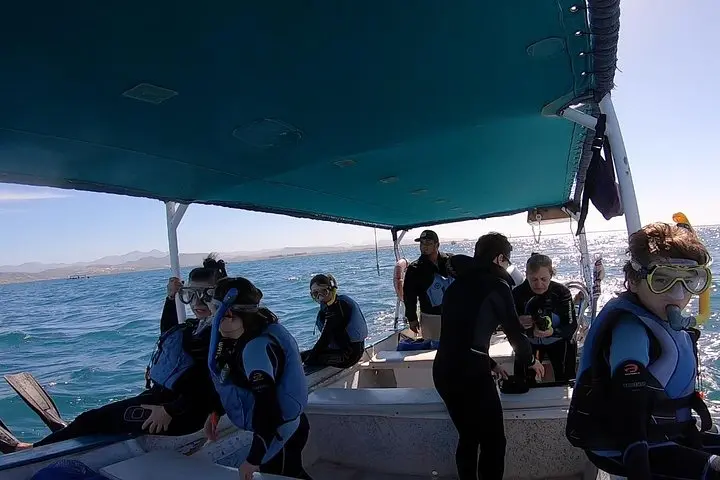
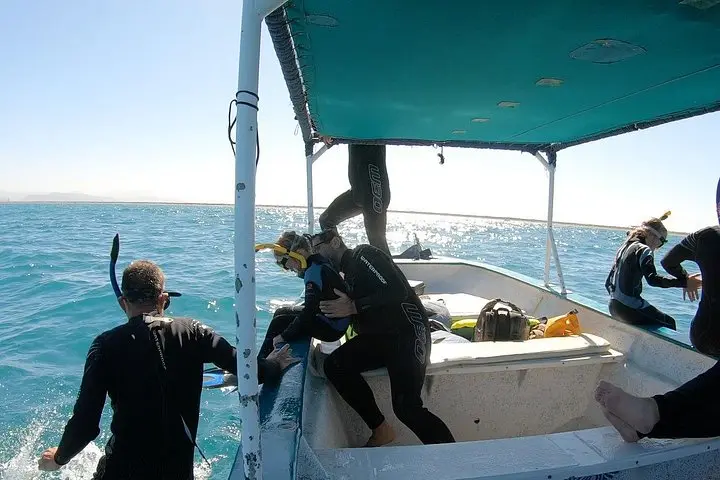
Practically: tours run about four hours, with a short boat hop to the protected area. Snorkeling proficiency and a moderate fitness level are required—you’ll enter from a ladder and may swim against small currents. Operators usually supply 2–3 mm wetsuits and snorkel gear; bring reef‑safe sunscreen, a waterproof camera, and a calm approach. Follow guide instructions—no touching or chasing—and you’ll leave with a clear sense of scale, the slow rhythm of a gentle giant, and a deeper appreciation for La Paz’s living sea.
No—whale sharks are wild animals; operators go where the animals have been seen and follow protocol, but sightings can’t be guaranteed.
Yes—most operators supply masks, snorkels, fins, and a 2–3 mm full wetsuit as part of the excursion.
Beginners can join if they have basic snorkeling ability and reasonable comfort in open water; the guide will brief and assist before each entry.
Policies vary by operator; children are often allowed if they meet minimum age and swimming requirements—check with the operator in advance.
Eco Migrations operates guided outdoor trips and adventures with an emphasis on safety, stewardship, and memorable experiences.
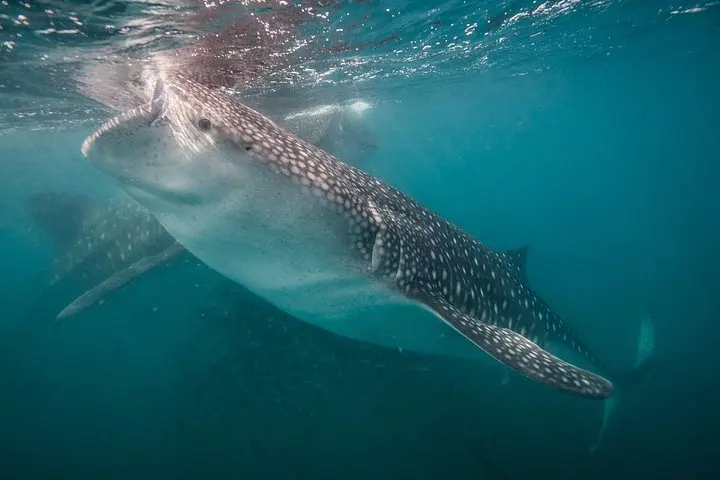
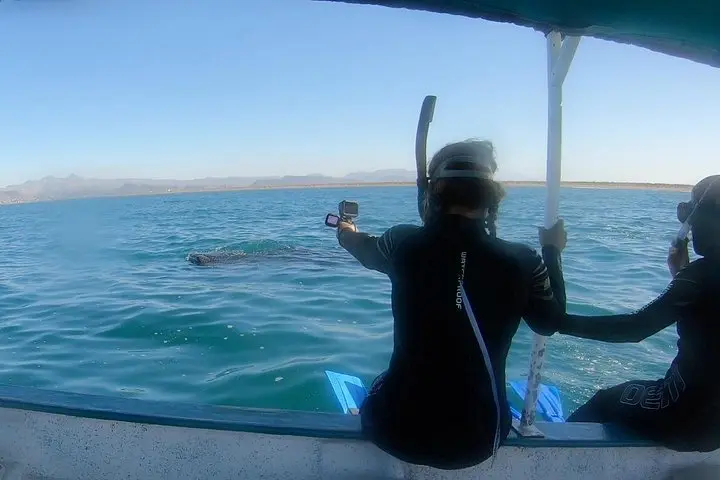
The boat slips away from La Paz’s cracked-masonry malecon and the city peels back into open water, the bay stretching wide and blue. You scan the surface for tell‑tale ripples: a convocation of white spots, a shadow rolling beneath the swell. When the whale shark appears, there’s no roar—only the low hum of the engine easing back and a current that seems to hold its breath. You don a mask, slip in, and the ocean rearranges itself around a giant that cruises with calm intent.
The boat slips away from La Paz’s cracked-masonry malecon and the city peels back into open water, the bay stretching wide and blue. You scan the surface for tell‑tale ripples: a convocation of white spots, a shadow rolling beneath the swell. When the whale shark appears, there’s no roar—only the low hum of the engine easing back and a current that seems to hold its breath. You don a mask, slip in, and the ocean rearranges itself around a giant that cruises with calm intent.
La Paz sits on the eastern edge of Baja California Sur, where nutrient-rich upwelling and the Gulf of California’s enclosed basin create seasonal feeding grounds for whale sharks. Local fishers first noted the aggregations decades ago; today the area is managed through protected zones and regulated encounters to reduce disturbance.
Expect clear, often cool water, plenty of plankton, and encounters that prioritize observation over interaction. Small-group limits (max six) and a marine biologist guide mean more time in the water and context about whale shark behavior, biology, and the local conservation efforts that protect them.
Practically: tours run about four hours, with a short boat hop to the protected area. Snorkeling proficiency and a moderate fitness level are required—you’ll enter from a ladder and may swim against small currents. Operators usually supply 2–3 mm wetsuits and snorkel gear; bring reef‑safe sunscreen, a waterproof camera, and a calm approach. Follow guide instructions—no touching or chasing—and you’ll leave with a clear sense of scale, the slow rhythm of a gentle giant, and a deeper appreciation for La Paz’s living sea.