THE ADVENTURE COLLECTIVE® · Independent discovery and booking for outdoor travel

Board a private boat from the Riviera Maya and snorkel alongside whale sharks as naturalist guides point out feeding behavior and local conservation efforts. This full-day, eco-focused tour pairs close encounters with practical safety and sustainability practices.
Board a private boat from the Riviera Maya and snorkel alongside whale sharks as naturalist guides point out feeding behavior and local conservation efforts. This full-day, eco-focused tour pairs close encounters with practical safety and sustainability practices.
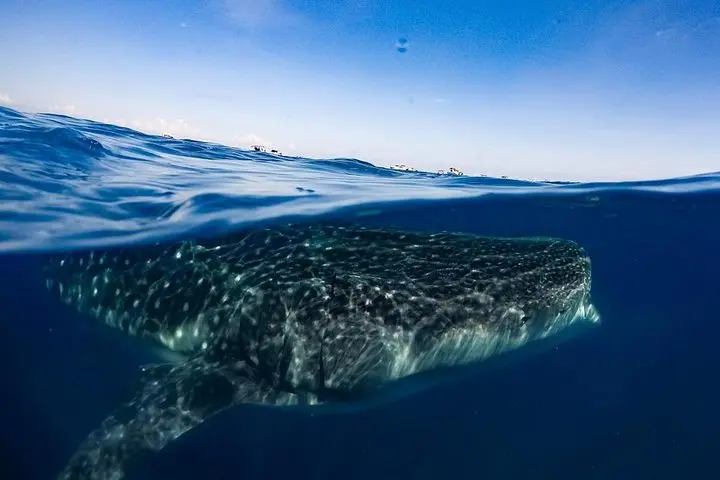
The morning begins before the sun fully warms the shore: an air-conditioned van pulls away from a Riviera Maya hotel, the highway a ribbon of palm shadows, and the Caribbean ahead already flashing promise. By the time the boat slices through the shallow shelf where the Gulf of Mexico meets the Caribbean Sea, the guides—biologists and naturalists—are scanning the glassy blue for the telltale ripple of the largest fish on earth. When a mottled back breaks the surface, the boat eases to a respectful distance and the ocean seems to hold its breath.
Verified experiences and guided adventures in the surrounding area.
Operated by EcoColors Mexico · Playa del Carmen, Quintana Roo
The morning begins before the sun fully warms the shore: an air-conditioned van pulls away from a Riviera Maya hotel, the highway a ribbon of palm shadows, and the Caribbean ahead already flashing promise. By the time the boat slices through the shallow shelf where the Gulf of Mexico meets the Caribbean Sea, the guides—biologists and naturalists—are scanning the glassy blue for the telltale ripple of the largest fish on earth. When a mottled back breaks the surface, the boat eases to a respectful distance and the ocean seems to hold its breath.
The whale shark season here is precise and driven by plankton. Every year, from late spring into autumn, currents funnel nutrient-rich waters around Isla Mujeres, Contoy and the northern tip of Holbox, producing dense feeding patches. That meeting of seas is a product of the Yucatán’s flat karst platform: shallow banks and shifting currents create plankton blooms, and the whale sharks follow the food.
This stretch of coastline has long balanced livelihoods and protection. Fishing towns along the Riviera Maya and Isla Mujeres have shifted toward regulated ecotourism; Contoy National Park—set aside to protect nesting birds and marine life—helps ensure that permits, trained guides and strict viewing rules govern each encounter. The tour operator’s bilingual naturalists explain anatomy and behavior as readily as they cover local conservation efforts: how regulated approaches and no-touch policies keep these gentle giants healthy and the industry sustainable.
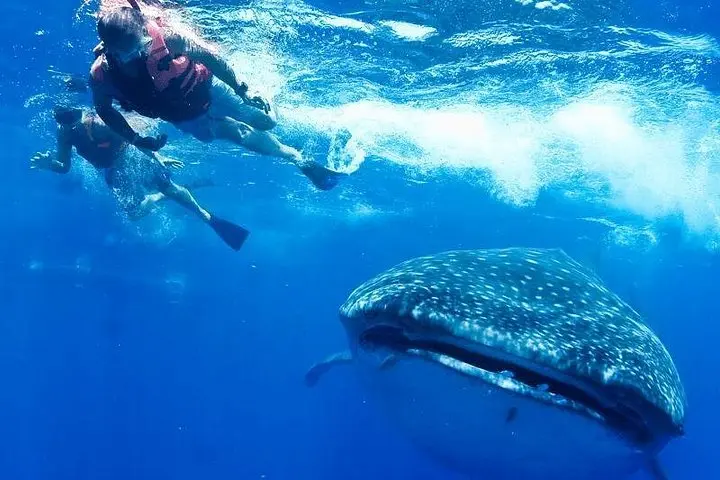
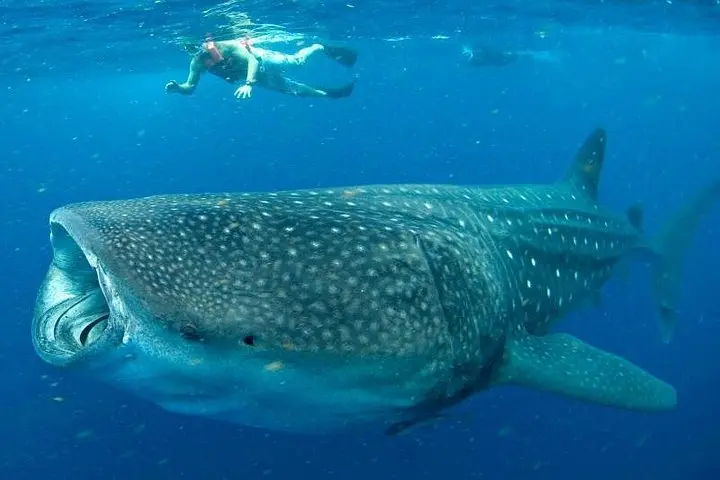
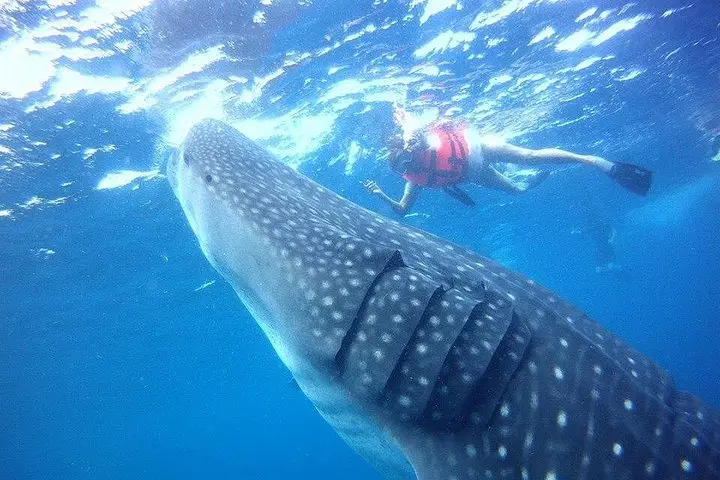
On the water, the experience is elemental. The whale shark is deliberate: a massive cart of mottled skin and a slow, roomy mouth filtering steady gulps. Guides position swimmers so the animals choose the distance; you float with fins and snorkel while the current pushes and the shark moves like a drifting island. The sea itself becomes an active participant—thermals that lift plankton, a breeze that knits small whitecaps, and the boat’s wake that hums under your toes.
Practicalities matter. This private full-day adventure runs about eight hours and includes hotel pickup across the Riviera Maya (two hours before departure), bottled water, lunch and snorkeling gear. Expect light-to-moderate physical effort: repeated short swims off the boat and time in the sun. Operators enforce a safe buffer around animals and use mouth covers, hand sanitation and frequent equipment cleaning—part of an eco-minded run program.
To prepare: bring reef-safe sunscreen, a wide-brimmed hat, a waterproof camera, and seasickness remedies if you’re prone. Listen to the naturalists—no touching, no chasing—and you’ll leave with a rare marine memory and the sense that the ocean has lent you something immense and patient.
Whale sharks are most commonly seen from late spring through early autumn, with peak sightings typically June–August.
Participants must be comfortable in the water and able to snorkel; non-swimmers should discuss options with the operator before booking.
Guides enforce regulated distances—usually several meters—to avoid stressing the animal; always follow guide instructions.
The operator uses mouth covers, hand sanitizers, frequent equipment cleaning and staff temperature checks as part of their health protocol.
Policies vary; infants must sit on laps during transport and children should meet the operator’s minimum swim and age requirements—ask when booking.
Trips may be canceled for safety if conditions are poor; the operator’s policy indicates cancellations for bad weather with no refunds, so confirm before booking.
EcoColors Mexico operates guided outdoor trips and adventures with an emphasis on safety, stewardship, and memorable experiences.
The morning begins before the sun fully warms the shore: an air-conditioned van pulls away from a Riviera Maya hotel, the highway a ribbon of palm shadows, and the Caribbean ahead already flashing promise. By the time the boat slices through the shallow shelf where the Gulf of Mexico meets the Caribbean Sea, the guides—biologists and naturalists—are scanning the glassy blue for the telltale ripple of the largest fish on earth. When a mottled back breaks the surface, the boat eases to a respectful distance and the ocean seems to hold its breath.
The morning begins before the sun fully warms the shore: an air-conditioned van pulls away from a Riviera Maya hotel, the highway a ribbon of palm shadows, and the Caribbean ahead already flashing promise. By the time the boat slices through the shallow shelf where the Gulf of Mexico meets the Caribbean Sea, the guides—biologists and naturalists—are scanning the glassy blue for the telltale ripple of the largest fish on earth. When a mottled back breaks the surface, the boat eases to a respectful distance and the ocean seems to hold its breath.
The whale shark season here is precise and driven by plankton. Every year, from late spring into autumn, currents funnel nutrient-rich waters around Isla Mujeres, Contoy and the northern tip of Holbox, producing dense feeding patches. That meeting of seas is a product of the Yucatán’s flat karst platform: shallow banks and shifting currents create plankton blooms, and the whale sharks follow the food.
This stretch of coastline has long balanced livelihoods and protection. Fishing towns along the Riviera Maya and Isla Mujeres have shifted toward regulated ecotourism; Contoy National Park—set aside to protect nesting birds and marine life—helps ensure that permits, trained guides and strict viewing rules govern each encounter. The tour operator’s bilingual naturalists explain anatomy and behavior as readily as they cover local conservation efforts: how regulated approaches and no-touch policies keep these gentle giants healthy and the industry sustainable.
On the water, the experience is elemental. The whale shark is deliberate: a massive cart of mottled skin and a slow, roomy mouth filtering steady gulps. Guides position swimmers so the animals choose the distance; you float with fins and snorkel while the current pushes and the shark moves like a drifting island. The sea itself becomes an active participant—thermals that lift plankton, a breeze that knits small whitecaps, and the boat’s wake that hums under your toes.
Practicalities matter. This private full-day adventure runs about eight hours and includes hotel pickup across the Riviera Maya (two hours before departure), bottled water, lunch and snorkeling gear. Expect light-to-moderate physical effort: repeated short swims off the boat and time in the sun. Operators enforce a safe buffer around animals and use mouth covers, hand sanitation and frequent equipment cleaning—part of an eco-minded run program.
To prepare: bring reef-safe sunscreen, a wide-brimmed hat, a waterproof camera, and seasickness remedies if you’re prone. Listen to the naturalists—no touching, no chasing—and you’ll leave with a rare marine memory and the sense that the ocean has lent you something immense and patient.