THE ADVENTURE COLLECTIVE® · Independent discovery and booking for outdoor travel

Board a small boat from Cancun and slip into waters where whale sharks gather each summer. This guided day trip combines up-close snorkeling with conservation-minded protocols, a rest stop on Contoy Island, and time on Playa Norte in Isla Mujeres.
Board a small boat from Cancun and slip into waters where whale sharks gather each summer. This guided day trip combines up-close snorkeling with conservation-minded protocols, a rest stop on Contoy Island, and time on Playa Norte in Isla Mujeres.
The boat slips away from Cancun’s busy marinas and the shoreline thins to a horizon of turquoise—an invitation rather than a promise. Within an hour the water deepens to the cobalt where whale sharks gather, and the captain eases the throttle as guides scan the surface. When the first broad, spotted back breaks the plane of the sea, the crowd exhales. These gentle leviathans move like slow thoughts, the ocean parting politely for them as plankton clouds draw them through the Yucatán Channel.
Verified experiences and guided adventures in the surrounding area.
Operated by Cancun Vacation Experts · Isla Mujeres, Quintana Roo
The boat slips away from Cancun’s busy marinas and the shoreline thins to a horizon of turquoise—an invitation rather than a promise. Within an hour the water deepens to the cobalt where whale sharks gather, and the captain eases the throttle as guides scan the surface. When the first broad, spotted back breaks the plane of the sea, the crowd exhales. These gentle leviathans move like slow thoughts, the ocean parting politely for them as plankton clouds draw them through the Yucatán Channel.
This encounter sits where the Gulf of Mexico meets the Caribbean: a shallow continental shelf that funnels nutrient-rich currents and feeds seasonal plankton blooms. That convergence has been a waypoint for fishermen and Maya canoemen for centuries; islands like Contoy and Isla Mujeres have alternately sheltered sailors, birds and sea turtles. Contoy is a protected reserve—its mangroves and coral bars a living classroom for guides who explain how geology and currents choreograph the whale sharks’ migration.
Locals read the sea the way others read weather—by color and scent. Playa Norte on Isla Mujeres, where the tour drops you after snorkeling, is a good barometer: the sand is white and the shallows are a postcard of shifting blue. The island’s downtown still pulses with island rhythms—sea-salty air, small cafés, and souvenir stalls run by families who’ve worked these docks for generations.
Practical side: the season runs June 1 to September 15; tours last about six hours and run in small snorkeling groups to reduce disturbance. You’ll be briefed on approach rules—no touching, no chasing, and the emphasis is on keeping distance while letting the sharks come close on their own terms. Guides provide masks, snorkels and life jackets; you provide respect, sunscreen and basic stamina for multiple water entries.
If you’re planning, aim for an early departure to catch calmer seas and clearer light; mid-morning winds and afternoon clouds can stir chop and scatter plankton. Bring biodegradable sunscreen, a snug mask that won’t fog, and a lightweight long-sleeve or rashguard for sun and chafing. Expect warm, humid conditions ashore and strong sun on deck—hydrate liberally. If you’re traveling with kids, note the tour recommends ages 8+ and has a moderate fitness requirement.
Beyond the swim, the itinerary gives time ashore on Contoy’s protected beaches and a stroll through Isla Mujeres’ shops—small rewards that turn a single wildlife encounter into a full-day snapshot of the northern Yucatán’s marine life and island culture. When you slide back into the boat at day’s end, the water will look different: less an expanse and more a system, alive and deliberately moving you through it.
The prime season is June 1–September 15 when plankton blooms attract large numbers to the Yucatán Channel.
No — touching is prohibited to protect the animals and is enforced by guides and local regulations.
Yes, the tour recommends children aged 8 and up; parents should assess swimming comfort and follow guide instructions.
Tours may operate in light conditions, but heavy weather can lead to cancellations or rescheduling—check cancellation rules and reconfirm with the operator.
Yes—operators typically provide snorkels, masks and life jackets, though bringing your own mask can improve fit and comfort.
Swim windows vary by day and group but expect multiple short entries; time next to a whale shark is limited to minimize disturbance.
Cancun Vacation Experts operates guided outdoor trips and adventures with an emphasis on safety, stewardship, and memorable experiences.


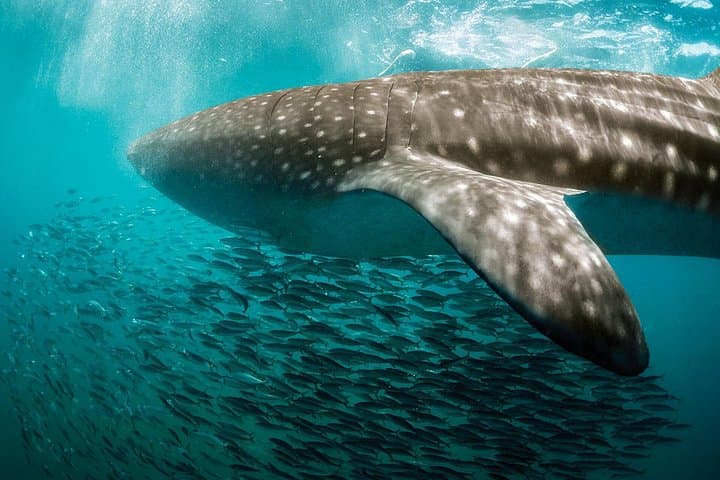

The boat slips away from Cancun’s busy marinas and the shoreline thins to a horizon of turquoise—an invitation rather than a promise. Within an hour the water deepens to the cobalt where whale sharks gather, and the captain eases the throttle as guides scan the surface. When the first broad, spotted back breaks the plane of the sea, the crowd exhales. These gentle leviathans move like slow thoughts, the ocean parting politely for them as plankton clouds draw them through the Yucatán Channel.
The boat slips away from Cancun’s busy marinas and the shoreline thins to a horizon of turquoise—an invitation rather than a promise. Within an hour the water deepens to the cobalt where whale sharks gather, and the captain eases the throttle as guides scan the surface. When the first broad, spotted back breaks the plane of the sea, the crowd exhales. These gentle leviathans move like slow thoughts, the ocean parting politely for them as plankton clouds draw them through the Yucatán Channel.
This encounter sits where the Gulf of Mexico meets the Caribbean: a shallow continental shelf that funnels nutrient-rich currents and feeds seasonal plankton blooms. That convergence has been a waypoint for fishermen and Maya canoemen for centuries; islands like Contoy and Isla Mujeres have alternately sheltered sailors, birds and sea turtles. Contoy is a protected reserve—its mangroves and coral bars a living classroom for guides who explain how geology and currents choreograph the whale sharks’ migration.
Locals read the sea the way others read weather—by color and scent. Playa Norte on Isla Mujeres, where the tour drops you after snorkeling, is a good barometer: the sand is white and the shallows are a postcard of shifting blue. The island’s downtown still pulses with island rhythms—sea-salty air, small cafés, and souvenir stalls run by families who’ve worked these docks for generations.
Practical side: the season runs June 1 to September 15; tours last about six hours and run in small snorkeling groups to reduce disturbance. You’ll be briefed on approach rules—no touching, no chasing, and the emphasis is on keeping distance while letting the sharks come close on their own terms. Guides provide masks, snorkels and life jackets; you provide respect, sunscreen and basic stamina for multiple water entries.
If you’re planning, aim for an early departure to catch calmer seas and clearer light; mid-morning winds and afternoon clouds can stir chop and scatter plankton. Bring biodegradable sunscreen, a snug mask that won’t fog, and a lightweight long-sleeve or rashguard for sun and chafing. Expect warm, humid conditions ashore and strong sun on deck—hydrate liberally. If you’re traveling with kids, note the tour recommends ages 8+ and has a moderate fitness requirement.
Beyond the swim, the itinerary gives time ashore on Contoy’s protected beaches and a stroll through Isla Mujeres’ shops—small rewards that turn a single wildlife encounter into a full-day snapshot of the northern Yucatán’s marine life and island culture. When you slide back into the boat at day’s end, the water will look different: less an expanse and more a system, alive and deliberately moving you through it.