THE ADVENTURE COLLECTIVE® · Independent discovery and booking for outdoor travel

Board a full-day boat from Exmouth to swim alongside whale sharks on Ningaloo Reef. This guided eco-tour includes a spotter plane, snorkel gear, meals and a strict safety and no-sighting policy.
Board a full-day boat from Exmouth to swim alongside whale sharks on Ningaloo Reef. This guided eco-tour includes a spotter plane, snorkel gear, meals and a strict safety and no-sighting policy.
You step off the jetty with salt on your lips and the wide blue of Ningaloo opening before you. The boat hums away from Exmouth, and within an hour the water changes from green to the deep turquoise of reef slope and sand channel. A spotter plane circles; below, a pale leopard of a whale shark drifts, indifferent and enormous, currents nudging it past coral bommies as you slip into the water to meet it.
Verified experiences and guided adventures in the surrounding area.
Operated by Three Islands Whale Shark Dive · Exmouth, Western Australia
You step off the jetty with salt on your lips and the wide blue of Ningaloo opening before you. The boat hums away from Exmouth, and within an hour the water changes from green to the deep turquoise of reef slope and sand channel. A spotter plane circles; below, a pale leopard of a whale shark drifts, indifferent and enormous, currents nudging it past coral bommies as you slip into the water to meet it.
Ningaloo is one of the world’s longest fringing reefs and a seasonal magnet for whale sharks between mid-March and mid-August. The coast around Exmouth sits against Cape Range limestone—rugged gorges on land, a living reef offshore—recognised as the Ningaloo Coast World Heritage area for its ecological value. Indigenous people have maintained a connection to these waters for millennia; European maritime activity arrived later with pearling and fishing.
Practical details shape the day: full-day departures from Exmouth, snorkel gear and wetsuits provided, a spotter plane to locate animals, and a safety tender to keep boat traffic clear. Expect a mix of reef snorkels and open-water swims; operators follow a no-sighting policy and brief participants on safe approach distances and buoyancy control.
Plan for long daylight, sun exposure, and boat motion—reef-safe sunscreen, a snug mask, and steady hydration are key. Even with calm seas, strong currents can push you; listen to crew instructions and conserve energy during long swims. When the whale sharks glide by, they command the scene quietly—the ocean’s slow giants, unhurried and enormous.
No—operators commonly have a no-sighting policy; they use a spotter plane and local knowledge to maximize chances but sightings cannot be guaranteed.
Children must be accompanied by adults and infants sit on laps; basic swimming ability and comfort in open water are required for participation.
Trips can be cancelled for safety or insufficient travelers; the operator typically refunds or reschedules when conditions make the trip unsafe.
Yes—this tour includes free photos taken by the guide/photographer, but you may also bring your own waterproof camera.
Three Islands Whale Shark Dive operates guided outdoor trips and adventures with an emphasis on safety, stewardship, and memorable experiences.
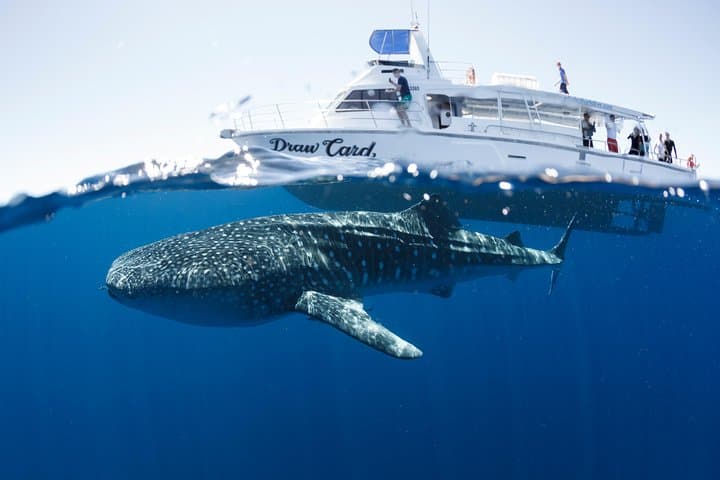
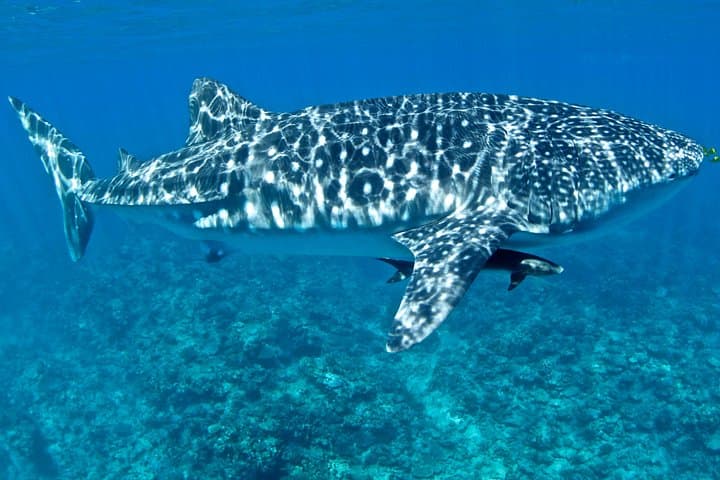
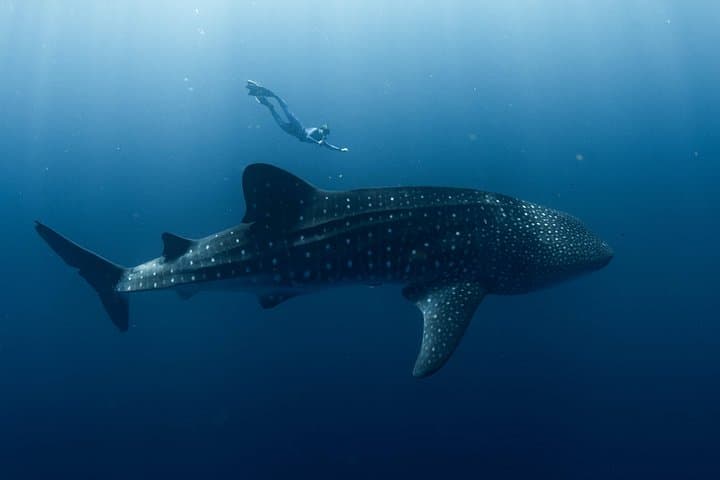
You step off the jetty with salt on your lips and the wide blue of Ningaloo opening before you. The boat hums away from Exmouth, and within an hour the water changes from green to the deep turquoise of reef slope and sand channel. A spotter plane circles; below, a pale leopard of a whale shark drifts, indifferent and enormous, currents nudging it past coral bommies as you slip into the water to meet it.
You step off the jetty with salt on your lips and the wide blue of Ningaloo opening before you. The boat hums away from Exmouth, and within an hour the water changes from green to the deep turquoise of reef slope and sand channel. A spotter plane circles; below, a pale leopard of a whale shark drifts, indifferent and enormous, currents nudging it past coral bommies as you slip into the water to meet it.
Ningaloo is one of the world’s longest fringing reefs and a seasonal magnet for whale sharks between mid-March and mid-August. The coast around Exmouth sits against Cape Range limestone—rugged gorges on land, a living reef offshore—recognised as the Ningaloo Coast World Heritage area for its ecological value. Indigenous people have maintained a connection to these waters for millennia; European maritime activity arrived later with pearling and fishing.
Practical details shape the day: full-day departures from Exmouth, snorkel gear and wetsuits provided, a spotter plane to locate animals, and a safety tender to keep boat traffic clear. Expect a mix of reef snorkels and open-water swims; operators follow a no-sighting policy and brief participants on safe approach distances and buoyancy control.
Plan for long daylight, sun exposure, and boat motion—reef-safe sunscreen, a snug mask, and steady hydration are key. Even with calm seas, strong currents can push you; listen to crew instructions and conserve energy during long swims. When the whale sharks glide by, they command the scene quietly—the ocean’s slow giants, unhurried and enormous.