THE ADVENTURE COLLECTIVE® · Independent discovery and booking for outdoor travel

Join a three-hour guided snorkeling trip in La Paz Bay to observe juvenile whale sharks feeding on plankton. Expect a short boat ride, safety briefings, provided wetsuits and masks, and strict no-touch rules—sightings depend on nature, but the experience emphasizes education and conservation.
Join a three-hour guided snorkeling trip in La Paz Bay to observe juvenile whale sharks feeding on plankton. Expect a short boat ride, safety briefings, provided wetsuits and masks, and strict no-touch rules—sightings depend on nature, but the experience emphasizes education and conservation.
Dawn glassed across La Paz Bay and the boat eased from the marina, engines low so the water could do its talking. Within an hour the horizon changes—open Sea of Cortez to your left, the ragged silhouette of Isla Espíritu Santo to your right—and you begin scanning for the slow, spotted shadow of a whale shark.
Verified experiences and guided adventures in the surrounding area.
Operated by Desértica Baja Sur · La Paz, Baja California Sur
Dawn glassed across La Paz Bay and the boat eased from the marina, engines low so the water could do its talking. Within an hour the horizon changes—open Sea of Cortez to your left, the ragged silhouette of Isla Espíritu Santo to your right—and you begin scanning for the slow, spotted shadow of a whale shark.
La Paz sits on the southeastern edge of the Baja California peninsula where tectonic forces opened the Gulf of California. Those same ocean currents bring plankton-rich upwellings that attract juvenile whale sharks each winter. Local fishing communities and researchers have long observed these seasonal visits and now run guided encounters that emphasize learning and protection.
The excursion is focused, typically three hours on the water with up to a dozen guests. Guides brief the group on snorkeling technique, approach distances, and conservation behavior before setting out. Wetsuits and masks are usually provided; sightings depend on the animals’ movements and are never guaranteed.
Practical notes: expect choppy water at times, wear a snug mask and reef-safe sunscreen, and plan for strong sun and wind on the ride back. Listen to guides—rules about distance and no-touch are enforced to keep both swimmers and sharks safe. Bring a towel, a dry bag for electronics, and seasickness remedies if you're prone.
This is an encounter built on patience and respect: you may leave with breath caught at the sight of a gentle giant or with the quiet satisfaction of having supported local conservation through responsible tourism.
No—whale sharks are wild and sightings depend on seasonal patterns and animal movements; reputable operators will never guarantee encounters.
Participants should be able to swim and snorkel; operators usually set age minimums and ask about health conditions—check booking requirements in advance.
Guides enforce safe approach distances to avoid disturbing the animals; expect to observe from a respectful buffer rather than touch or chase.
Most tours provide masks, snorkels, fins and wetsuits, but many travelers prefer to bring personal-fitting masks or rash guards for comfort.
Desértica Baja Sur operates guided outdoor trips and adventures with an emphasis on safety, stewardship, and memorable experiences.
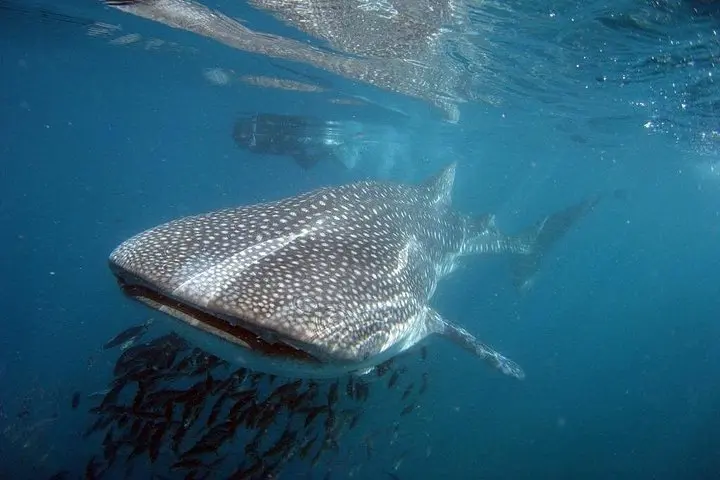
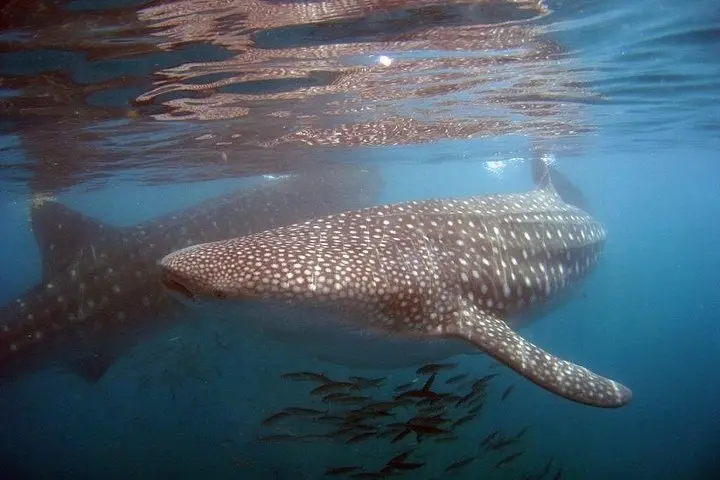
Dawn glassed across La Paz Bay and the boat eased from the marina, engines low so the water could do its talking. Within an hour the horizon changes—open Sea of Cortez to your left, the ragged silhouette of Isla Espíritu Santo to your right—and you begin scanning for the slow, spotted shadow of a whale shark.
Dawn glassed across La Paz Bay and the boat eased from the marina, engines low so the water could do its talking. Within an hour the horizon changes—open Sea of Cortez to your left, the ragged silhouette of Isla Espíritu Santo to your right—and you begin scanning for the slow, spotted shadow of a whale shark.
La Paz sits on the southeastern edge of the Baja California peninsula where tectonic forces opened the Gulf of California. Those same ocean currents bring plankton-rich upwellings that attract juvenile whale sharks each winter. Local fishing communities and researchers have long observed these seasonal visits and now run guided encounters that emphasize learning and protection.
The excursion is focused, typically three hours on the water with up to a dozen guests. Guides brief the group on snorkeling technique, approach distances, and conservation behavior before setting out. Wetsuits and masks are usually provided; sightings depend on the animals’ movements and are never guaranteed.
Practical notes: expect choppy water at times, wear a snug mask and reef-safe sunscreen, and plan for strong sun and wind on the ride back. Listen to guides—rules about distance and no-touch are enforced to keep both swimmers and sharks safe. Bring a towel, a dry bag for electronics, and seasickness remedies if you're prone.
This is an encounter built on patience and respect: you may leave with breath caught at the sight of a gentle giant or with the quiet satisfaction of having supported local conservation through responsible tourism.