THE ADVENTURE COLLECTIVE® · Independent discovery and booking for outdoor travel

Explore downtown Syracuse on a focused two‑hour private walking tour from the MOST museum through Clinton and Hanover Squares. Learn how the Erie Canal and the salt industry shaped the city while taking in 19th‑century architecture and civic monuments.
Explore downtown Syracuse on a focused two‑hour private walking tour from the MOST museum through Clinton and Hanover Squares. Learn how the Erie Canal and the salt industry shaped the city while taking in 19th‑century architecture and civic monuments.
The morning air in Armory Square feels like a page turning — brick façades catching light, a few delivery trucks easing past cafés, and the promise of two hours that will redraw how you see Syracuse.
Verified experiences and guided adventures in the surrounding area.
Operated by [email protected] · Syracuse, New York
The morning air in Armory Square feels like a page turning — brick façades catching light, a few delivery trucks easing past cafés, and the promise of two hours that will redraw how you see Syracuse.
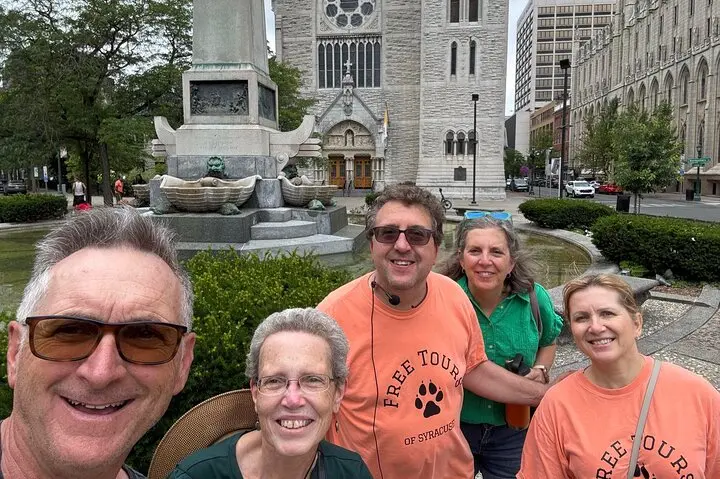
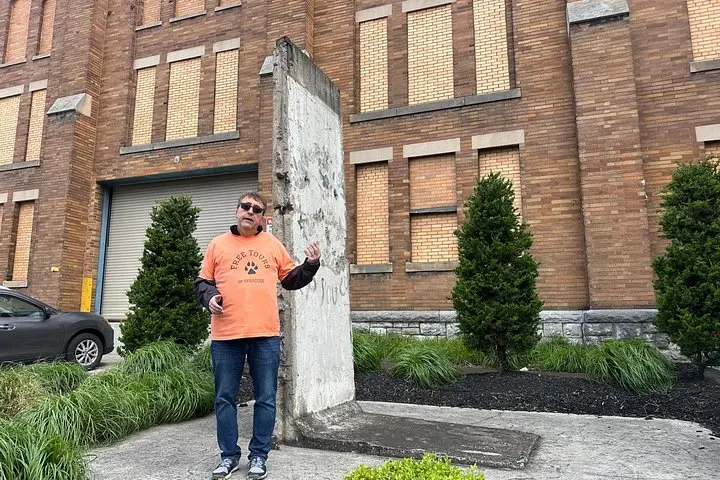
Walkers start in front of the MOST museum and move through Clinton Square where the Erie Canal once cut a decisive line through town, daring commerce and people to push northward. The route threads Hanover Square’s 19th‑century masonry, pauses at the Gridley Building — Syracuse’s first skyscraper — and stops at civic sites like the Onondaga County courthouse and Soldiers and Sailors Monument. Along the way guides layer industrial history (salt works and manufacturing), immigrant neighborhoods, and the city’s architectural shifts from Greek Revival to Romanesque Revival.
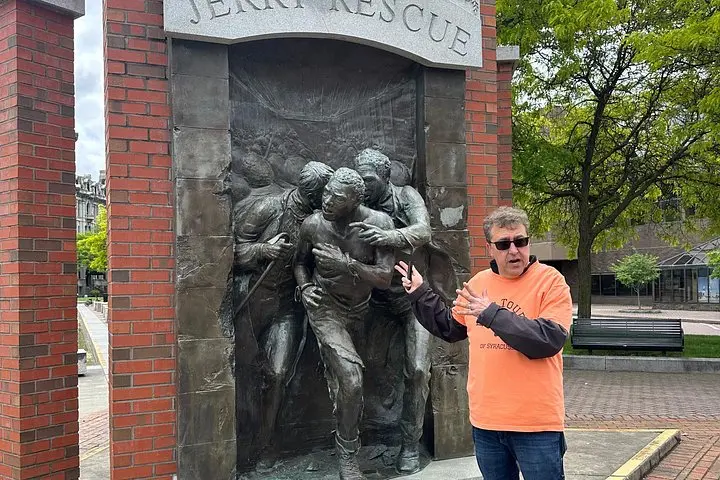
Geology here is subtle: glacially scoured lakes and salt springs shaped settlement patterns more than dramatic peaks. Culture is public and gritty — neighborhood businesses, murals, and monuments that mark social struggles like the Jerry Rescue.
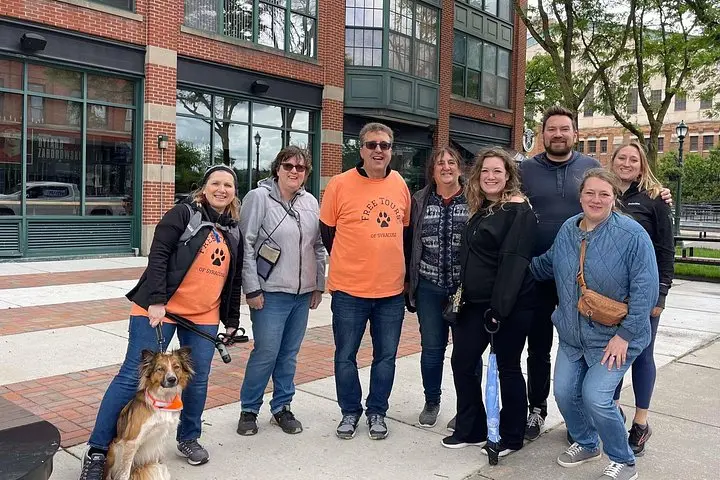
Practical guide: expect a two‑hour, roughly 1.5–2 mile walk on paved streets with minimal elevation gain. Comfortable shoes, a water bottle, and a light jacket for variable Northeastern weather make this easy on most fitness levels. Public transit and street parking are nearby; the tour is stroller‑accessible and private, ideal for visitors who want focused interpretation. Check weather and cancellation terms (full refund if canceled 24 hours ahead) and arrive 10 minutes early to start promptly at the MOST. This is an urban stroll that rewards curiosity — look up, read plaques, and let the city’s past pull you forward.
Yes — the tour is listed as stroller accessible and is family friendly; expect two hours of walking with stops for stories and photos.
The tour starts and ends in front of the MOST (Milton J. Rubenstein Museum of Science & Technology) in Armory Square for easy meeting and transit access.
Full refund available if you cancel at least 24 hours before departure; tours may be canceled for bad weather per the provider’s policy.
Most exterior stops and monuments are included in the walking route; paid internal admissions (museum entries) are typically not included unless specified.
[email protected] operates guided outdoor trips and adventures with an emphasis on safety, stewardship, and memorable experiences.
The morning air in Armory Square feels like a page turning — brick façades catching light, a few delivery trucks easing past cafés, and the promise of two hours that will redraw how you see Syracuse.
The morning air in Armory Square feels like a page turning — brick façades catching light, a few delivery trucks easing past cafés, and the promise of two hours that will redraw how you see Syracuse.
Walkers start in front of the MOST museum and move through Clinton Square where the Erie Canal once cut a decisive line through town, daring commerce and people to push northward. The route threads Hanover Square’s 19th‑century masonry, pauses at the Gridley Building — Syracuse’s first skyscraper — and stops at civic sites like the Onondaga County courthouse and Soldiers and Sailors Monument. Along the way guides layer industrial history (salt works and manufacturing), immigrant neighborhoods, and the city’s architectural shifts from Greek Revival to Romanesque Revival.
Geology here is subtle: glacially scoured lakes and salt springs shaped settlement patterns more than dramatic peaks. Culture is public and gritty — neighborhood businesses, murals, and monuments that mark social struggles like the Jerry Rescue.
Practical guide: expect a two‑hour, roughly 1.5–2 mile walk on paved streets with minimal elevation gain. Comfortable shoes, a water bottle, and a light jacket for variable Northeastern weather make this easy on most fitness levels. Public transit and street parking are nearby; the tour is stroller‑accessible and private, ideal for visitors who want focused interpretation. Check weather and cancellation terms (full refund if canceled 24 hours ahead) and arrive 10 minutes early to start promptly at the MOST. This is an urban stroll that rewards curiosity — look up, read plaques, and let the city’s past pull you forward.