THE ADVENTURE COLLECTIVE® · Independent discovery and booking for outdoor travel

Travel south from Budapest for a full-day private tour of Szeged — cathedral towers, university quarters, a family paprika mill and a riverside lunch on the Tisza. Learn how paprika shaped local agriculture and taste the region’s signature flavors.
Travel south from Budapest for a full-day private tour of Szeged — cathedral towers, university quarters, a family paprika mill and a riverside lunch on the Tisza. Learn how paprika shaped local agriculture and taste the region’s signature flavors.
You arrive on a bright morning as the private car slips south from Budapest, the flat Hungarian plain opening like a vast green page. By the time the Tisza comes into view in Szeged, its current seems to dare you to slow down — the city’s low-rise facades, broad squares, and the twin towers of the Dom rise against a wide sky.
Verified experiences and guided adventures in the surrounding area.
Operated by Budapest Day Trips · Szeged, Csongrád-Csanád
You arrive on a bright morning as the private car slips south from Budapest, the flat Hungarian plain opening like a vast green page. By the time the Tisza comes into view in Szeged, its current seems to dare you to slow down — the city’s low-rise facades, broad squares, and the twin towers of the Dom rise against a wide sky.
Szeged wears history plainly: Roman roads beneath modern streets, a university that produced Nobel laureates, and Secessionist architecture like the Reök Palace. Geologically the area lies on the plain of the Tisza River, shaped by alluvial soils that made paprika cultivation viable in the 18th–19th centuries. Culturally, paprika is more than a spice here; it’s an agricultural industry and a local identity — you’ll visit a family-owned mill and a small museum that includes a short film and plantation tour demonstrating the drying and grinding that produced the famous red powders.
The itinerary moves deliberately — cathedral visit with views from the 83 m towers, a riverside stroll, the university quarter, synagogue and local museum, followed by a traditional fishermen’s soup lunch and time at the paprika mill to sample mild, hot, smoked and oil varieties.
Practicalities: expect a 9–10 hour day with hotel pickup and private transport, mostly flat walking on paved streets. Wear comfortable shoes, bring sun protection and a small daypack for purchases. If you want specific paprika heats or bulk shipments, tell your guide — many family mills will pack for travel. Accessibility is generally good, but check seasonal hours for the plantation visit.
No — the tour accepts mobile or paper tickets; guides can confirm your booking from a digital reservation.
Yes — transportation and many sites are wheelchair accessible, but check in advance for any mobility needs at specific stops like the plantation area.
Yes — the family mill sells mild, hot, smoked and paprika oil, and can pack items for travel; international shipping may be arranged by the mill on request.
Pickup is available from your Budapest hotel; the day trip includes private vehicle transport to and from Szeged.
Budapest Day Trips operates guided outdoor trips and adventures with an emphasis on safety, stewardship, and memorable experiences.
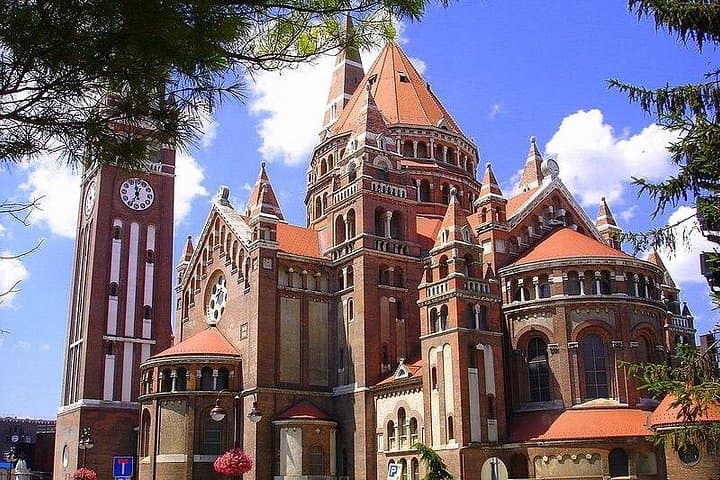


You arrive on a bright morning as the private car slips south from Budapest, the flat Hungarian plain opening like a vast green page. By the time the Tisza comes into view in Szeged, its current seems to dare you to slow down — the city’s low-rise facades, broad squares, and the twin towers of the Dom rise against a wide sky.
You arrive on a bright morning as the private car slips south from Budapest, the flat Hungarian plain opening like a vast green page. By the time the Tisza comes into view in Szeged, its current seems to dare you to slow down — the city’s low-rise facades, broad squares, and the twin towers of the Dom rise against a wide sky.
Szeged wears history plainly: Roman roads beneath modern streets, a university that produced Nobel laureates, and Secessionist architecture like the Reök Palace. Geologically the area lies on the plain of the Tisza River, shaped by alluvial soils that made paprika cultivation viable in the 18th–19th centuries. Culturally, paprika is more than a spice here; it’s an agricultural industry and a local identity — you’ll visit a family-owned mill and a small museum that includes a short film and plantation tour demonstrating the drying and grinding that produced the famous red powders.
The itinerary moves deliberately — cathedral visit with views from the 83 m towers, a riverside stroll, the university quarter, synagogue and local museum, followed by a traditional fishermen’s soup lunch and time at the paprika mill to sample mild, hot, smoked and oil varieties.
Practicalities: expect a 9–10 hour day with hotel pickup and private transport, mostly flat walking on paved streets. Wear comfortable shoes, bring sun protection and a small daypack for purchases. If you want specific paprika heats or bulk shipments, tell your guide — many family mills will pack for travel. Accessibility is generally good, but check seasonal hours for the plantation visit.