THE ADVENTURE COLLECTIVE® · Independent discovery and booking for outdoor travel

Explore Ta Prohm at first light, read the faces of Bayon, walk Angkor Wat’s broad causeways, and finish with the floating communities of Tonle Sap. This one-day private tour pairs temple history with living lake culture, with hotel pickup and an English guide.
Explore Ta Prohm at first light, read the faces of Bayon, walk Angkor Wat’s broad causeways, and finish with the floating communities of Tonle Sap. This one-day private tour pairs temple history with living lake culture, with hotel pickup and an English guide.
A cool morning breaks across the Angkor moats as the van pulls up before dawn and the stones begin to warm beneath your feet. The tour opens at Ta Prohm, where roots push through galleries and the jungle seems to be actively reclaiming the temple — a place of sudden angles, shadowed corridors, and cinematic photo stops. From there the route threads through the fortified avenues of Angkor Thom, pauses at the placid faces of Bayon, and climbs the terraces where kings once stood.
Verified experiences and guided adventures in the surrounding area.
Operated by Peacock Asia Tours · Siem Reap, Siem Reap Province
A cool morning breaks across the Angkor moats as the van pulls up before dawn and the stones begin to warm beneath your feet. The tour opens at Ta Prohm, where roots push through galleries and the jungle seems to be actively reclaiming the temple — a place of sudden angles, shadowed corridors, and cinematic photo stops. From there the route threads through the fortified avenues of Angkor Thom, pauses at the placid faces of Bayon, and climbs the terraces where kings once stood.
Angkor Wat caps the day: a vast 12th-century complex originally dedicated to Vishnu, its galleries carved with myths and bas-reliefs that map Khmer history. Afternoon shifts the mood to Tonle Sap, Southeast Asia’s largest freshwater lake, where floating houses and fishing platforms rise and fall with the seasons and waterbirds dot the horizon like punctuation.
Geology here is flat, limestone and laterite foundations with sandstone temples; the terrain is mostly compacted dirt, steps, and carved stone slabs — uneven but not technical. Culturally, the route tours both royal symbolism and daily life: temple architecture tells statecraft and devotion, while the floating village illustrates adaptive livelihoods tied to seasonal floods.
Practical guide: expect a 7–8 hour private tour with hotel pickup, an English-speaking guide, and breaks for photos and lunch. Bring sun protection, modest clothing that covers shoulders and knees (required), cash for the Angkor pass ($37 for a single day) and local purchases, and comfortable shoes for walking on uneven stone. Start early to beat crowds and heat; keep hydrated and move deliberately on temple steps.
Yes — a single-day Angkor pass is required for entry to the Angkor Archaeological Park (current single-day price is $37). Purchase ahead to speed entry.
The tour runs approximately 7–8 hours and typically begins around 7:30 a.m. with hotel pickup in Siem Reap.
No — the tour is rated easy and suitable for most fitness levels, but expect walking on uneven stone and stairs; bring supportive shoes.
Cold drinking water and cold towels are provided during the temple visits; lunch in Angkor Park is included in the itinerary but verify menu options with the operator if you have dietary needs.
Peacock Asia Tours operates guided outdoor trips and adventures with an emphasis on safety, stewardship, and memorable experiences.
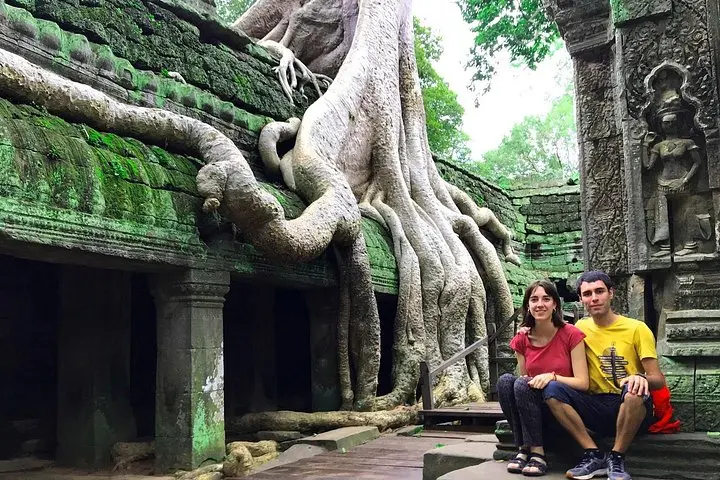
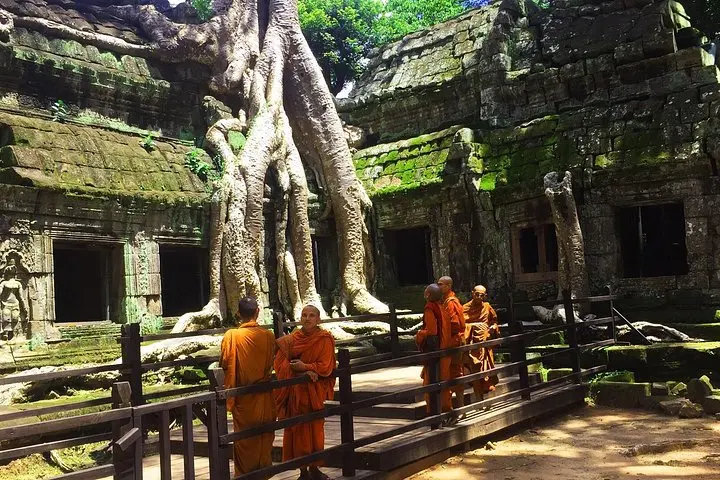
A cool morning breaks across the Angkor moats as the van pulls up before dawn and the stones begin to warm beneath your feet. The tour opens at Ta Prohm, where roots push through galleries and the jungle seems to be actively reclaiming the temple — a place of sudden angles, shadowed corridors, and cinematic photo stops. From there the route threads through the fortified avenues of Angkor Thom, pauses at the placid faces of Bayon, and climbs the terraces where kings once stood.
A cool morning breaks across the Angkor moats as the van pulls up before dawn and the stones begin to warm beneath your feet. The tour opens at Ta Prohm, where roots push through galleries and the jungle seems to be actively reclaiming the temple — a place of sudden angles, shadowed corridors, and cinematic photo stops. From there the route threads through the fortified avenues of Angkor Thom, pauses at the placid faces of Bayon, and climbs the terraces where kings once stood.
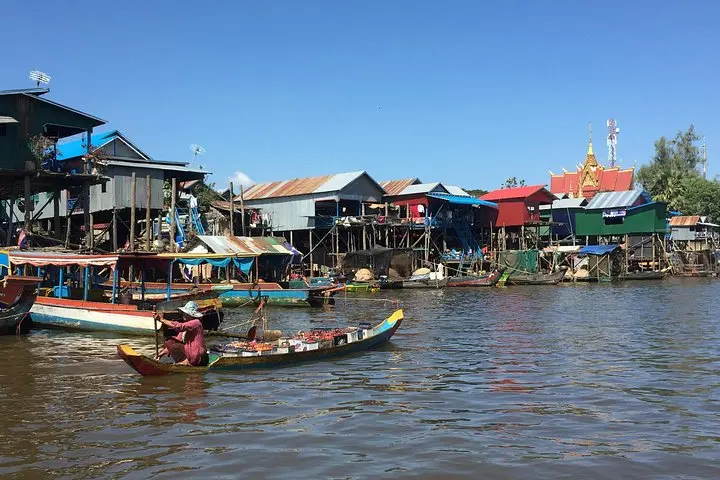
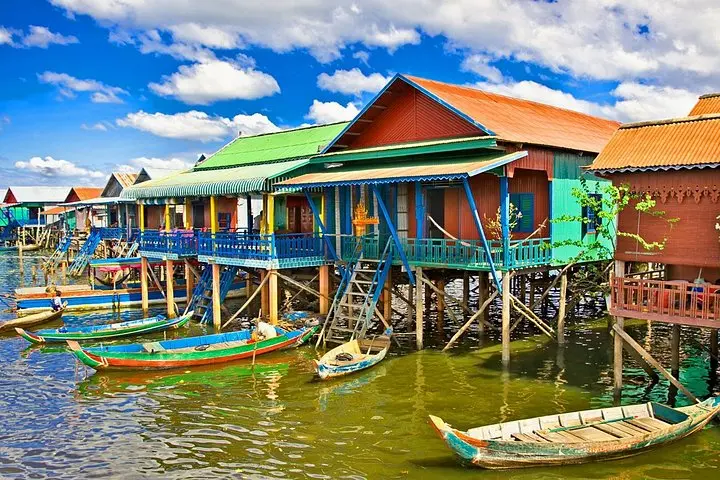
Angkor Wat caps the day: a vast 12th-century complex originally dedicated to Vishnu, its galleries carved with myths and bas-reliefs that map Khmer history. Afternoon shifts the mood to Tonle Sap, Southeast Asia’s largest freshwater lake, where floating houses and fishing platforms rise and fall with the seasons and waterbirds dot the horizon like punctuation.
Geology here is flat, limestone and laterite foundations with sandstone temples; the terrain is mostly compacted dirt, steps, and carved stone slabs — uneven but not technical. Culturally, the route tours both royal symbolism and daily life: temple architecture tells statecraft and devotion, while the floating village illustrates adaptive livelihoods tied to seasonal floods.
Practical guide: expect a 7–8 hour private tour with hotel pickup, an English-speaking guide, and breaks for photos and lunch. Bring sun protection, modest clothing that covers shoulders and knees (required), cash for the Angkor pass ($37 for a single day) and local purchases, and comfortable shoes for walking on uneven stone. Start early to beat crowds and heat; keep hydrated and move deliberately on temple steps.