THE ADVENTURE COLLECTIVE® · Independent discovery and booking for outdoor travel

Step inside Taghazout’s Targant Museum to trace Amazigh life where surf meets shore. This short visit pairs curated artifacts with local stories and a light argan‑oil aperitif for a clear snapshot of coastal Berber heritage.
Step inside Taghazout’s Targant Museum to trace Amazigh life where surf meets shore. This short visit pairs curated artifacts with local stories and a light argan‑oil aperitif for a clear snapshot of coastal Berber heritage.
A salt-scented wind from the Atlantic carries the sound of distant surf as visitors step through the Targant Museum’s doorway in Taghazout. The room cools and the immediate pace of the village falls away—display cases and woven textiles refocus attention on human histories shaped by sea and mountain.
Verified experiences and guided adventures in the surrounding area.
Operated by Go Booking Tours · Taghazout, Souss‑Massa
A salt-scented wind from the Atlantic carries the sound of distant surf as visitors step through the Targant Museum’s doorway in Taghazout. The room cools and the immediate pace of the village falls away—display cases and woven textiles refocus attention on human histories shaped by sea and mountain.
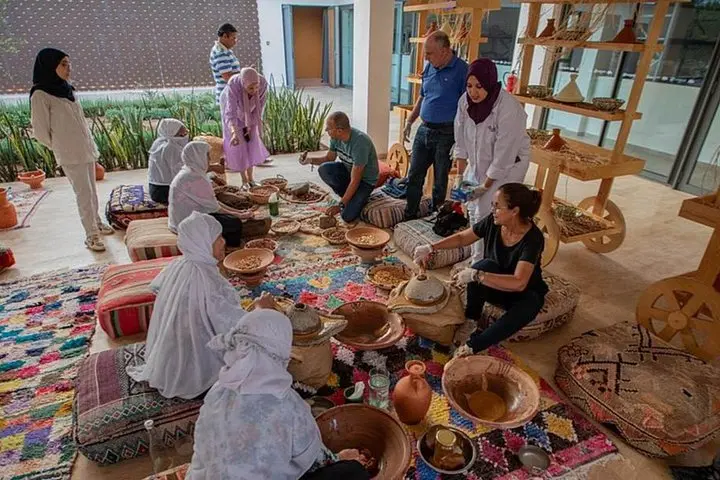
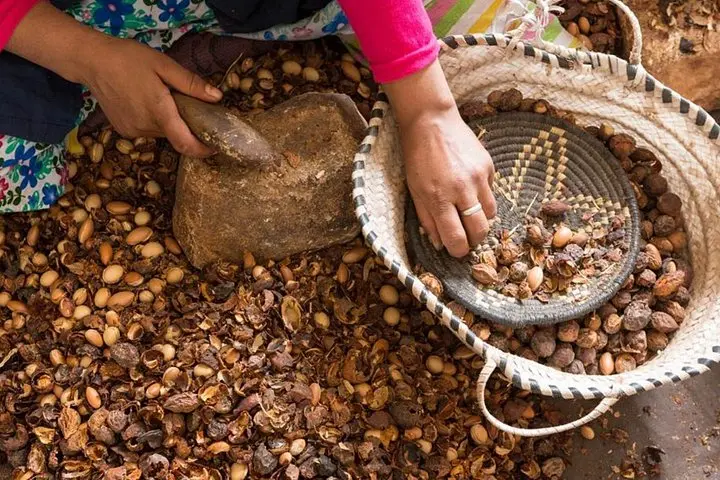
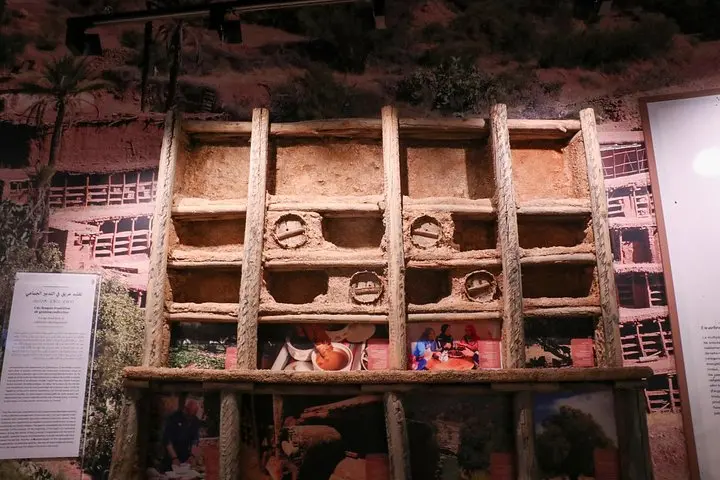
The museum documents Amazigh (Berber) life on Morocco’s Atlantic edge: fishing tools, argan‑oil implements, traditional garments and reed baskets that speak to resourceful coastal subsistence. Geologically, the region sits on the fertile coastal plain below the Anti‑Atlas foothills; visible shells and weathered rock fragments in the area explain long ties between communities and the sea.
Culturally, Taghazout has shifted from a fishing village to a surf destination while retaining craft traditions; the museum frames that transition with objects and oral histories. Staff commonly offer contextual explanation in Arabic, French and English, and exhibits occasionally touch on local biodiversity—the coastal dunes, migratory birds and intertidal life that fishermen once depended on.
Practical guidance: plan on 3–4 hours to include guided interpretation and the included light lunch and Moroccan tea. The site is compact and stroller‑friendly; wear comfortable shoes for short walks between exhibits and nearby viewpoints. Midday can be busy—visit in the morning for cooler temperatures and clearer explanations from guides. Respect display rules, ask before photographing artifacts, and consider combining the museum visit with a short walk along Taghazout’s shoreline to connect the exhibits to the landscape that shaped them.
The experience typically lasts 3–4 hours including the guided visit, explanations, and the included light lunch and tea.
The museum is described as stroller accessible and suitable for most mobility levels, with short, flat routes through exhibits.
Guides commonly speak Arabic, French and English; check availability when booking if you require a specific language.
Yes—families and children are welcome; infants may ride in strollers and exhibits include hands‑on displays appropriate for younger visitors.
Go Booking Tours operates guided outdoor trips and adventures with an emphasis on safety, stewardship, and memorable experiences.
A salt-scented wind from the Atlantic carries the sound of distant surf as visitors step through the Targant Museum’s doorway in Taghazout. The room cools and the immediate pace of the village falls away—display cases and woven textiles refocus attention on human histories shaped by sea and mountain.
A salt-scented wind from the Atlantic carries the sound of distant surf as visitors step through the Targant Museum’s doorway in Taghazout. The room cools and the immediate pace of the village falls away—display cases and woven textiles refocus attention on human histories shaped by sea and mountain.
The museum documents Amazigh (Berber) life on Morocco’s Atlantic edge: fishing tools, argan‑oil implements, traditional garments and reed baskets that speak to resourceful coastal subsistence. Geologically, the region sits on the fertile coastal plain below the Anti‑Atlas foothills; visible shells and weathered rock fragments in the area explain long ties between communities and the sea.
Culturally, Taghazout has shifted from a fishing village to a surf destination while retaining craft traditions; the museum frames that transition with objects and oral histories. Staff commonly offer contextual explanation in Arabic, French and English, and exhibits occasionally touch on local biodiversity—the coastal dunes, migratory birds and intertidal life that fishermen once depended on.
Practical guidance: plan on 3–4 hours to include guided interpretation and the included light lunch and Moroccan tea. The site is compact and stroller‑friendly; wear comfortable shoes for short walks between exhibits and nearby viewpoints. Midday can be busy—visit in the morning for cooler temperatures and clearer explanations from guides. Respect display rules, ask before photographing artifacts, and consider combining the museum visit with a short walk along Taghazout’s shoreline to connect the exhibits to the landscape that shaped them.