THE ADVENTURE COLLECTIVE® · Independent discovery and booking for outdoor travel

Experience the Taj Mahal at first light and explore Agra’s Mughal landmarks on a full-day private tour from Delhi. Expect guided history, wheelchair-accessible transport, and practical tips for visiting three major sites in a long but rewarding day.
Experience the Taj Mahal at first light and explore Agra’s Mughal landmarks on a full-day private tour from Delhi. Expect guided history, wheelchair-accessible transport, and practical tips for visiting three major sites in a long but rewarding day.
Dawn breaks on the Yamuna and the Taj Mahal shifts from pale to luminous as visitors arrive through the formal gardens. The white marble seems to change with each step, the river at the monument’s back reflecting a pale ribbon that nudges the base of the platform. It’s a day of close-up monuments, crowded lanes, and controlled moments of quiet before the gates open.
Verified experiences and guided adventures in the surrounding area.
Operated by AEROELITE TOUR AND TRAVEL · Agra, Uttar Pradesh
Dawn breaks on the Yamuna and the Taj Mahal shifts from pale to luminous as visitors arrive through the formal gardens. The white marble seems to change with each step, the river at the monument’s back reflecting a pale ribbon that nudges the base of the platform. It’s a day of close-up monuments, crowded lanes, and controlled moments of quiet before the gates open.
The route threads through Mughal history: the Taj Mahal (commissioned by Shah Jahan in 1631), the fortified complexity of Agra Fort to the northwest, the finely inlaid Tomb of I'timād-ud-Daulah (the “Baby Taj”) and the ruined Sheesh Mahal with its surviving water channels. Geologically, the Taj’s white Makrana marble and pietra dura inlay work trace trade in stone and semi-precious minerals across the subcontinent.
Culturally, the visit moves between palace architecture and living streets—local guides translate inscriptions and point out Mughal garden logic while markets offer kebabs, petha sweets, and hand-block prints.
Practical guidance: plan an early departure from Delhi (this is a 10–12 hour day), expect airport-style security at entrances, and carry ID—passport for foreign nationals. The site is largely accessible but involves walking on paved terraces and some stairs; wear broken-in shoes and bring sun protection and water. Photography is common but drones and tripods are restricted. Allow time for transit delays and check temple/monument opening times; many visitors combine the Taj with Agra Fort and the Baby Taj for a full sense of Mughal Agra.
Typical door-to-door duration is 10–12 hours, covering transit time to Agra plus guided visits to the Taj, Agra Fort, and the Tomb of I'timād-ud-Daulah.
This tour lists admission fees for monuments as included; confirm at booking and carry a copy of the voucher.
The tour notes wheelchair-accessible transport and surfaces in some areas, but there are steps at many monuments—check specific access requirements with the operator.
Meals are not generally listed as included; the itinerary often provides bottled water and a private vehicle, while food stops are available en route or in Agra.
AEROELITE TOUR AND TRAVEL operates guided outdoor trips and adventures with an emphasis on safety, stewardship, and memorable experiences.

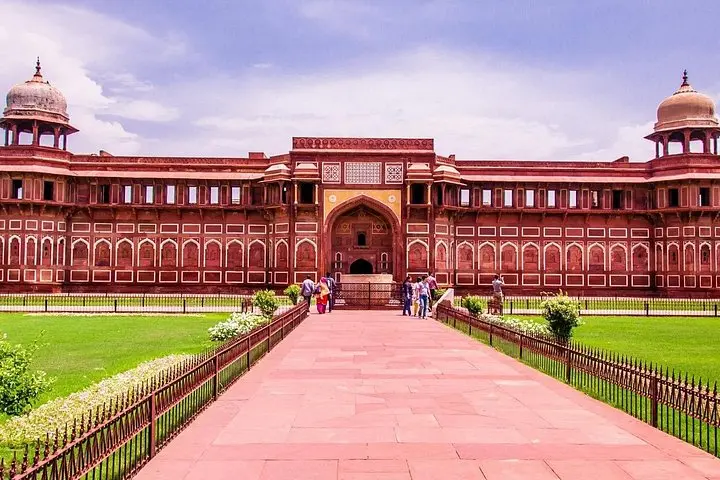


Dawn breaks on the Yamuna and the Taj Mahal shifts from pale to luminous as visitors arrive through the formal gardens. The white marble seems to change with each step, the river at the monument’s back reflecting a pale ribbon that nudges the base of the platform. It’s a day of close-up monuments, crowded lanes, and controlled moments of quiet before the gates open.
Dawn breaks on the Yamuna and the Taj Mahal shifts from pale to luminous as visitors arrive through the formal gardens. The white marble seems to change with each step, the river at the monument’s back reflecting a pale ribbon that nudges the base of the platform. It’s a day of close-up monuments, crowded lanes, and controlled moments of quiet before the gates open.
The route threads through Mughal history: the Taj Mahal (commissioned by Shah Jahan in 1631), the fortified complexity of Agra Fort to the northwest, the finely inlaid Tomb of I'timād-ud-Daulah (the “Baby Taj”) and the ruined Sheesh Mahal with its surviving water channels. Geologically, the Taj’s white Makrana marble and pietra dura inlay work trace trade in stone and semi-precious minerals across the subcontinent.
Culturally, the visit moves between palace architecture and living streets—local guides translate inscriptions and point out Mughal garden logic while markets offer kebabs, petha sweets, and hand-block prints.
Practical guidance: plan an early departure from Delhi (this is a 10–12 hour day), expect airport-style security at entrances, and carry ID—passport for foreign nationals. The site is largely accessible but involves walking on paved terraces and some stairs; wear broken-in shoes and bring sun protection and water. Photography is common but drones and tripods are restricted. Allow time for transit delays and check temple/monument opening times; many visitors combine the Taj with Agra Fort and the Baby Taj for a full sense of Mughal Agra.