THE ADVENTURE COLLECTIVE® · Independent discovery and booking for outdoor travel

Make the long day from Jaipur count: watch the Taj Mahal’s marble glow at dawn, explore Agra Fort, and detour to Fatehpur Sikri on a guided car- or train-assisted day trip. Practical logistics, local history, and timing tips help you see the highlights without surprises.
Make the long day from Jaipur count: watch the Taj Mahal’s marble glow at dawn, explore Agra Fort, and detour to Fatehpur Sikri on a guided car- or train-assisted day trip. Practical logistics, local history, and timing tips help you see the highlights without surprises.
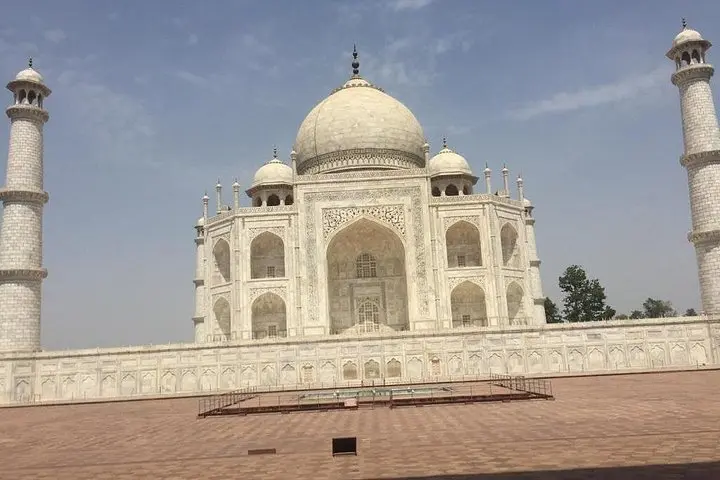
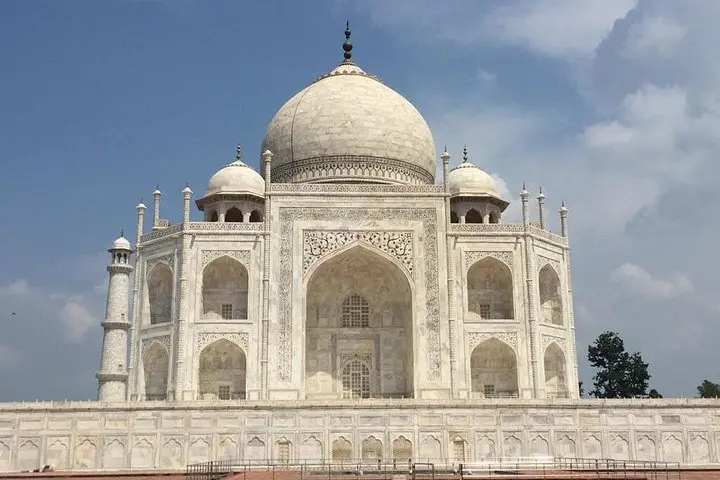
A pre-dawn drive from Jaipur unwraps itself on the highway: low sun glancing off fields, drivers navigating roadside bazaars, and the Yamuna’s valley drawing you toward a white silhouette. Arriving in Agra, the Taj Mahal’s marble appears to breathe in the morning light — cool, carved, and precisely scaled to be seen from many angles.
Verified experiences and guided adventures in the surrounding area.
Operated by TAJ ONE INDIA · Agra, Uttar Pradesh
A pre-dawn drive from Jaipur unwraps itself on the highway: low sun glancing off fields, drivers navigating roadside bazaars, and the Yamuna’s valley drawing you toward a white silhouette. Arriving in Agra, the Taj Mahal’s marble appears to breathe in the morning light — cool, carved, and precisely scaled to be seen from many angles.
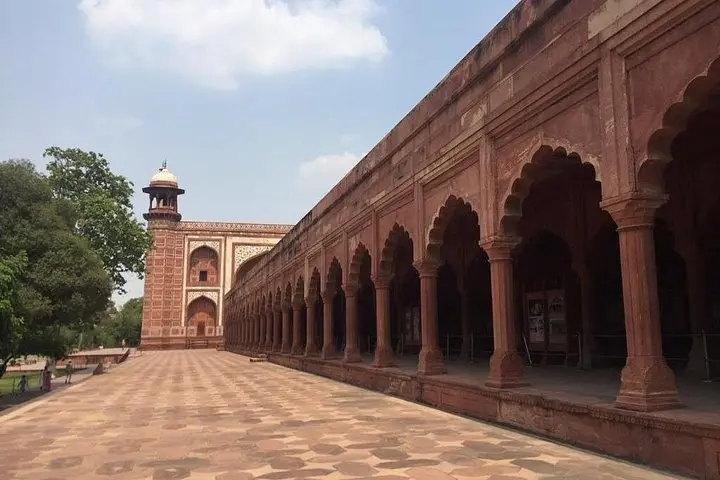
Built by Shah Jahan in the 17th century as an imperial mausoleum, the Taj sits on the south bank of the Yamuna, its white Makrana marble quarried from Rajasthan and laid in delicate inlay work that resists the river’s damp. Nearby, Agra Fort and the deserted red-stone city of Fatehpur Sikri, a short stop en route, tell complementary stories of Mughal power and architectural experiment.
On a practical level, this is a long day: expect 4–5 hours each way by road (Jaipur–Agra ≈ 240 km) or a similar total time using scheduled trains plus local transfers. Sunrise and late afternoon provide gentler light and fewer crowds; security checks, bag restrictions, and modest dress rules apply at the complex. The tour’s structure typically includes guided time at the Taj, a walkthrough of Agra Fort, and a stop at Fatehpur Sikri, with lunch and driver/guide hospitality built in.
Bring a refillable water bottle, breathable layers for hot afternoons and cooler mornings, and comfortable shoes for uneven marble and fort staircases. If arriving by train, coordinate platform pickup to avoid delays. For visitors who want history with a reliable logistics backbone, the Jaipur-to-Agra day trip packages a concentrated cultural immersion into Mughal India without overnight planning.
Car offers flexible timing and en route stops (Fatehpur Sikri); train can be faster on scheduled services but requires careful coordination for platform pickup and local transfers.
Plan 1.5–2.5 hours at the Taj to allow for security, guided interpretation, and photography without rushing.
Expect bag checks, metal detectors, and a ticket counter; buying e-tickets in advance and carrying ID speeds entry.
The site has accessible pathways and options, but uneven surfaces and stairs at Agra Fort may limit access; check operator wheelchair provisions ahead of booking.
TAJ ONE INDIA operates guided outdoor trips and adventures with an emphasis on safety, stewardship, and memorable experiences.
A pre-dawn drive from Jaipur unwraps itself on the highway: low sun glancing off fields, drivers navigating roadside bazaars, and the Yamuna’s valley drawing you toward a white silhouette. Arriving in Agra, the Taj Mahal’s marble appears to breathe in the morning light — cool, carved, and precisely scaled to be seen from many angles.
A pre-dawn drive from Jaipur unwraps itself on the highway: low sun glancing off fields, drivers navigating roadside bazaars, and the Yamuna’s valley drawing you toward a white silhouette. Arriving in Agra, the Taj Mahal’s marble appears to breathe in the morning light — cool, carved, and precisely scaled to be seen from many angles.
Built by Shah Jahan in the 17th century as an imperial mausoleum, the Taj sits on the south bank of the Yamuna, its white Makrana marble quarried from Rajasthan and laid in delicate inlay work that resists the river’s damp. Nearby, Agra Fort and the deserted red-stone city of Fatehpur Sikri, a short stop en route, tell complementary stories of Mughal power and architectural experiment.
On a practical level, this is a long day: expect 4–5 hours each way by road (Jaipur–Agra ≈ 240 km) or a similar total time using scheduled trains plus local transfers. Sunrise and late afternoon provide gentler light and fewer crowds; security checks, bag restrictions, and modest dress rules apply at the complex. The tour’s structure typically includes guided time at the Taj, a walkthrough of Agra Fort, and a stop at Fatehpur Sikri, with lunch and driver/guide hospitality built in.
Bring a refillable water bottle, breathable layers for hot afternoons and cooler mornings, and comfortable shoes for uneven marble and fort staircases. If arriving by train, coordinate platform pickup to avoid delays. For visitors who want history with a reliable logistics backbone, the Jaipur-to-Agra day trip packages a concentrated cultural immersion into Mughal India without overnight planning.