THE ADVENTURE COLLECTIVE® · Independent discovery and booking for outdoor travel

Take India’s fastest train for a one-day sweep of Agra’s must-see monuments. This Gatimaan Express day trip pairs efficient rail travel with guided visits to the Taj Mahal, Agra Fort and the Baby Taj—ideal for travelers short on time but hungry for heritage.
Take India’s fastest train for a one-day sweep of Agra’s must-see monuments. This Gatimaan Express day trip pairs efficient rail travel with guided visits to the Taj Mahal, Agra Fort and the Baby Taj—ideal for travelers short on time but hungry for heritage.
You step onto the Gatimaan Express while Delhi still yawns, the train pulling out as fields and small towns blur into ribboned countryside. Ninety minutes later Agra Cantt appears—warm air, a guide with your name on a placard, and the soft hint of riverine sand on the breeze.
Verified experiences and guided adventures in the surrounding area.
Operated by Julie International Tours · Agra, Uttar Pradesh
You step onto the Gatimaan Express while Delhi still yawns, the train pulling out as fields and small towns blur into ribboned countryside. Ninety minutes later Agra Cantt appears—warm air, a guide with your name on a placard, and the soft hint of riverine sand on the breeze.
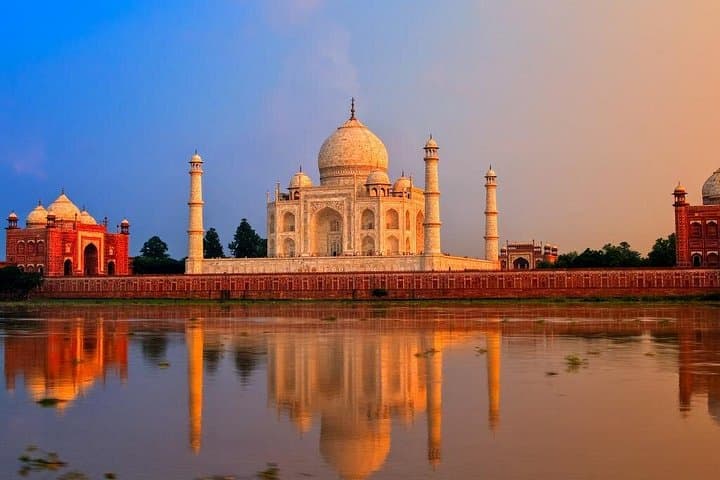
The day is a concentrated walk through Mughal history: the Taj Mahal’s white Makrana marble gleams on the riverbank, built in the 17th century by Shah Jahan as a mausoleum for Mumtaz Mahal. Nearby, Agra Fort’s red sandstone bulks like a fortified city-within-a-city, its pavilions framing long views of the Yamuna. The smaller Itmad-ud-Daulah (the “Baby Taj”) offers delicate pietra dura inlay that reads like a rehearsal for the Taj’s ornament.
Geology and craft meet here—Makrana marble that turns honeyed in low light, and artisans whose inlay techniques still echo centuries-old workshops. The cultural rhythm is practical: scheduled entry slots, security checks, and strict photography rules at some points; a golf cart option from parking to the complex reduces walking but expect paved plazas and steps.
Practical side: start early to beat heat and crowds, carry a refillable water bottle and sun protection, and keep ID and e-tickets ready for train and monument checkpoints. Modest shoulders and knees-covering attire speeds entry, and comfortable shoes make the short walks between sites easier. The itinerary packs three heritage sites and a buffet or local lunch into a long but manageable day that returns you to Delhi by evening—memories, photographs, and an efficient portrait of Mughal Agra.
Gatimaan is the preferred train; if seats are unavailable the operator typically books the Satabdi Express as an efficient alternative.
Some listings include monument tickets in an all-inclusive option—confirm at booking; otherwise have cash or card ready for entrance fees.
The itinerary lists wheelchair-accessible options; Agra sites have uneven surfaces and steps, but golf carts and ramps are available at certain points—notify the operator in advance.
Yes—infants may ride in strollers on the train and the tour is rated easy, but parents should account for security checks and heat.
Julie International Tours operates guided outdoor trips and adventures with an emphasis on safety, stewardship, and memorable experiences.


You step onto the Gatimaan Express while Delhi still yawns, the train pulling out as fields and small towns blur into ribboned countryside. Ninety minutes later Agra Cantt appears—warm air, a guide with your name on a placard, and the soft hint of riverine sand on the breeze.
You step onto the Gatimaan Express while Delhi still yawns, the train pulling out as fields and small towns blur into ribboned countryside. Ninety minutes later Agra Cantt appears—warm air, a guide with your name on a placard, and the soft hint of riverine sand on the breeze.
The day is a concentrated walk through Mughal history: the Taj Mahal’s white Makrana marble gleams on the riverbank, built in the 17th century by Shah Jahan as a mausoleum for Mumtaz Mahal. Nearby, Agra Fort’s red sandstone bulks like a fortified city-within-a-city, its pavilions framing long views of the Yamuna. The smaller Itmad-ud-Daulah (the “Baby Taj”) offers delicate pietra dura inlay that reads like a rehearsal for the Taj’s ornament.
Geology and craft meet here—Makrana marble that turns honeyed in low light, and artisans whose inlay techniques still echo centuries-old workshops. The cultural rhythm is practical: scheduled entry slots, security checks, and strict photography rules at some points; a golf cart option from parking to the complex reduces walking but expect paved plazas and steps.
Practical side: start early to beat heat and crowds, carry a refillable water bottle and sun protection, and keep ID and e-tickets ready for train and monument checkpoints. Modest shoulders and knees-covering attire speeds entry, and comfortable shoes make the short walks between sites easier. The itinerary packs three heritage sites and a buffet or local lunch into a long but manageable day that returns you to Delhi by evening—memories, photographs, and an efficient portrait of Mughal Agra.