THE ADVENTURE COLLECTIVE® · Independent discovery and booking for outdoor travel

Spend a full day moving from the narrow, waterfall-cut Takachiho Gorge to the sweeping grasslands and steaming vents of Mt. Aso. This practical guide prepares you for boat rides, spring water stops, crater viewpoints, and a locally sourced Aka beef lunch.
Spend a full day moving from the narrow, waterfall-cut Takachiho Gorge to the sweeping grasslands and steaming vents of Mt. Aso. This practical guide prepares you for boat rides, spring water stops, crater viewpoints, and a locally sourced Aka beef lunch.
You step out of the van and the gorge pulls you sideways — a narrow river daring you into its shadowed walls while water-worn basalt cliffs frame the current like old pages. The Takachiho boat ride drops you into a corridor of green and spray; paddles whisper, and the gorge’s waterfall writes a steady punctuation.
Verified experiences and guided adventures in the surrounding area.
Operated by H.I.S.Co., Ltd. · Takachiho, Miyazaki Prefecture
You step out of the van and the gorge pulls you sideways — a narrow river daring you into its shadowed walls while water-worn basalt cliffs frame the current like old pages. The Takachiho boat ride drops you into a corridor of green and spray; paddles whisper, and the gorge’s waterfall writes a steady punctuation.
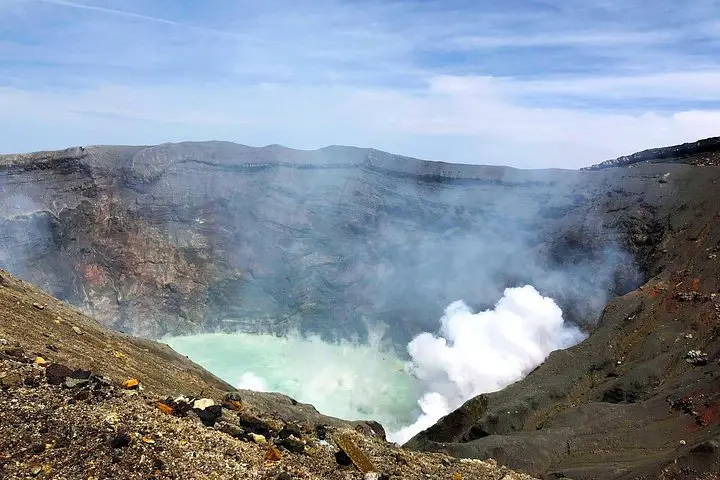
This route stitches together local geology and myth. Takachiho Gorge was carved by lava flows and river action; nearby Amano Iwato features in Shinto myth as the cave where the sun hid. Shirakawa Suigen’s spring water is one of Japan’s 100 best natural waters, fed by volcanic aquifers. Mount Aso sits within one of the planet’s largest calderas — a broad bowl of grasslands, hot springs, and smoking craters shaped by repeated eruptions over millennia.
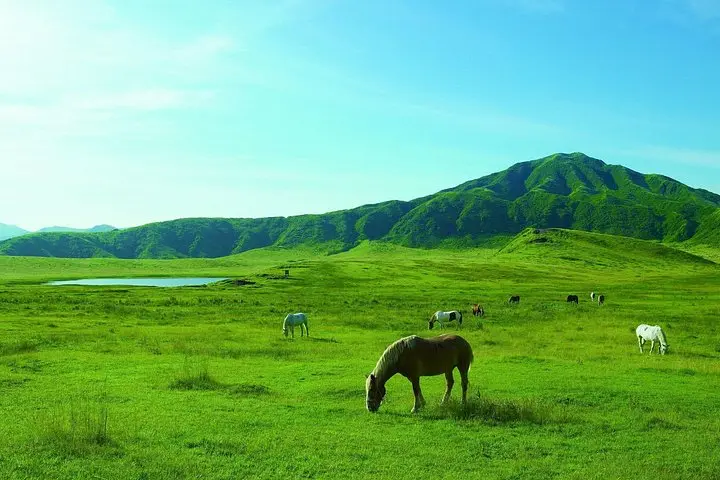
Expect easy, scenic walking (the gorge promenade is ~1 km) and a calm 20–30 minute rowing-boat experience when conditions permit. Kusasenri-ga-hama offers spacious plains and short, flat loops of 1–2 km for lingering views. Crater viewpoints sit higher — plan for cooler winds and possible restrictions if volcanic activity is elevated.
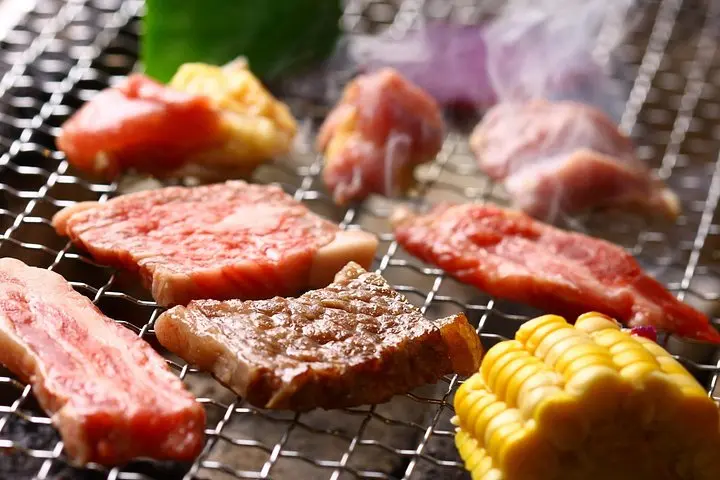
Practical edge: wear sturdy walking shoes, carry a waterproof layer, and bring a refillable bottle — springs are potable at designated taps. Aim for early departures to beat afternoon clouds and improve crater visibility. If boat operations close for safety, guides will redirect to nearby shrines or spring sites. Lunch on Aka beef highlights local flavor — book a tour that includes admissions and transport to maximize a compact, full day in Miyazaki’s raw, living landscape.
Yes; the tour includes a Takachiho Gorge scenic boat ride when weather and water conditions allow — operators may substitute other nearby sights if boats are unavailable.
Access depends on volcanic activity and local safety rules; the tour will take you to the best available viewpoint and the Aso Volcano Museum if direct access is restricted.
The tour is family-friendly and described as physically easy, but infants must sit on laps and the operator advises against participation for pregnant travelers or those with certain health issues.
Spring and autumn offer stable weather and clear visibility; summer is lush but hotter and cloudier, while winter provides crisper air and fewer crowds but colder winds at higher viewpoints.
H.I.S.Co., Ltd. operates guided outdoor trips and adventures with an emphasis on safety, stewardship, and memorable experiences.
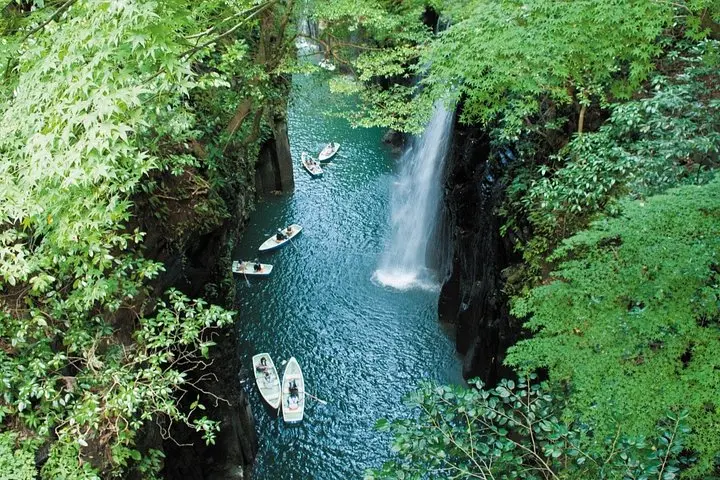
You step out of the van and the gorge pulls you sideways — a narrow river daring you into its shadowed walls while water-worn basalt cliffs frame the current like old pages. The Takachiho boat ride drops you into a corridor of green and spray; paddles whisper, and the gorge’s waterfall writes a steady punctuation.
You step out of the van and the gorge pulls you sideways — a narrow river daring you into its shadowed walls while water-worn basalt cliffs frame the current like old pages. The Takachiho boat ride drops you into a corridor of green and spray; paddles whisper, and the gorge’s waterfall writes a steady punctuation.
This route stitches together local geology and myth. Takachiho Gorge was carved by lava flows and river action; nearby Amano Iwato features in Shinto myth as the cave where the sun hid. Shirakawa Suigen’s spring water is one of Japan’s 100 best natural waters, fed by volcanic aquifers. Mount Aso sits within one of the planet’s largest calderas — a broad bowl of grasslands, hot springs, and smoking craters shaped by repeated eruptions over millennia.
Expect easy, scenic walking (the gorge promenade is ~1 km) and a calm 20–30 minute rowing-boat experience when conditions permit. Kusasenri-ga-hama offers spacious plains and short, flat loops of 1–2 km for lingering views. Crater viewpoints sit higher — plan for cooler winds and possible restrictions if volcanic activity is elevated.
Practical edge: wear sturdy walking shoes, carry a waterproof layer, and bring a refillable bottle — springs are potable at designated taps. Aim for early departures to beat afternoon clouds and improve crater visibility. If boat operations close for safety, guides will redirect to nearby shrines or spring sites. Lunch on Aka beef highlights local flavor — book a tour that includes admissions and transport to maximize a compact, full day in Miyazaki’s raw, living landscape.