THE ADVENTURE COLLECTIVE® · Independent discovery and booking for outdoor travel

Spend a day exploring Kyushu’s dramatic geology and living myths: cedar-lined shrine approaches, riverside stone offerings, and the basalt cliffs of Takachiho Gorge. This guided loop from Fukuoka combines cultural insight with accessible outdoor time.
Spend a day exploring Kyushu’s dramatic geology and living myths: cedar-lined shrine approaches, riverside stone offerings, and the basalt cliffs of Takachiho Gorge. This guided loop from Fukuoka combines cultural insight with accessible outdoor time.
A river threads the canyon like a bright seam, and basalt walls rise vertical, as if the earth decided to show its raw geometry. On this full-day circuit from Fukuoka, travelers move from quiet cedar avenues into a narrow gorge where water dares you to come closer and from there into forest shrines where stone steps hold centuries of rain.
Verified experiences and guided adventures in the surrounding area.
Operated by TREVOPEDIA · Takachiho, Miyazaki Prefecture
A river threads the canyon like a bright seam, and basalt walls rise vertical, as if the earth decided to show its raw geometry. On this full-day circuit from Fukuoka, travelers move from quiet cedar avenues into a narrow gorge where water dares you to come closer and from there into forest shrines where stone steps hold centuries of rain.
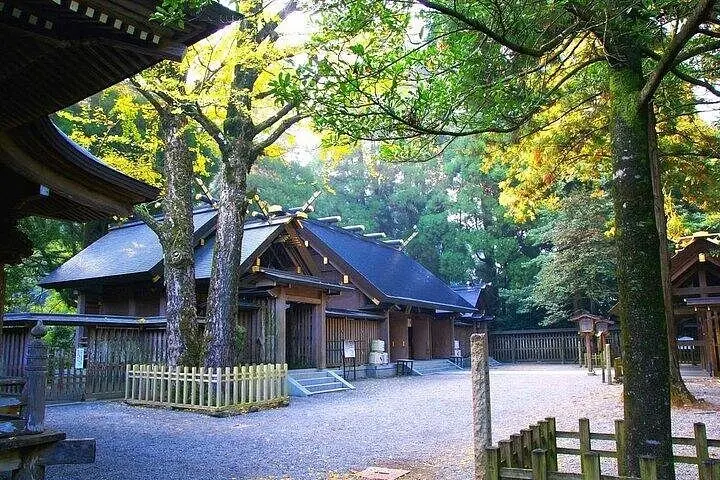
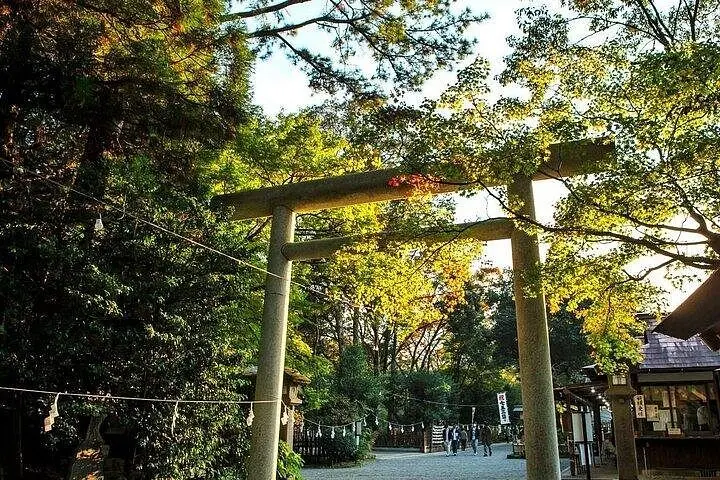
Kamishikimi Kumanoza Shrine opens the day beneath a canopy of tall trees and mossed guardian statues. The shrine’s worn torii and the Iwakura rock speak to local myth—places where kami are thought to rest. Amano Iwato Shrine and the nearby Amanoyasukawara are entwined with the legend of Amaterasu; pilgrims still pile stones at the river’s edge to leave wishes.
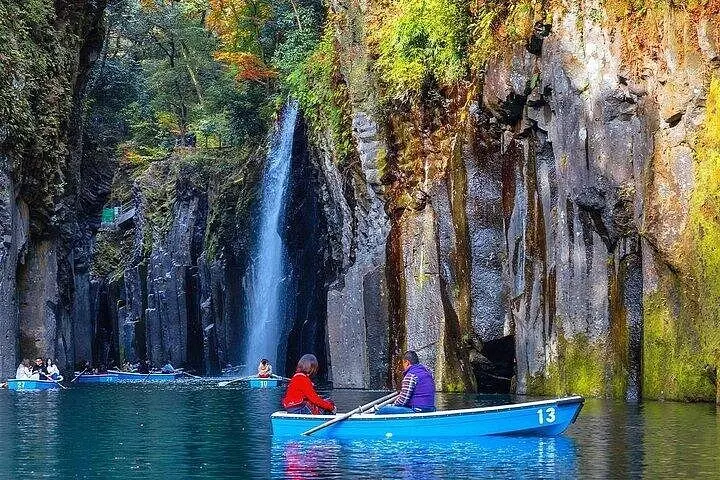
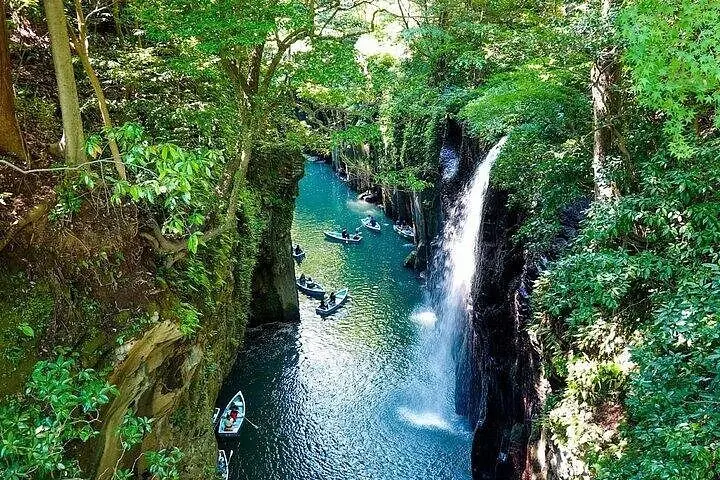
Takachiho Gorge is geological theater: volcanic eruptions and the slow incision of the Gokase River produced hexagonal basalt columns and cliffs up to 100 meters high, with Minainotaki Waterfall dropping into emerald pools below. The landscape has shaped local ritual—boatmen, shrine keepers and seasonal festivals reflect a long cultural link between people and place.
Practical guidance: this is a mostly low-impact walking day—expect paved and stone steps at shrines and gravel paths on the gorge rim. Bring layered rain protection, sturdy walking shoes, and a daypack with water and snacks. Boats on the gorge operate seasonally; arrive early to avoid crowds and give yourself time for short shrine ceremonies and photo stops. Trained guides translate folklore and point out geological details, making the route equally rewarding for history buffs and outdoor seekers.
The full-day tour runs about 9–10 hours including round-trip transfers from Fukuoka and time at each site.
This itinerary lists admission as not applicable; check with the operator for any optional activity fees like boat rentals.
The provider notes wheelchair and stroller accessibility for transportation, but some shrine areas have stone steps—check specifics with the operator for accessibility needs.
Yes—rowboats are available seasonally at the gorge’s pier; availability can be limited during peak times.
TREVOPEDIA operates guided outdoor trips and adventures with an emphasis on safety, stewardship, and memorable experiences.
A river threads the canyon like a bright seam, and basalt walls rise vertical, as if the earth decided to show its raw geometry. On this full-day circuit from Fukuoka, travelers move from quiet cedar avenues into a narrow gorge where water dares you to come closer and from there into forest shrines where stone steps hold centuries of rain.
A river threads the canyon like a bright seam, and basalt walls rise vertical, as if the earth decided to show its raw geometry. On this full-day circuit from Fukuoka, travelers move from quiet cedar avenues into a narrow gorge where water dares you to come closer and from there into forest shrines where stone steps hold centuries of rain.
Kamishikimi Kumanoza Shrine opens the day beneath a canopy of tall trees and mossed guardian statues. The shrine’s worn torii and the Iwakura rock speak to local myth—places where kami are thought to rest. Amano Iwato Shrine and the nearby Amanoyasukawara are entwined with the legend of Amaterasu; pilgrims still pile stones at the river’s edge to leave wishes.
Takachiho Gorge is geological theater: volcanic eruptions and the slow incision of the Gokase River produced hexagonal basalt columns and cliffs up to 100 meters high, with Minainotaki Waterfall dropping into emerald pools below. The landscape has shaped local ritual—boatmen, shrine keepers and seasonal festivals reflect a long cultural link between people and place.
Practical guidance: this is a mostly low-impact walking day—expect paved and stone steps at shrines and gravel paths on the gorge rim. Bring layered rain protection, sturdy walking shoes, and a daypack with water and snacks. Boats on the gorge operate seasonally; arrive early to avoid crowds and give yourself time for short shrine ceremonies and photo stops. Trained guides translate folklore and point out geological details, making the route equally rewarding for history buffs and outdoor seekers.