THE ADVENTURE COLLECTIVE® · Independent discovery and booking for outdoor travel

Glide through karst caves on a traditional sampan, then climb stone steps to the layered Bich Dong Pagoda for valley views. This half-day private tour pairs geology, history and quiet riverside scenery in Ninh Binh.
Glide through karst caves on a traditional sampan, then climb stone steps to the layered Bich Dong Pagoda for valley views. This half-day private tour pairs geology, history and quiet riverside scenery in Ninh Binh.
The sampan slips away from the grass-fringed pier and the Ngo Dong River takes the lead, guiding passengers between limestone towers that rise like weathered sentries. Water lilies drift against the hull; sunlight filters through cave mouths, and the boat’s soft rhythm sets the day’s tempo.
Verified experiences and guided adventures in the surrounding area.
Operated by Vietnam Plus Travel · Tam Coc, Ninh Binh Province
The sampan slips away from the grass-fringed pier and the Ngo Dong River takes the lead, guiding passengers between limestone towers that rise like weathered sentries. Water lilies drift against the hull; sunlight filters through cave mouths, and the boat’s soft rhythm sets the day’s tempo.
This half-day route pairs Tam Coc’s famed three caves—carved by millennia of water—with Bich Dong’s layered pagoda complex clinging partway up a limestone outcrop. Tam Coc’s karst landscape is a chapter in Vietnam’s geology: soluble limestone shaped into towers, subterranean passageways and scalloped cave ceilings. Nearby Thai Vi Temple, a 13th-century site honoring Tran dynasty kings, adds a human-history counterpoint—stone architecture contrasting with the river’s shifting light.
Local culture is visible at close range: women who have rowed these sampans for generations, farmers working seasonal rice paddies, and small temples tucked beneath cliffs. The tour’s private format allows timing for the best light and quieter stretches on the water.
Practical guidance: expect easy, mostly flat activity punctuated by short climbs at Bich Dong (stone steps to middle and upper pagodas). Wear sturdy walking shoes that can handle wet boards and uneven rock, and bring layered rain protection—weather changes quickly here. Peak photo moments are around golden hour and during the May–June rice harvest when fields turn yellow. Carry cash for small offerings and tips, keep plastic waste out of the river, and move deliberately through caves where footing may be dim.
This outing is scenic, low-impact, and accessible—ideal for travelers wanting a compact, sensory introduction to Ninh Binh’s karst valley.
The sampan stretch typically lasts 60–90 minutes, covering the Ngo Dong River and passing through three main caves.
Yes—many traditional sampan operators are local women who use a distinctive rowing technique; it’s a cultural highlight and common on private tours.
Generally yes—activity is low-impact, though boats are low to the water and some sections require careful stepping; travelers with mobility issues should notify the operator ahead of time.
Yes—this half-day itinerary typically includes time at Bich Dong’s lower, middle and upper pagodas and a stop at Thai Vi Temple for a short visit.
Vietnam Plus Travel operates guided outdoor trips and adventures with an emphasis on safety, stewardship, and memorable experiences.

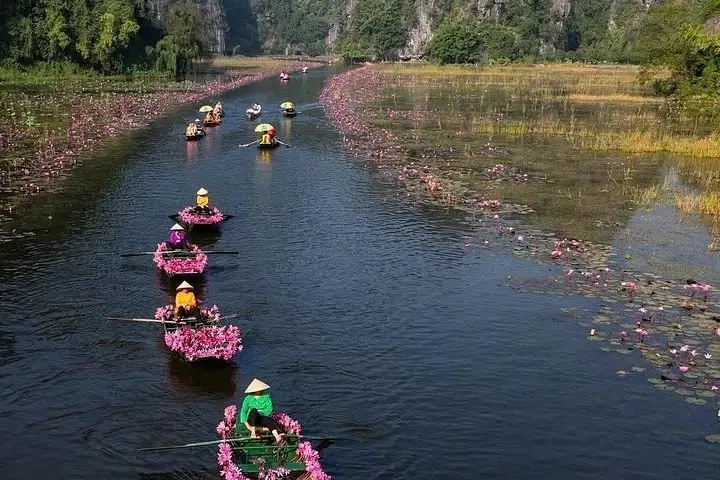

The sampan slips away from the grass-fringed pier and the Ngo Dong River takes the lead, guiding passengers between limestone towers that rise like weathered sentries. Water lilies drift against the hull; sunlight filters through cave mouths, and the boat’s soft rhythm sets the day’s tempo.
The sampan slips away from the grass-fringed pier and the Ngo Dong River takes the lead, guiding passengers between limestone towers that rise like weathered sentries. Water lilies drift against the hull; sunlight filters through cave mouths, and the boat’s soft rhythm sets the day’s tempo.
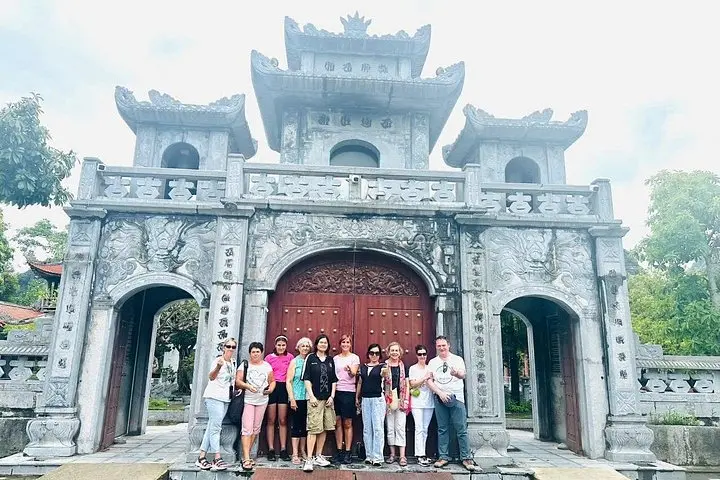
This half-day route pairs Tam Coc’s famed three caves—carved by millennia of water—with Bich Dong’s layered pagoda complex clinging partway up a limestone outcrop. Tam Coc’s karst landscape is a chapter in Vietnam’s geology: soluble limestone shaped into towers, subterranean passageways and scalloped cave ceilings. Nearby Thai Vi Temple, a 13th-century site honoring Tran dynasty kings, adds a human-history counterpoint—stone architecture contrasting with the river’s shifting light.
Local culture is visible at close range: women who have rowed these sampans for generations, farmers working seasonal rice paddies, and small temples tucked beneath cliffs. The tour’s private format allows timing for the best light and quieter stretches on the water.
Practical guidance: expect easy, mostly flat activity punctuated by short climbs at Bich Dong (stone steps to middle and upper pagodas). Wear sturdy walking shoes that can handle wet boards and uneven rock, and bring layered rain protection—weather changes quickly here. Peak photo moments are around golden hour and during the May–June rice harvest when fields turn yellow. Carry cash for small offerings and tips, keep plastic waste out of the river, and move deliberately through caves where footing may be dim.
This outing is scenic, low-impact, and accessible—ideal for travelers wanting a compact, sensory introduction to Ninh Binh’s karst valley.