THE ADVENTURE COLLECTIVE® · Independent discovery and booking for outdoor travel

Spend a full day from Hanoi exploring Hoa Lu’s ancient temples, gliding through Tam Coc’s three caves by bamboo boat, cycling village lanes, and climbing the 500 steps to Mua Cave for sweeping views. This practical day trip pairs cultural history with hands-on outdoor time on water, road, and stone.
Spend a full day from Hanoi exploring Hoa Lu’s ancient temples, gliding through Tam Coc’s three caves by bamboo boat, cycling village lanes, and climbing the 500 steps to Mua Cave for sweeping views. This practical day trip pairs cultural history with hands-on outdoor time on water, road, and stone.
Dawn leaves Hanoi behind on a quiet limousine road north; within two hours rice paddies stretch like green panels and limestone towers rise from the wet fields. At Tam Coc, a bamboo boat slips onto the Ngo Dong River, oars tapping a steady rhythm as you glide into three dark cave mouths and watch reflections of karst cliffs shiver on the water.
Verified experiences and guided adventures in the surrounding area.
Operated by Vivu Halong - One Vivu Travel · Ninh Binh, Ninh Binh Province
Dawn leaves Hanoi behind on a quiet limousine road north; within two hours rice paddies stretch like green panels and limestone towers rise from the wet fields. At Tam Coc, a bamboo boat slips onto the Ngo Dong River, oars tapping a steady rhythm as you glide into three dark cave mouths and watch reflections of karst cliffs shiver on the water.
The route threads history and geology: Hoa Lu’s 10th-century temples recall the Dinh and Early Le dynasties, with low stone sanctuaries marking an early Vietnamese capital. The karst landscape is young in geological terms but rugged—limestone dissolved over millennia into vertical cliffs, tunnels, and the narrow river corridors you pass. Local villages still farm the alluvial flats, and bicycling between lanes gives a close look at rural life—water buffalo at work, farmers tending narrow dikes.
The final act is a climb to Mua Cave viewpoint: roughly 500 stone steps and ~100 m of ascent reward you with a wide panorama of the Tam Coc basin. Expect flat, paved village trails, calm river paddling, and a steep stair climb with handrails at the summit.
Practical edge: bring at least 1.5–2 liters of water, wear sturdy walking shoes for the steps, and carry sun protection; boats are exposed and can get hot. Timing matters—midday is busiest and brightest; early morning or late afternoon light makes for cooler cycling and better photos. Carry small local currency for snacks, and respect temple sites by keeping voices low and removing hats inside sanctuaries.
Expect about 10–11 hours total round trip; travel time each way can be up to three hours depending on traffic.
No—the bamboo boat is rowed by a local boatman; you sit and relax, though the cave passages require ducking at low points.
Yes—cycling is on mostly flat, low-traffic village lanes for roughly 30–45 minutes; basic bike handling is sufficient.
A local buffet lunch is included and vegetarian dishes are available—notify the operator in advance if you have dietary restrictions.
Vivu Halong - One Vivu Travel operates guided outdoor trips and adventures with an emphasis on safety, stewardship, and memorable experiences.

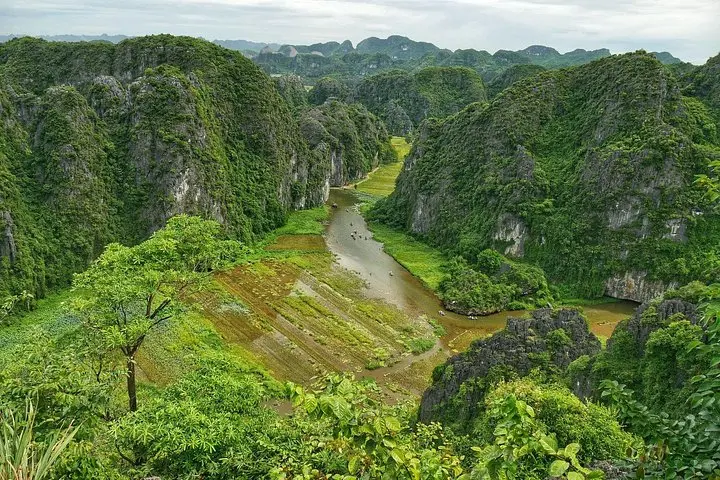
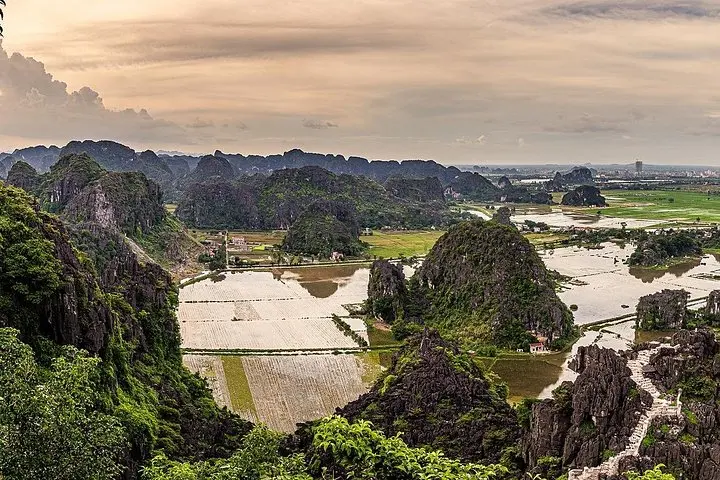

Dawn leaves Hanoi behind on a quiet limousine road north; within two hours rice paddies stretch like green panels and limestone towers rise from the wet fields. At Tam Coc, a bamboo boat slips onto the Ngo Dong River, oars tapping a steady rhythm as you glide into three dark cave mouths and watch reflections of karst cliffs shiver on the water.
Dawn leaves Hanoi behind on a quiet limousine road north; within two hours rice paddies stretch like green panels and limestone towers rise from the wet fields. At Tam Coc, a bamboo boat slips onto the Ngo Dong River, oars tapping a steady rhythm as you glide into three dark cave mouths and watch reflections of karst cliffs shiver on the water.
The route threads history and geology: Hoa Lu’s 10th-century temples recall the Dinh and Early Le dynasties, with low stone sanctuaries marking an early Vietnamese capital. The karst landscape is young in geological terms but rugged—limestone dissolved over millennia into vertical cliffs, tunnels, and the narrow river corridors you pass. Local villages still farm the alluvial flats, and bicycling between lanes gives a close look at rural life—water buffalo at work, farmers tending narrow dikes.
The final act is a climb to Mua Cave viewpoint: roughly 500 stone steps and ~100 m of ascent reward you with a wide panorama of the Tam Coc basin. Expect flat, paved village trails, calm river paddling, and a steep stair climb with handrails at the summit.
Practical edge: bring at least 1.5–2 liters of water, wear sturdy walking shoes for the steps, and carry sun protection; boats are exposed and can get hot. Timing matters—midday is busiest and brightest; early morning or late afternoon light makes for cooler cycling and better photos. Carry small local currency for snacks, and respect temple sites by keeping voices low and removing hats inside sanctuaries.