THE ADVENTURE COLLECTIVE® · Independent discovery and booking for outdoor travel

Three intensive days take you from pool drills to four open-water dives off Tamarindo’s Pacific coast. Learn SSI-standard skills with equipment, snacks and transport provided, and emerge certified and confident to dive Costa Rica’s reefs.
Three intensive days take you from pool drills to four open-water dives off Tamarindo’s Pacific coast. Learn SSI-standard skills with equipment, snacks and transport provided, and emerge certified and confident to dive Costa Rica’s reefs.
Morning light strips the black of pre-dawn off Tamarindo’s bay and the ocean breathes cool against the shore. Students gather at 6:15 a.m., equipment stacked into an air-conditioned van, and the day begins with theory and pool drills that make the reef dives feel like a next step rather than a leap.
Verified experiences and guided adventures in the surrounding area.
Operated by TamaDive Dive Center · Tamarindo, Guanacaste
Morning light strips the black of pre-dawn off Tamarindo’s bay and the ocean breathes cool against the shore. Students gather at 6:15 a.m., equipment stacked into an air-conditioned van, and the day begins with theory and pool drills that make the reef dives feel like a next step rather than a leap.
The course follows SSI open-water standards across three days: confined-water practice and video instruction, then two open-water dives on day two and two more plus an exam on day three. The Pacific off Guanacaste is volcanic in origin — rocky outcrops and basalt shelves cut through sand flats — and hosts reef fish, rays, and occasional turtles. Tamarindo’s rise as a surf-and-dive town dates to the 1980s tourism boom; local operators now balance livelihoods with marine stewardship.
Expect warm water (typically mid- to high-20s°C / mid-70s–80s°F), entry from small boats or shore, and variable visibility depending on tides and seasonal rains. Instructors provide full scuba kit, bottled water, snacks, and transport; students should bring swimwear, a logbook, and a confident basic level of fitness.
Practical advice: arrive rested and hydrated for early starts, review theory materials beforehand, and communicate any health concerns—this program excludes pregnant travelers and those with serious heart or spinal conditions. The final open-water dives consolidate skills like buoyancy control and emergency ascent procedures, leaving new divers ready to explore Costa Rica’s underwater neighborhoods with safety and curiosity.
Four open-water dives are included: two on day two and two on day three, which cover required SSI skill demonstrations.
Yes — use of full scuba equipment is provided as part of the course; students should bring personal masks if they prefer.
Pregnant travelers and those with uncontrolled heart, respiratory, or serious spinal conditions should not enroll; medical clearance may be required for other health issues.
Meeting time is 6:15 a.m. at the operator’s Tamarindo location; transport to dive sites and snacks/water are included.
TamaDive Dive Center operates guided outdoor trips and adventures with an emphasis on safety, stewardship, and memorable experiences.


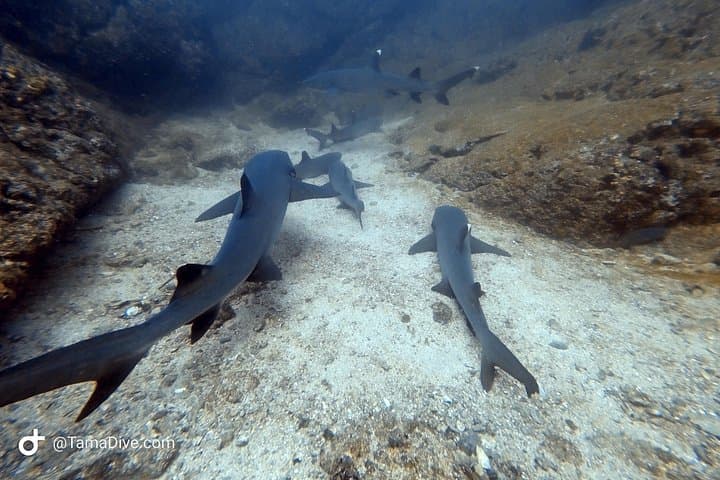
Morning light strips the black of pre-dawn off Tamarindo’s bay and the ocean breathes cool against the shore. Students gather at 6:15 a.m., equipment stacked into an air-conditioned van, and the day begins with theory and pool drills that make the reef dives feel like a next step rather than a leap.
Morning light strips the black of pre-dawn off Tamarindo’s bay and the ocean breathes cool against the shore. Students gather at 6:15 a.m., equipment stacked into an air-conditioned van, and the day begins with theory and pool drills that make the reef dives feel like a next step rather than a leap.
The course follows SSI open-water standards across three days: confined-water practice and video instruction, then two open-water dives on day two and two more plus an exam on day three. The Pacific off Guanacaste is volcanic in origin — rocky outcrops and basalt shelves cut through sand flats — and hosts reef fish, rays, and occasional turtles. Tamarindo’s rise as a surf-and-dive town dates to the 1980s tourism boom; local operators now balance livelihoods with marine stewardship.
Expect warm water (typically mid- to high-20s°C / mid-70s–80s°F), entry from small boats or shore, and variable visibility depending on tides and seasonal rains. Instructors provide full scuba kit, bottled water, snacks, and transport; students should bring swimwear, a logbook, and a confident basic level of fitness.
Practical advice: arrive rested and hydrated for early starts, review theory materials beforehand, and communicate any health concerns—this program excludes pregnant travelers and those with serious heart or spinal conditions. The final open-water dives consolidate skills like buoyancy control and emergency ascent procedures, leaving new divers ready to explore Costa Rica’s underwater neighborhoods with safety and curiosity.