THE ADVENTURE COLLECTIVE® · Independent discovery and booking for outdoor travel

Explore Tambo Colorado’s painted Inca walls and the Pisco Valley’s desert-farm mosaic on a half-day guided tour from Paracas. Learn practical tips for visiting adobe ruins and what to expect on the drive.
Explore Tambo Colorado’s painted Inca walls and the Pisco Valley’s desert-farm mosaic on a half-day guided tour from Paracas. Learn practical tips for visiting adobe ruins and what to expect on the drive.
A low sun warms the adobe walls as you step from the van onto hard-packed desert near a broad trapezoid plaza. Winds sift sand through narrow alleys while painted facades—faded reds and ochres—still cling to stone and adobe, giving the ruins a quiet authority. The site sits on the coastal edge of the Pisco Valley; the road from Paracas unwinds across dunes and irrigated fields, a visual contrast between arid plains and small farms that still use centuries-old water channels.
Verified experiences and guided adventures in the surrounding area.
Operated by JD ADVENTURE TRAVEL · Paracas, Ica
A low sun warms the adobe walls as you step from the van onto hard-packed desert near a broad trapezoid plaza. Winds sift sand through narrow alleys while painted facades—faded reds and ochres—still cling to stone and adobe, giving the ruins a quiet authority. The site sits on the coastal edge of the Pisco Valley; the road from Paracas unwinds across dunes and irrigated fields, a visual contrast between arid plains and small farms that still use centuries-old water channels.
Tambo Colorado was raised in the late 15th century under Inca expansion and used as a roadside administrative and ceremonial complex to control movement between coast and highlands. Its architecture blends Wari and Inca styles; the main building, La Fortaleza, and the high priest’s chamber reveal careful planning and, unusually for desert ruins, traces of original pigments preserved by dry air.
Geologically this is coastal desert—flat, windy, with compacted sand and occasional washouts—so expect minimal elevation change but uneven surfaces at the site. Culturally, the surrounding valley remains agricultural, with small villages where local irrigation practices continue.
Practical guidance: tours run about four hours including transport from Paracas; allow 45–60 minutes driving each way. Bring sun protection, at least 1–1.5 liters of water, sturdy shoes for uneven adobe and gravel, and layers for wind. Respect ropes and signage—walls are fragile and conservation depends on visitors staying on marked paths. Morning visits are cooler and offer softer light for photos; mid-day brings stronger winds and harsher sun.
Expect roughly 45–60 minutes each way depending on traffic and exact pickup point in Paracas.
Check your booking details; some operators include entrance while others require payment on arrival—bring small local currency just in case.
The site has uneven surfaces and limited accessibility; visitors with significant mobility issues should enquire in advance about vehicle drop-off and short routes.
Yes—families can join, but infants must sit on laps and minimal walking is required; the tour is described as suitable for all fitness levels.
JD ADVENTURE TRAVEL operates guided outdoor trips and adventures with an emphasis on safety, stewardship, and memorable experiences.
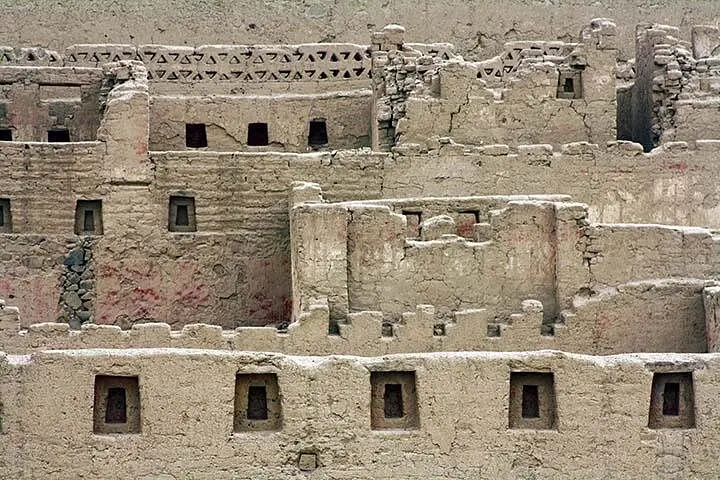
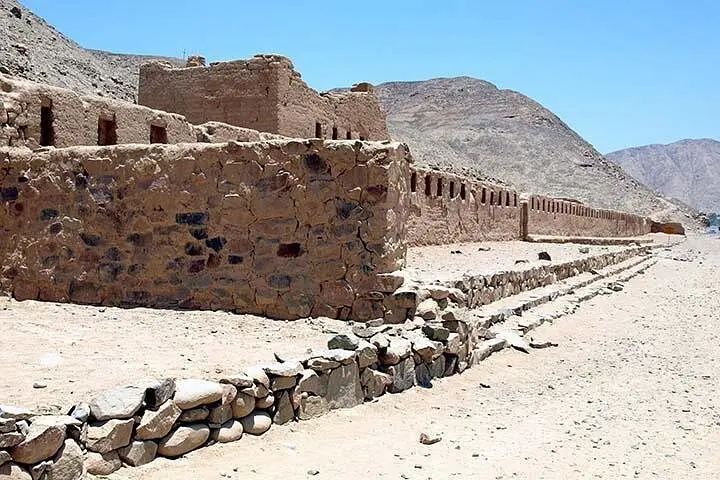
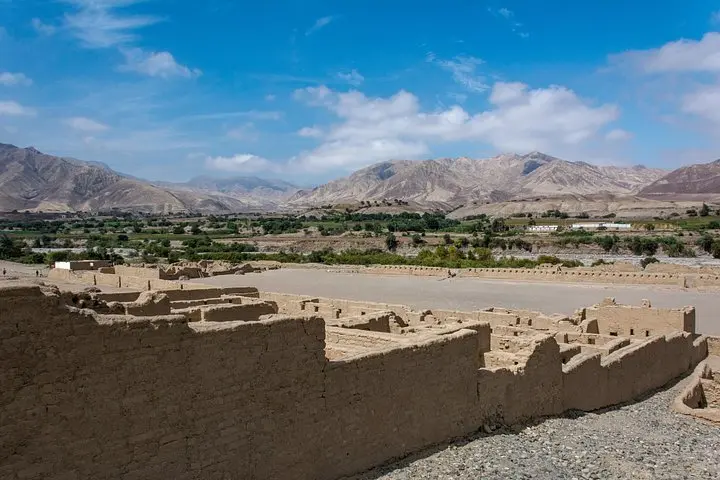
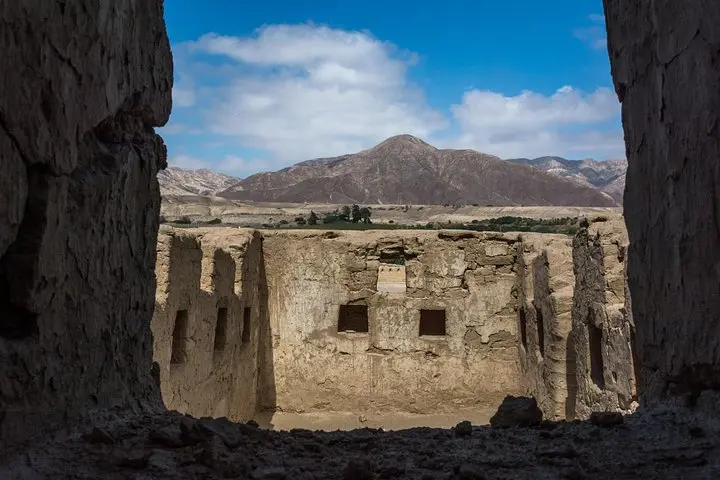
A low sun warms the adobe walls as you step from the van onto hard-packed desert near a broad trapezoid plaza. Winds sift sand through narrow alleys while painted facades—faded reds and ochres—still cling to stone and adobe, giving the ruins a quiet authority. The site sits on the coastal edge of the Pisco Valley; the road from Paracas unwinds across dunes and irrigated fields, a visual contrast between arid plains and small farms that still use centuries-old water channels.
A low sun warms the adobe walls as you step from the van onto hard-packed desert near a broad trapezoid plaza. Winds sift sand through narrow alleys while painted facades—faded reds and ochres—still cling to stone and adobe, giving the ruins a quiet authority. The site sits on the coastal edge of the Pisco Valley; the road from Paracas unwinds across dunes and irrigated fields, a visual contrast between arid plains and small farms that still use centuries-old water channels.
Tambo Colorado was raised in the late 15th century under Inca expansion and used as a roadside administrative and ceremonial complex to control movement between coast and highlands. Its architecture blends Wari and Inca styles; the main building, La Fortaleza, and the high priest’s chamber reveal careful planning and, unusually for desert ruins, traces of original pigments preserved by dry air.
Geologically this is coastal desert—flat, windy, with compacted sand and occasional washouts—so expect minimal elevation change but uneven surfaces at the site. Culturally, the surrounding valley remains agricultural, with small villages where local irrigation practices continue.
Practical guidance: tours run about four hours including transport from Paracas; allow 45–60 minutes driving each way. Bring sun protection, at least 1–1.5 liters of water, sturdy shoes for uneven adobe and gravel, and layers for wind. Respect ropes and signage—walls are fragile and conservation depends on visitors staying on marked paths. Morning visits are cooler and offer softer light for photos; mid-day brings stronger winds and harsher sun.