THE ADVENTURE COLLECTIVE® · Independent discovery and booking for outdoor travel

Explore Tamgaly-Tas’s rare Buddhist petroglyphs and the film-built Castle of Nomads on a full-day guided loop from Almaty. This 8–10 hour tour blends riverside walks, a ridge viewpoint, and a picnic inside the reconstructed nomad city.
Explore Tamgaly-Tas’s rare Buddhist petroglyphs and the film-built Castle of Nomads on a full-day guided loop from Almaty. This 8–10 hour tour blends riverside walks, a ridge viewpoint, and a picnic inside the reconstructed nomad city.
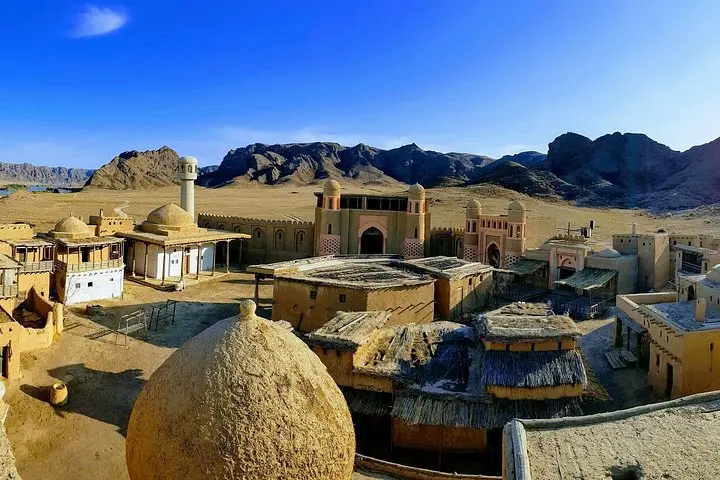
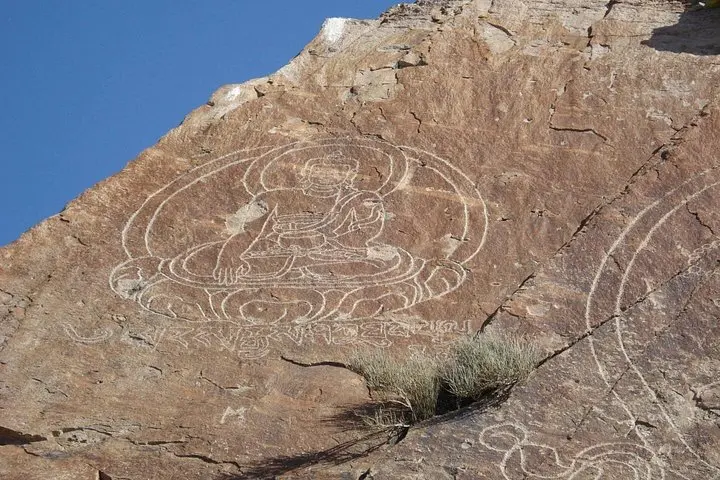
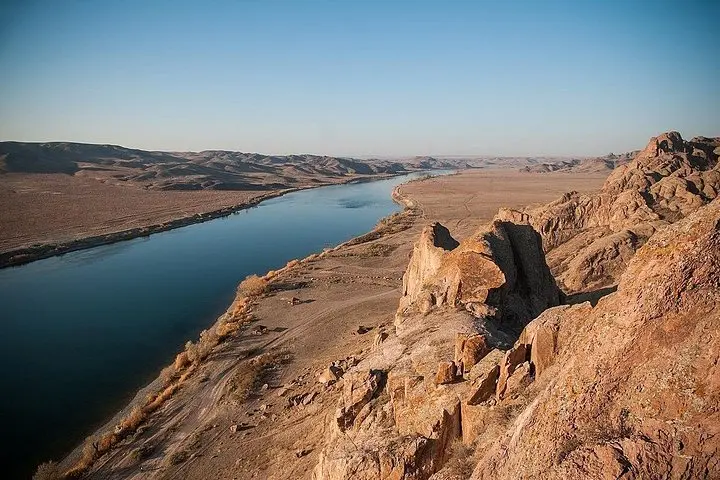
A wind off the Ili River cools the sun-baked cliff face as visitors step onto a narrow riverside ledge and come face-to-face with centuries of carved images. The rock paintings at Tamgaly-Tas sit low on dark stone, figures frozen in motion; across the river the modern wooden towers of the Castle of Nomads rise like a staged village, their timbers creaking in the same wind that shaped the valley.
Verified experiences and guided adventures in the surrounding area.
Operated by Explore Kazakhstan · Kapchagay, Almaty Region
A wind off the Ili River cools the sun-baked cliff face as visitors step onto a narrow riverside ledge and come face-to-face with centuries of carved images. The rock paintings at Tamgaly-Tas sit low on dark stone, figures frozen in motion; across the river the modern wooden towers of the Castle of Nomads rise like a staged village, their timbers creaking in the same wind that shaped the valley.
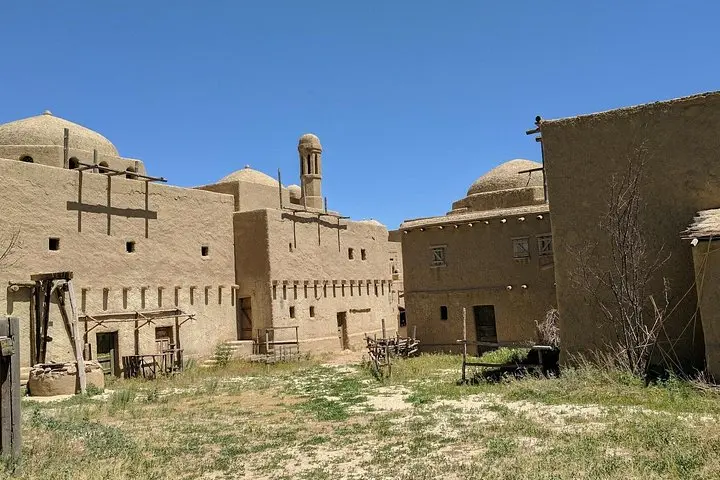
Tamgaly-Tas preserves Buddhist and Tibetan iconography tied to Dzungar Lamaism from the 17th–18th centuries, carved into limestone veneers that record ritual practice and travelers’ marks. Geologically the site is river-cut limestone and conglomerate; erosion has exposed smooth faces that take petroglyphs well but remain fragile. The Castle of Nomads was erected as a film set for the 2005 movie “Nomad,” now repurposed as an interpretive site and picnic spot that fits the open steppe around the Ili.
Expect an 8–10 hour day: an approximately three-hour guided walking loop along the river with a steep scramble to a ridge for panoramas, then a short drive to the reconstructed city for a guided hour and lunch. Guides explain iconography, local Kazakh nomadic culture, and sensible behavior around sacred art.
Practical tips: bring sun protection and at least 2 liters of water, comfortable hiking shoes with grip for limestone steps, and a light wind layer. Photography is allowed but avoid touching carvings. Plan for dusty access roads and sun-heavy afternoons; mornings are cooler and best for crisp photos and calmer light.
The tour runs about 8–10 hours and includes transport in an air-conditioned vehicle, an English-speaking guide, bottled water and lunch, plus admission and a walking tour of both sites.
The operator lists the tour as suitable for all fitness levels; however, there is a 20–30 minute uneven section and a short climb to a ridge that may be challenging—wheelchair access is limited at carved panels.
Yes—photography is allowed, but do not touch carvings or use flash close to soot-darkened panels; follow guide instructions to preserve the art.
The drive from Almaty is typically around 1.5–2 hours by road; the tour provides round-trip transport in an air-conditioned vehicle.
Explore Kazakhstan operates guided outdoor trips and adventures with an emphasis on safety, stewardship, and memorable experiences.
A wind off the Ili River cools the sun-baked cliff face as visitors step onto a narrow riverside ledge and come face-to-face with centuries of carved images. The rock paintings at Tamgaly-Tas sit low on dark stone, figures frozen in motion; across the river the modern wooden towers of the Castle of Nomads rise like a staged village, their timbers creaking in the same wind that shaped the valley.
A wind off the Ili River cools the sun-baked cliff face as visitors step onto a narrow riverside ledge and come face-to-face with centuries of carved images. The rock paintings at Tamgaly-Tas sit low on dark stone, figures frozen in motion; across the river the modern wooden towers of the Castle of Nomads rise like a staged village, their timbers creaking in the same wind that shaped the valley.
Tamgaly-Tas preserves Buddhist and Tibetan iconography tied to Dzungar Lamaism from the 17th–18th centuries, carved into limestone veneers that record ritual practice and travelers’ marks. Geologically the site is river-cut limestone and conglomerate; erosion has exposed smooth faces that take petroglyphs well but remain fragile. The Castle of Nomads was erected as a film set for the 2005 movie “Nomad,” now repurposed as an interpretive site and picnic spot that fits the open steppe around the Ili.
Expect an 8–10 hour day: an approximately three-hour guided walking loop along the river with a steep scramble to a ridge for panoramas, then a short drive to the reconstructed city for a guided hour and lunch. Guides explain iconography, local Kazakh nomadic culture, and sensible behavior around sacred art.
Practical tips: bring sun protection and at least 2 liters of water, comfortable hiking shoes with grip for limestone steps, and a light wind layer. Photography is allowed but avoid touching carvings. Plan for dusty access roads and sun-heavy afternoons; mornings are cooler and best for crisp photos and calmer light.