THE ADVENTURE COLLECTIVE® · Independent discovery and booking for outdoor travel

Set out from the Corey Causeway for a relaxed two-hour yacht cruise across Boca Ciega Bay and the Intracoastal Waterway. Expect narrated local history, coastal geology, and optional chef-prepared lunch served on deck.
Set out from the Corey Causeway for a relaxed two-hour yacht cruise across Boca Ciega Bay and the Intracoastal Waterway. Expect narrated local history, coastal geology, and optional chef-prepared lunch served on deck.
The yacht slips away from the Corey Causeway and the city sagas of St. Petersburg fall open before you — low-slung beaches, gulls policing the wake and the Gulf teasing at the horizon. In two hours the captain eases through Boca Ciega Bay, threading calm water that alternates between bright flats and sheltered mangrove fingers. Wind and wake set the tempo; the Intracoastal Waterway keeps one eye on commerce while the Gulf of Mexico hovers like a wider promise beyond.
Verified experiences and guided adventures in the surrounding area.
The yacht slips away from the Corey Causeway and the city sagas of St. Petersburg fall open before you — low-slung beaches, gulls policing the wake and the Gulf teasing at the horizon. In two hours the captain eases through Boca Ciega Bay, threading calm water that alternates between bright flats and sheltered mangrove fingers. Wind and wake set the tempo; the Intracoastal Waterway keeps one eye on commerce while the Gulf of Mexico hovers like a wider promise beyond.
Tampa Bay has long been a maritime crossroads: Cuban schooners, commercial fishing fleets and the turn-of-the-century passenger steamers that shaped the region’s waterfronts. Geology here is coastal plain — barrier islands of sand and shell, backed by seagrass flats that stabilize the bay and feed its food chain. Culture is visible from the rail: beach-town leisure, working marinas, and neighborhoods that grew because the water allowed trade and travel.
Practical guidance: the outing lasts about two hours and typically covers roughly 10–20 nautical miles depending on route. Boats cruise slowly for sightseeing; bring layered sun protection because reflected light off the water intensifies exposure. Narration from the captain highlights landmarks and local history; upgrading to the chef-prepared lunch adds about 30–45 minutes of dining time and a seated experience on deck.
Expect easy walking on a stable vessel, minimal elevation change and large open decks for photography. Arrive 20–30 minutes early for boarding, secure loose items against spray, and keep binoculars handy — the bay often rewards close looks at dolphin pods and migrant shorebirds.
Lunch is optional; you can upgrade to a chef-prepared meal when booking or onboard if space allows.
The scheduled cruise is two hours and typically covers roughly 10–20 nautical miles depending on the chosen route and conditions.
Most sightseeing yachts have onboard restrooms and partially covered deck space for shade; check the vessel specifics when booking.
Cameras are welcome; compact tripods or monopods may be allowed but should be secured and not interfere with other passengers.
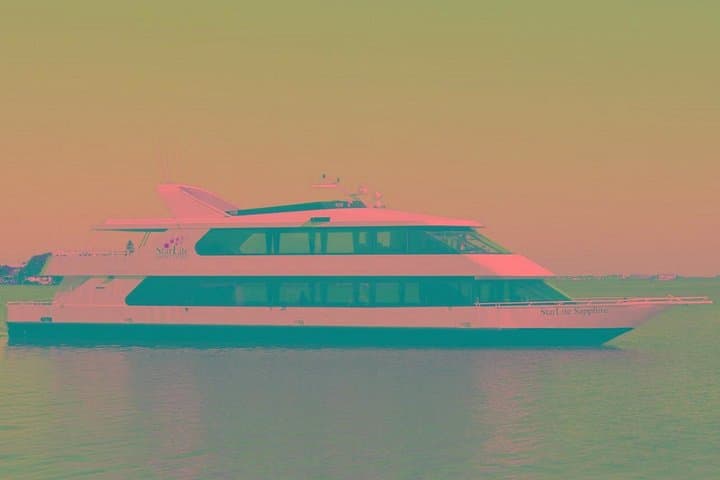
The yacht slips away from the Corey Causeway and the city sagas of St. Petersburg fall open before you — low-slung beaches, gulls policing the wake and the Gulf teasing at the horizon. In two hours the captain eases through Boca Ciega Bay, threading calm water that alternates between bright flats and sheltered mangrove fingers. Wind and wake set the tempo; the Intracoastal Waterway keeps one eye on commerce while the Gulf of Mexico hovers like a wider promise beyond.
The yacht slips away from the Corey Causeway and the city sagas of St. Petersburg fall open before you — low-slung beaches, gulls policing the wake and the Gulf teasing at the horizon. In two hours the captain eases through Boca Ciega Bay, threading calm water that alternates between bright flats and sheltered mangrove fingers. Wind and wake set the tempo; the Intracoastal Waterway keeps one eye on commerce while the Gulf of Mexico hovers like a wider promise beyond.
Tampa Bay has long been a maritime crossroads: Cuban schooners, commercial fishing fleets and the turn-of-the-century passenger steamers that shaped the region’s waterfronts. Geology here is coastal plain — barrier islands of sand and shell, backed by seagrass flats that stabilize the bay and feed its food chain. Culture is visible from the rail: beach-town leisure, working marinas, and neighborhoods that grew because the water allowed trade and travel.
Practical guidance: the outing lasts about two hours and typically covers roughly 10–20 nautical miles depending on route. Boats cruise slowly for sightseeing; bring layered sun protection because reflected light off the water intensifies exposure. Narration from the captain highlights landmarks and local history; upgrading to the chef-prepared lunch adds about 30–45 minutes of dining time and a seated experience on deck.
Expect easy walking on a stable vessel, minimal elevation change and large open decks for photography. Arrive 20–30 minutes early for boarding, secure loose items against spray, and keep binoculars handy — the bay often rewards close looks at dolphin pods and migrant shorebirds.