THE ADVENTURE COLLECTIVE® · Independent discovery and booking for outdoor travel

Spend a private day in Tangkoko National Park from Manado, watching spectral tarsiers, black-crested macaques, and endemic hornbills with a local ranger. This concise guide explains what you’ll see, when to go, and how to prepare for forest trails and humid conditions.
Spend a private day in Tangkoko National Park from Manado, watching spectral tarsiers, black-crested macaques, and endemic hornbills with a local ranger. This concise guide explains what you’ll see, when to go, and how to prepare for forest trails and humid conditions.
You step out of the van into hot, humid air and the forest closes around you—tall dipterocarp trunks, a chorus of insect calls, and a ranger pointing toward a clump of leaves where the tiny tarsier watches with round, unblinking eyes. For six hours you move through lowland rainforest that still holds some of Sulawesi’s most unusual endemics.
Verified experiences and guided adventures in the surrounding area.
Operated by Wandernesia · Manado, North Sulawesi
You step out of the van into hot, humid air and the forest closes around you—tall dipterocarp trunks, a chorus of insect calls, and a ranger pointing toward a clump of leaves where the tiny tarsier watches with round, unblinking eyes. For six hours you move through lowland rainforest that still holds some of Sulawesi’s most unusual endemics.
Tangkoko sits on volcanic soils and rugged limestone outcrops at the northeastern tip of Sulawesi. The park’s hills and coastal lowlands have shaped both habitat and local culture: Minahasa coastal villages once relied on small-scale fishing and shifting gardens here, and many trails follow old community paths. Geologically, the island is a knot of fault lines and uplifted coral, which creates steep ridgelines and sheltered valleys that wildlife prefers.
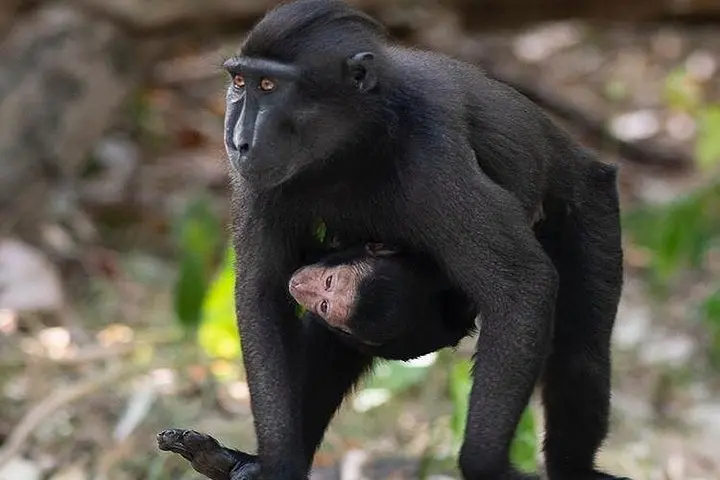
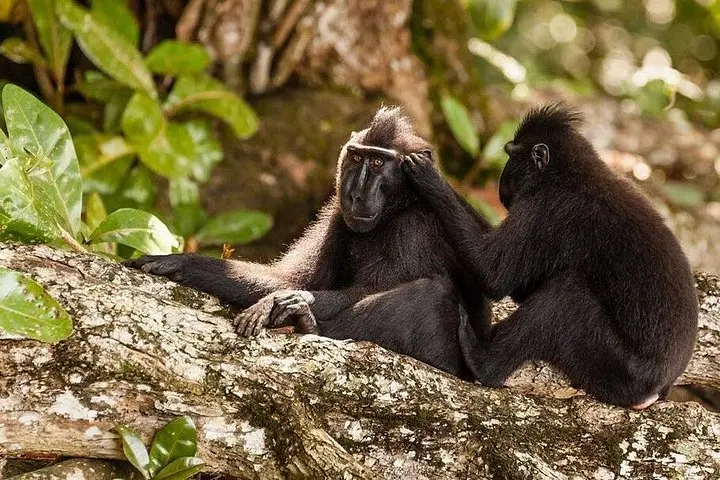
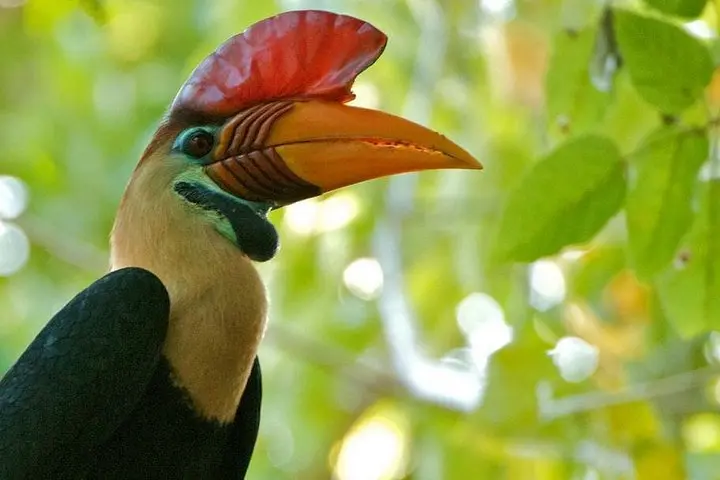
Wildlife is the draw—black-crested macaques that leap through branches, hornbills calling overhead, the slow-moving Sulawesi bear cuscus, and the diminutive tarsier concealed under leaves. Respectful observation is part of the experience: guides keep groups small and insist on no flash photography to avoid stressing nocturnal species.
Practical guidance: plan for early morning or late afternoon windows when animals are most active; trails are uneven and muddy after rain so wear closed-toe shoes and gaiters if needed. The tour includes hotel pickup from Manado, ranger-led walks, and lunch, with roughly four hours in the forest. Bring water, insect repellent, and a compact pair of binoculars; battery-powered lights and loud noises disturb the animals. Facilities in the park are basic, so treat the day as a field outing—responsible behavior benefits the animals you came to see.
Most tours include hotel pickup in Manado; the drive to the park entrance is about 1–1.5 hours depending on traffic and exact pickup location.
No wildlife can be guaranteed, but guided walks during early morning or late afternoon greatly increase the chance of seeing tarsiers, crested macaques, and hornbills.
The tour is rated easy and suitable for most ages, but guests should be able to walk short stretches on uneven ground—check with the operator if you have mobility concerns.
No—flash and close approaches stress wildlife. Follow your ranger’s instructions to keep a safe distance and avoid disturbing animals.
Wandernesia operates guided outdoor trips and adventures with an emphasis on safety, stewardship, and memorable experiences.
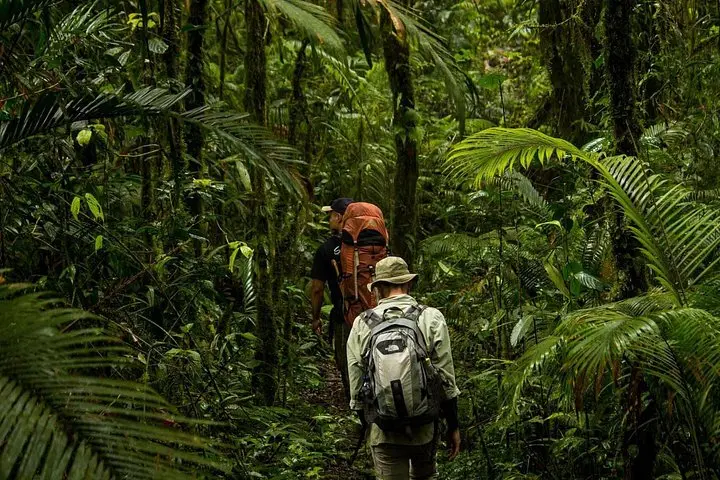
You step out of the van into hot, humid air and the forest closes around you—tall dipterocarp trunks, a chorus of insect calls, and a ranger pointing toward a clump of leaves where the tiny tarsier watches with round, unblinking eyes. For six hours you move through lowland rainforest that still holds some of Sulawesi’s most unusual endemics.
You step out of the van into hot, humid air and the forest closes around you—tall dipterocarp trunks, a chorus of insect calls, and a ranger pointing toward a clump of leaves where the tiny tarsier watches with round, unblinking eyes. For six hours you move through lowland rainforest that still holds some of Sulawesi’s most unusual endemics.
Tangkoko sits on volcanic soils and rugged limestone outcrops at the northeastern tip of Sulawesi. The park’s hills and coastal lowlands have shaped both habitat and local culture: Minahasa coastal villages once relied on small-scale fishing and shifting gardens here, and many trails follow old community paths. Geologically, the island is a knot of fault lines and uplifted coral, which creates steep ridgelines and sheltered valleys that wildlife prefers.
Wildlife is the draw—black-crested macaques that leap through branches, hornbills calling overhead, the slow-moving Sulawesi bear cuscus, and the diminutive tarsier concealed under leaves. Respectful observation is part of the experience: guides keep groups small and insist on no flash photography to avoid stressing nocturnal species.
Practical guidance: plan for early morning or late afternoon windows when animals are most active; trails are uneven and muddy after rain so wear closed-toe shoes and gaiters if needed. The tour includes hotel pickup from Manado, ranger-led walks, and lunch, with roughly four hours in the forest. Bring water, insect repellent, and a compact pair of binoculars; battery-powered lights and loud noises disturb the animals. Facilities in the park are basic, so treat the day as a field outing—responsible behavior benefits the animals you came to see.