THE ADVENTURE COLLECTIVE® · Independent discovery and booking for outdoor travel

Travel from Cefalù to Taormina’s cliff-top streets and then up Mount Etna to 2,900 m by cable car and ATV. This full-day tour pairs seaside culture with high-altitude volcanic scenery — practical, scenic, and best prepared for wind and sun.
Travel from Cefalù to Taormina’s cliff-top streets and then up Mount Etna to 2,900 m by cable car and ATV. This full-day tour pairs seaside culture with high-altitude volcanic scenery — practical, scenic, and best prepared for wind and sun.
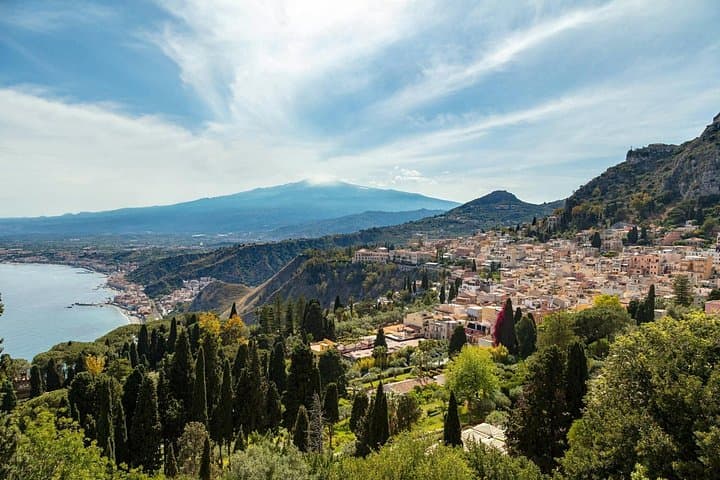
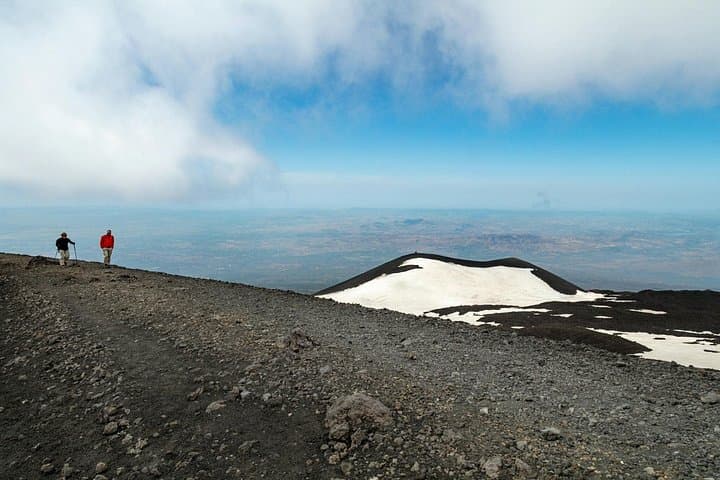
The morning light off the Tyrrhenian shines on Cefalù as the coach pulls away, cliffs and olive groves shrinking behind. By midday the landscape changes — terraces give way to black lava fields, wind sharpening as the road climbs. At 2,900 metres the air is thin, the crater rim raw and alive; Etna’s breath lifts ash and steam, daring visitors to step closer.
Verified experiences and guided adventures in the surrounding area.
Operated by TUI italia s.r.l · Catania, Sicily
The morning light off the Tyrrhenian shines on Cefalù as the coach pulls away, cliffs and olive groves shrinking behind. By midday the landscape changes — terraces give way to black lava fields, wind sharpening as the road climbs. At 2,900 metres the air is thin, the crater rim raw and alive; Etna’s breath lifts ash and steam, daring visitors to step closer.
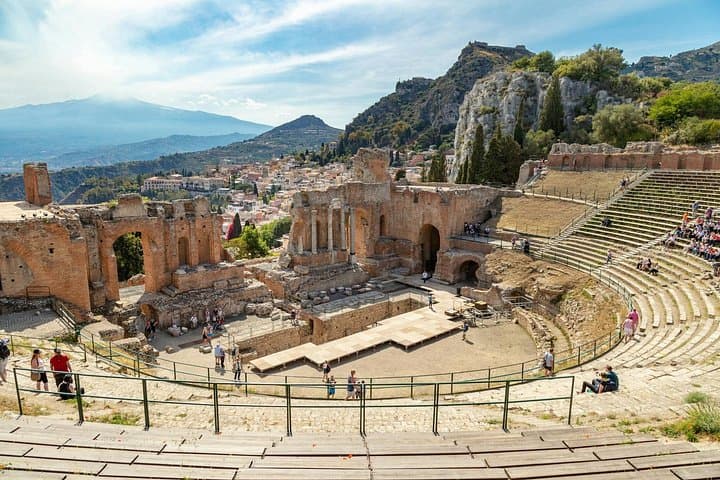
This full-day route pairs Taormina’s cliff-top charm with Etna’s volcanic geology. Taormina’s Greek‑Roman theatre dates to the Hellenistic era, a rock-hewn stage with Ionian Sea views, while Etna has shaped Sicily for millennia — its layers of basalt and pumice record repeated eruptions and the island’s shifting shoreline. Local culture alternates between seaside cafés and mountain shepherding; citrus groves and vineyards thrive on the volcano’s fertile soils.
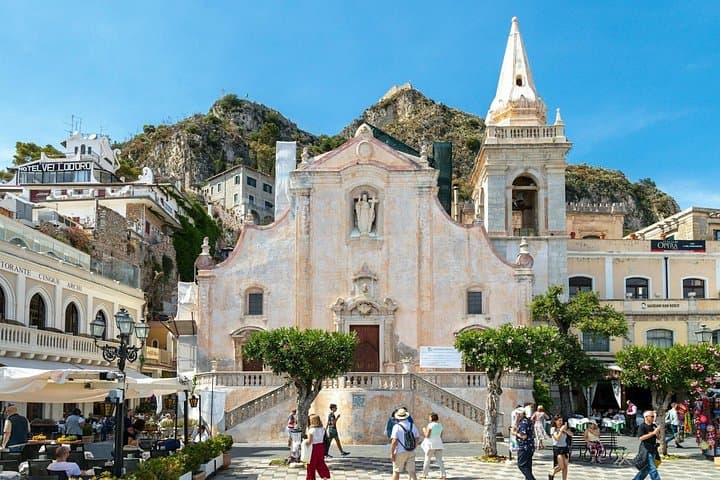
Expect a mix of pavement and rougher mountain surfaces: most ascent is by coach, then cable car or all‑terrain vehicle for the higher sections. Time in Taormina is typically free for a coffee in Piazza Nove Aprile and a quick walk through Corso Umberto.
Practical essentials: layer for wind and rapid temperature change, wear sturdy thick‑soled shoes for scree and volcanic rock, and bring a hat and sunscreen — solar exposure is strong at altitude. Hydrate before and during the day; anyone with respiratory issues should consult a doctor because altitude and volcanic gases can aggravate conditions.
The day is scenic and accessible but weather-dependent; guides will adapt routes if wind or visibility make the upper slopes unsafe. With planning, it’s a compact taste of Sicily’s sea, history and fire.
The itinerary ascends to approximately 2,900 metres using a combination of coach, cable car and all‑terrain vehicle depending on conditions.
The day is designed for most fitness levels, but it involves altitude and uneven ground; infants must sit on laps and the tour is not recommended for people with reduced mobility.
Guides take visitors to safe viewing zones; access to active craters depends on volcanic activity and local safety regulations on the day.
Yes — the tour usually includes free time in Taormina to explore the Greek‑Roman theatre, Piazza Nove Aprile and Corso Umberto before returning to Cefalù.
TUI italia s.r.l operates guided outdoor trips and adventures with an emphasis on safety, stewardship, and memorable experiences.
The morning light off the Tyrrhenian shines on Cefalù as the coach pulls away, cliffs and olive groves shrinking behind. By midday the landscape changes — terraces give way to black lava fields, wind sharpening as the road climbs. At 2,900 metres the air is thin, the crater rim raw and alive; Etna’s breath lifts ash and steam, daring visitors to step closer.
The morning light off the Tyrrhenian shines on Cefalù as the coach pulls away, cliffs and olive groves shrinking behind. By midday the landscape changes — terraces give way to black lava fields, wind sharpening as the road climbs. At 2,900 metres the air is thin, the crater rim raw and alive; Etna’s breath lifts ash and steam, daring visitors to step closer.
This full-day route pairs Taormina’s cliff-top charm with Etna’s volcanic geology. Taormina’s Greek‑Roman theatre dates to the Hellenistic era, a rock-hewn stage with Ionian Sea views, while Etna has shaped Sicily for millennia — its layers of basalt and pumice record repeated eruptions and the island’s shifting shoreline. Local culture alternates between seaside cafés and mountain shepherding; citrus groves and vineyards thrive on the volcano’s fertile soils.
Expect a mix of pavement and rougher mountain surfaces: most ascent is by coach, then cable car or all‑terrain vehicle for the higher sections. Time in Taormina is typically free for a coffee in Piazza Nove Aprile and a quick walk through Corso Umberto.
Practical essentials: layer for wind and rapid temperature change, wear sturdy thick‑soled shoes for scree and volcanic rock, and bring a hat and sunscreen — solar exposure is strong at altitude. Hydrate before and during the day; anyone with respiratory issues should consult a doctor because altitude and volcanic gases can aggravate conditions.
The day is scenic and accessible but weather-dependent; guides will adapt routes if wind or visibility make the upper slopes unsafe. With planning, it’s a compact taste of Sicily’s sea, history and fire.