THE ADVENTURE COLLECTIVE® · Independent discovery and booking for outdoor travel

A tight two-day private safari from Arusha that pairs Tarangire’s elephant-dotted plains with the volcanic drama of Ngorongoro Crater. Perfect for travelers who want concentrated wildlife viewing and cultural stops like Maasai villages and Olduvai Gorge.
A tight two-day private safari from Arusha that pairs Tarangire’s elephant-dotted plains with the volcanic drama of Ngorongoro Crater. Perfect for travelers who want concentrated wildlife viewing and cultural stops like Maasai villages and Olduvai Gorge.
Dust lifts off the track as your 4x4 eases away from Arusha and the road opens into sun-broadened plains. In Tarangire the baobabs throw long shadows and herds of elephants move like slow decisions; the river dares you to follow its meandering edge for signs of life. By day two you stand on the Ngorongoro rim—air thinner, views folding into the crater bowl below where flamingos stain alkaline lakes pink and black rhinos graze within volcanic silence.
Verified experiences and guided adventures in the surrounding area.
Operated by Travel Season Networks · Arusha, Arusha Region
Dust lifts off the track as your 4x4 eases away from Arusha and the road opens into sun-broadened plains. In Tarangire the baobabs throw long shadows and herds of elephants move like slow decisions; the river dares you to follow its meandering edge for signs of life. By day two you stand on the Ngorongoro rim—air thinner, views folding into the crater bowl below where flamingos stain alkaline lakes pink and black rhinos graze within volcanic silence.
Tarangire sits about 120 km northeast of Arusha on an alluvial plain shaped by seasonal floods; its landscape is dominated by ancient baobabs and yellow-backed acacias. Ngorongoro is a collapsed volcanic caldera roughly 19 km across and ~600 m deep, a geological bowl that traps biodiversity and cultural history—Maasai communities have grazed these highlands for centuries and Olduvai Gorge nearby holds key hominin discoveries.
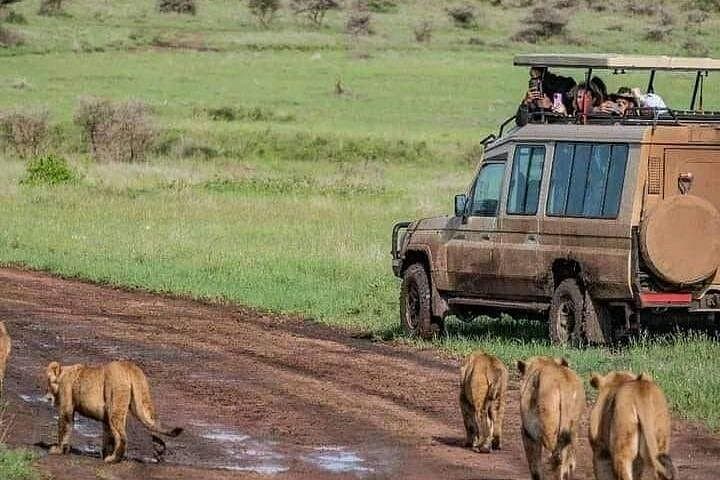
Expect game drives over relatively flat, dusty terrain with intermittent short walks; wildlife here congregates around water during the dry season, making sightings reliable. Logistics are straightforward: early departures, long days in the vehicle, and picnic lunches between stops. Bring layered clothing for warm plains and cool crater mornings, binoculars for distant herds, and insect protection for dusk.
Practical prep pays off—carry emergency cash for park entrance fees and tips, ensure your camera batteries and memory are ready, and plan for road dust. This two-day private safari is compact but rich: a concentrated primer in East African plains ecology and the dramatic geology of a living caldera.
Policies vary by operator; confirm whether Tarangire and Ngorongoro gate fees are included in your booking or paid locally—many tours require separate payment.
Arusha to Tarangire is roughly 1.5–2 hours (120 km) depending on road conditions; Arusha to Ngorongoro/Ngorongoro Conservation Area can take 3–4 hours with stops.
Yes—many private tours include optional visits to nearby Maasai villages and Olduvai (Olduvai) Gorge, but these may add time and small community fees.
Children can join, but long vehicle days and some uneven sights mean the tour is best for those comfortable with extended drives; discuss mobility needs with the operator before booking.
Travel Season Networks operates guided outdoor trips and adventures with an emphasis on safety, stewardship, and memorable experiences.
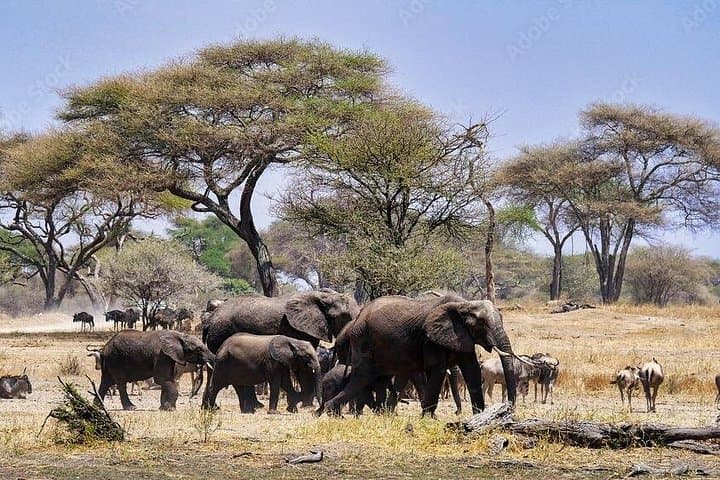
Dust lifts off the track as your 4x4 eases away from Arusha and the road opens into sun-broadened plains. In Tarangire the baobabs throw long shadows and herds of elephants move like slow decisions; the river dares you to follow its meandering edge for signs of life. By day two you stand on the Ngorongoro rim—air thinner, views folding into the crater bowl below where flamingos stain alkaline lakes pink and black rhinos graze within volcanic silence.
Dust lifts off the track as your 4x4 eases away from Arusha and the road opens into sun-broadened plains. In Tarangire the baobabs throw long shadows and herds of elephants move like slow decisions; the river dares you to follow its meandering edge for signs of life. By day two you stand on the Ngorongoro rim—air thinner, views folding into the crater bowl below where flamingos stain alkaline lakes pink and black rhinos graze within volcanic silence.
Tarangire sits about 120 km northeast of Arusha on an alluvial plain shaped by seasonal floods; its landscape is dominated by ancient baobabs and yellow-backed acacias. Ngorongoro is a collapsed volcanic caldera roughly 19 km across and ~600 m deep, a geological bowl that traps biodiversity and cultural history—Maasai communities have grazed these highlands for centuries and Olduvai Gorge nearby holds key hominin discoveries.
Expect game drives over relatively flat, dusty terrain with intermittent short walks; wildlife here congregates around water during the dry season, making sightings reliable. Logistics are straightforward: early departures, long days in the vehicle, and picnic lunches between stops. Bring layered clothing for warm plains and cool crater mornings, binoculars for distant herds, and insect protection for dusk.
Practical prep pays off—carry emergency cash for park entrance fees and tips, ensure your camera batteries and memory are ready, and plan for road dust. This two-day private safari is compact but rich: a concentrated primer in East African plains ecology and the dramatic geology of a living caldera.