THE ADVENTURE COLLECTIVE® · Independent discovery and booking for outdoor travel

A compact, private walking tour that moves from Chorsu Bazaar to the Old City in four hours—combining market flavors, Soviet architecture, and Silk Road history. Ideal for travelers who want both iconic sights and lesser‑known alleys.
A compact, private walking tour that moves from Chorsu Bazaar to the Old City in four hours—combining market flavors, Soviet architecture, and Silk Road history. Ideal for travelers who want both iconic sights and lesser‑known alleys.
Morning in Tashkent opens like a market stall thrown wide: steam from tandoor ovens pulls you toward Chorsu Bazaar, while metro stations—carved and tiled like underground galleries—lead you across the city’s layered past.
Verified experiences and guided adventures in the surrounding area.
Operated by Tatiana · Tashkent, Tashkent Region
Morning in Tashkent opens like a market stall thrown wide: steam from tandoor ovens pulls you toward Chorsu Bazaar, while metro stations—carved and tiled like underground galleries—lead you across the city’s layered past.
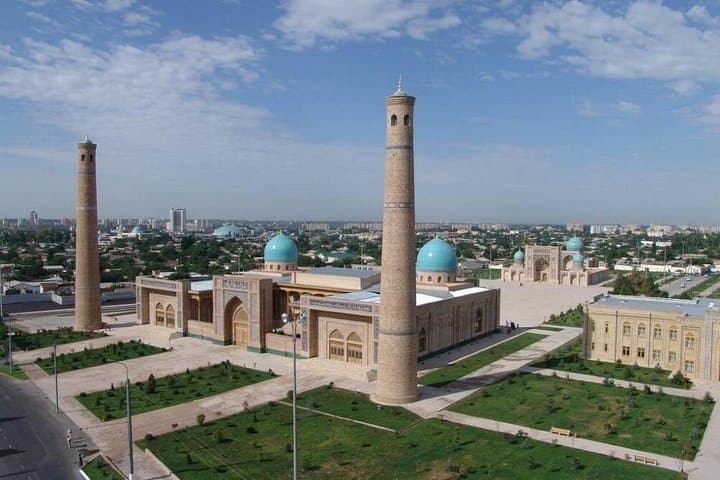
This four‑hour private walk threads Soviet boulevards and Silk Road echoes. Start at the bazaar where traders still weigh nuts by hand, then move to the Old City’s courtyards—Hast-Imam’s libraries and madrasahs hold manuscripts and histories older than the Soviet façades that flank the capital. You’ll pass Independence Square’s broad geometry, a reminder of the 1966 earthquake that reshaped Tashkent’s urban spine and led to sweeping mid‑20th‑century reconstruction. Geologically, the city sits on alluvial plains beneath the distant Tian Shan foothills, a flat city shaped more by human layers than mountain drama.
Culturally, the tour is about texture: blue tilework, the smell of black tea, and conversations with vendors who recall Soviet markets and post‑independence changes. Local guides bring the stories—family recipes, hidden alleys where artists gather, and quieter mosques that welcome respectful visitors.
Practical guidance: wear grippy shoes for uneven pavement, carry small notes for market purchases, and schedule morning or late‑afternoon tours to avoid high sun and peak crowds. Bring a lightweight layer for air‑conditioned museums and know that modest dress is expected at religious sites. Public transport like the metro is efficient and part of the experience—buy tokens, watch the architecture, and let the city’s momentum guide you through both its celebrated sights and quieter, lived‑in corners.
The tour runs about four hours at an unhurried walking pace, with frequent stops for sights, markets, and refreshments.
Yes—families and older travelers can join if everyone is comfortable with several short walks and stairs in metro stations; notify the operator of mobility needs.
Light snacks are typically included or available to sample at stalls, but full meals are usually paid for separately unless specified in the booking.
Local accredited guides commonly speak English and Russian; check booking details for other language options and request preferences in advance.
Tatiana operates guided outdoor trips and adventures with an emphasis on safety, stewardship, and memorable experiences.


Morning in Tashkent opens like a market stall thrown wide: steam from tandoor ovens pulls you toward Chorsu Bazaar, while metro stations—carved and tiled like underground galleries—lead you across the city’s layered past.
Morning in Tashkent opens like a market stall thrown wide: steam from tandoor ovens pulls you toward Chorsu Bazaar, while metro stations—carved and tiled like underground galleries—lead you across the city’s layered past.
This four‑hour private walk threads Soviet boulevards and Silk Road echoes. Start at the bazaar where traders still weigh nuts by hand, then move to the Old City’s courtyards—Hast-Imam’s libraries and madrasahs hold manuscripts and histories older than the Soviet façades that flank the capital. You’ll pass Independence Square’s broad geometry, a reminder of the 1966 earthquake that reshaped Tashkent’s urban spine and led to sweeping mid‑20th‑century reconstruction. Geologically, the city sits on alluvial plains beneath the distant Tian Shan foothills, a flat city shaped more by human layers than mountain drama.
Culturally, the tour is about texture: blue tilework, the smell of black tea, and conversations with vendors who recall Soviet markets and post‑independence changes. Local guides bring the stories—family recipes, hidden alleys where artists gather, and quieter mosques that welcome respectful visitors.
Practical guidance: wear grippy shoes for uneven pavement, carry small notes for market purchases, and schedule morning or late‑afternoon tours to avoid high sun and peak crowds. Bring a lightweight layer for air‑conditioned museums and know that modest dress is expected at religious sites. Public transport like the metro is efficient and part of the experience—buy tokens, watch the architecture, and let the city’s momentum guide you through both its celebrated sights and quieter, lived‑in corners.